By Fatima Saka | Abuja
The Federal Government has reaffirmed its commitment to placing Water, Sanitation and Hygiene (WASH) systems at the forefront of Nigeria’s climate action strategy, emphasizing the urgent need to align sectoral interventions with the country’s updated Nationally Determined Contribution (NDC 3.0).
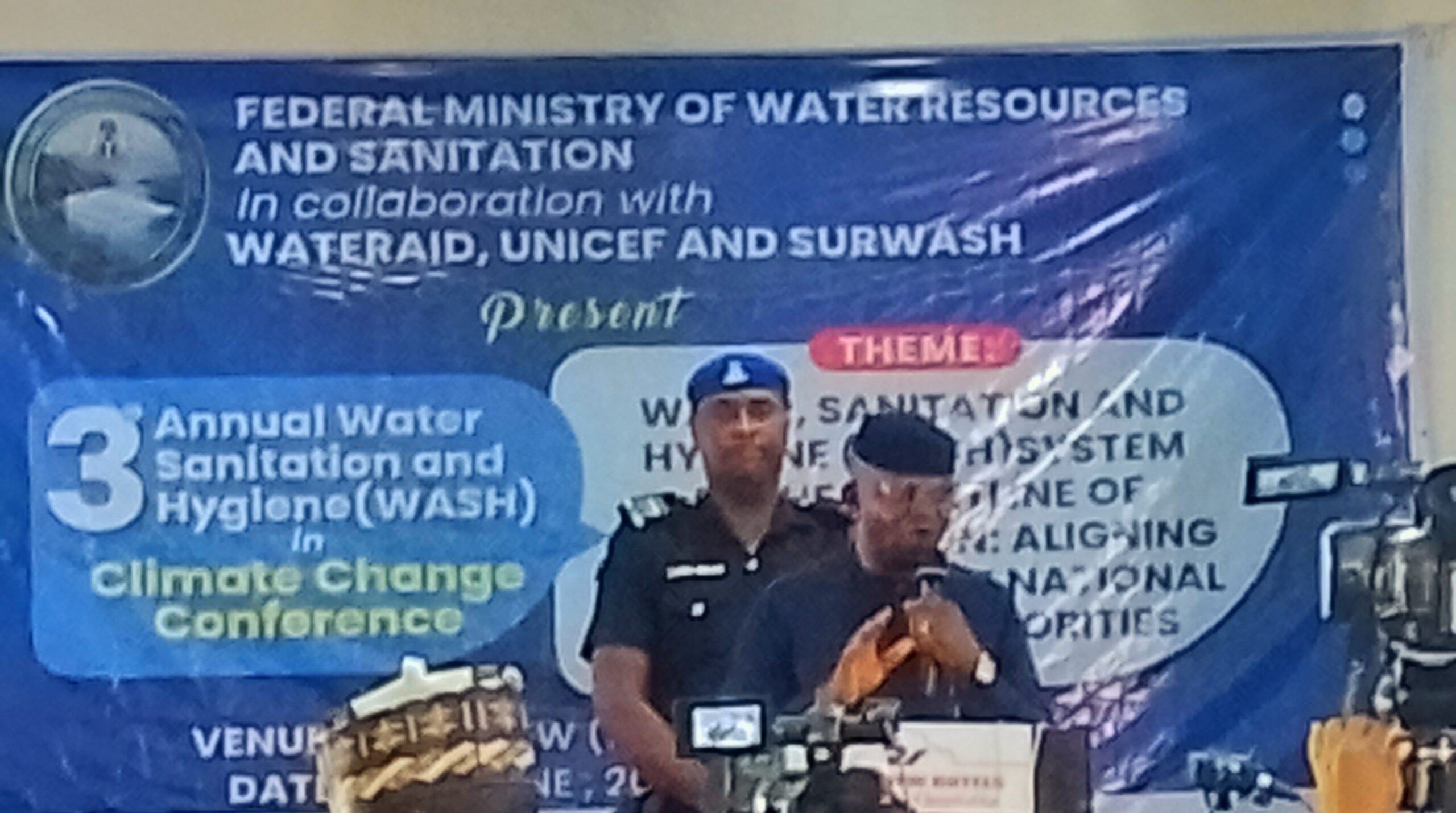
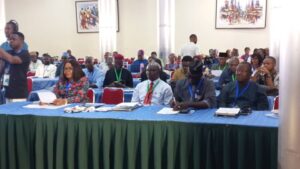
This was the central focus of the 3rd Annual National WASH in Climate Change Conference held on Monday in Abuja, convened by the Federal Ministry of Water Resources and Sanitation in collaboration with development partners, including UNICEF, WaterAid, and the Sustainable Urban and Rural Water Supply, Sanitation and Hygiene (SURWASH) programme.
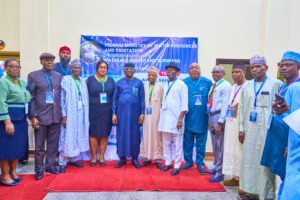
Speaking at the conference, the Minister of Water Resources and Sanitation, Engr. Prof. Joseph Terlumun Utsev, declared that Nigeria’s response to climate change must prioritize resilient WASH systems, describing water as the primary medium through which climate impacts are felt.
“The climate crisis is fundamentally a water crisis,” Utsev stated, noting that floods, droughts, erratic rainfall patterns, and declining water quality are already reshaping access to WASH services across the country.
He stressed that integrating WASH into NDC 3.0 implementation is critical to achieving climate resilience, public health security, food sustainability, and economic growth.
“Without water security, there can be no climate resilience. Without sanitation, there can be no public health resilience,” the minister said.
Utsev outlined key priority actions, including climate-resilient infrastructure, climate-smart sanitation, improved hydrological systems, and increased climate financing.
Earlier, the Ag Permanent Secretary, Federal Ministry of Water Resources and Sanitation, Mr. Ibrahim Ali, underscored the importance of aligning WASH systems with national adaptation priorities, noting that the sector intersects with health, agriculture, food security, and economic productivity.
Goodwill messages from stakeholders reinforced the urgency of coordinated action.
Mrs. Chika Okpala, representing the Federal Ministry of Environment, highlighted the growing threats posed by floods, droughts, and environmental degradation, stressing that resilient WASH systems are critical to achieving Nigeria’s climate goals.
Mr. Joseph Ikpeamaeze, Director, Social Development Department, representing the Federal Ministry of Budget and Economic Planning, emphasized the need to align climate financing with national budgets and strengthen data systems to unlock investments in WASH adaptation.
Mrs. Amuch Chiomas Felistas, representing the Director-General of the National Council on Climate Change, Barr. Temi Nnaemeka, described the conference as timely, noting that integrating WASH into climate plans provides co-benefits such as job creation and improved livelihoods, while urging stakeholders to focus on implementation.
Also speaking, Mr. Obinna Uche, WASH Officer representing UNICEF Nigeria, said integrating WASH into NDC 3.0 goes beyond policy to directly protect public health, safeguard livelihoods, and empower vulnerable populations, especially women and girls.
“We are not just ticking policy boxes; we are protecting lives and building climate-smart communities,” he said, calling for stronger collaboration and full prioritization of WASH in climate interventions.
Similarly, Mr. Kolawole Banwo, Head of Advocacy, Policy and Communication at WaterAid Nigeria, commended the Federal Government for sustaining a government-led, multi-stakeholder platform, noting that collaboration remains key to advancing climate-resilient WASH systems.
He emphasized that the Technical Working Group on Climate Resilient WASH has played a critical role in sustaining momentum and mainstreaming climate action within the sector.
Also, the conference featured a presentation on “Water, Sanitation and Hygiene (WASH) Systems at the Frontline of Climate Action: Aligning NDC 3.0 with National Adaptation Priorities,” delivered by Prof. Donatus Adie, who emphasized the need to integrate climate change considerations into health system planning in Nigeria.
Participants agreed that while progress has been made since the 2025 communiqué, the urgency of climate impacts requires accelerated implementation of agreed action plans.
The conference is expected to generate actionable recommendations to strengthen Nigeria’s climate resilience through inclusive and sustainable WASH systems.
Moro Condemns Killing of MACBAN Chairman, Demands Justice
Declaring the conference open, the minister urged stakeholders to move beyond dialogue to concrete action.
“Together, let us position WASH systems at the forefront of climate action and ensure that no community is left behind,” he said.
About The Author