By Fatima Saka
The Federal Government has identified health systems research as a critical defence against future pandemics, calling for sustained investment in evidence-based research, disease surveillance and stronger healthcare delivery systems.
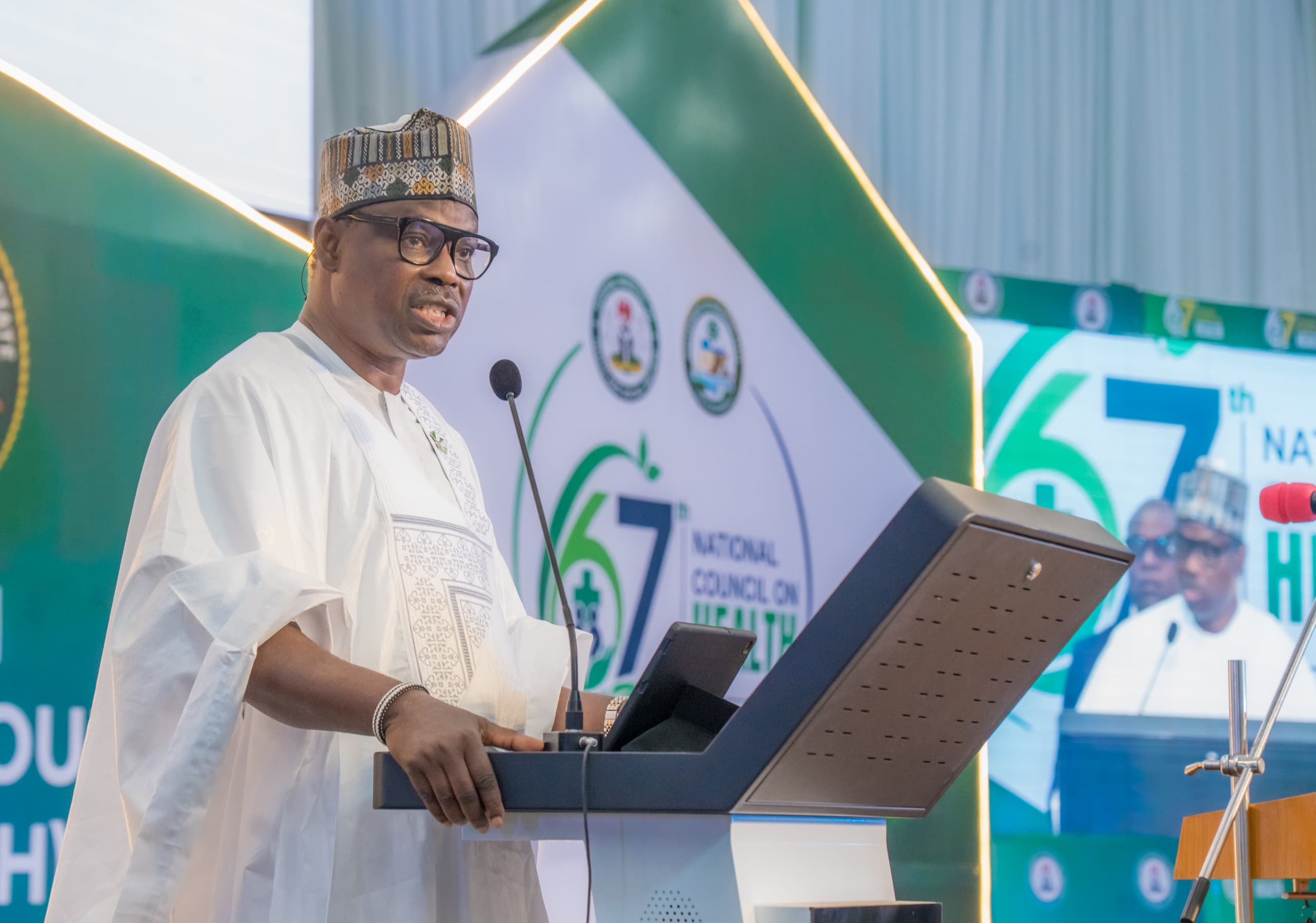
The Minister of State for Health and Social Welfare, Dr Iziaq Adekunle Salako, said the government was working to provide first-line funding for some categories of health research through the Basic Health Care Provision Fund (BHCPF), which is currently being considered for an increase from one to two per cent of the Consolidated Revenue Fund (CRF).
Salako made this known on Tuesday at the 2026 Annual Lecture and Induction Ceremony of the Nigerian Academy of Medicine, held at Reiz Continental Hotel, Jabi, Abuja.
Speaking on the theme, “Health System Research for Pandemic Preparedness,” the minister said the ongoing Ebola outbreak in some African countries and the lessons from the COVID-19 pandemic had reinforced the need for countries to strengthen their health systems before emergencies occur.
He noted that the COVID-19 pandemic exposed weaknesses in healthcare systems globally, including Nigeria, while demonstrating the importance of collective action in responding to public health emergencies.
According to him, effective pandemic preparedness requires functional disease surveillance systems, well-equipped laboratories, trained health workers and reliable data to ensure rapid responses to emerging health threats.
“Preparedness is not built during an outbreak; it is built beforehand, with evidence. Health systems research tells us what works, for whom, and at what cost. It turns hard lessons into policy, and policy into protection for our people,” he said.
Salako described health systems research as a frontline defence against pandemics rather than an academic luxury, stressing that the country must sustain investments between outbreaks instead of relying on emergency spending when crises emerge.
He urged researchers and fellows of the Academy to deploy their expertise towards reviewing Nigeria’s pandemic response, documenting successful interventions and developing flexible healthcare models capable of managing emergencies without disrupting routine health services.
The minister also called for research that would strengthen disease surveillance, improve resource allocation to vulnerable communities and develop strategies for building public trust through effective partnerships with community leaders.
He reaffirmed the Federal Ministry of Health and Social Welfare’s commitment to evidence-informed decision-making, particularly in health security, primary healthcare and health financing, describing the Nigerian Academy of Medicine as a trusted partner in advancing the country’s health sector.
Reflecting on the achievements of President Bola Tinubu’s Renewed Hope Agenda over the last 42 months, Salako said the Health Sector Renewal Compact had brought Nigeria’s previously fragmented health plans under a unified framework of one plan, one budget, one report and one conversation.
He disclosed that nearly eight million additional Nigerians had been enrolled in health insurance under the administration, including more than three million vulnerable persons.
He added that the government was directly supporting over 8,000 primary healthcare centres, quadrupling primary healthcare utilisation, releasing more than N290 billion for basic healthcare and upgrading over 3,000 primary healthcare facilities to Level 2 readiness.
According to him, facility-reported maternal deaths in priority local government areas have declined by about 60 per cent, while neonatal and under-five deaths have reduced by 22 and 25 per cent, respectively.
On local pharmaceutical production, Salako said data from the Pharmaceutical Group of the Manufacturers Association of Nigeria and the National Agency for Food and Drug Administration and Control showed about a 10 per cent increase in active local pharmaceutical companies.
He said the share of locally produced pharmaceuticals had also increased from 30 per cent in 2023 to 50 per cent in 2026.
The minister further stated that the administration had recorded between 60 and 92 per cent performance across key performance indicators covering its eight health priorities, including governance, health security, local production, health financing, primary and secondary healthcare, health workforce, mental health, equity, quality and preventive care.
As the country approaches the 2027 general elections, Salako urged the Academy to use town hall meetings, media engagements, policy briefs and other platforms to encourage Nigerians to assess political leadership based on demonstrated performance and viable solutions.
He said medical experts should not remain silent on national issues but should deploy their professional knowledge to strengthen democracy and contribute to national development.
READ ALSO: National Park Service Honours Retired ACGs, Oladipo, Fingesi After 34 Years of Service
Senate Frowns at Inadequate LPG Supply, Mulls Price Reduction
The minister congratulated the newly inducted fellows, describing their induction as both recognition of professional achievements and a call to greater national service.
He also commended the leadership of the Academy under Emeritus Professor Adewole, a former Minister of Health, and expressed optimism that the annual ceremony would further strengthen collaboration between the Academy and the Federal Ministry of Health and Social Welfare.
About The Author