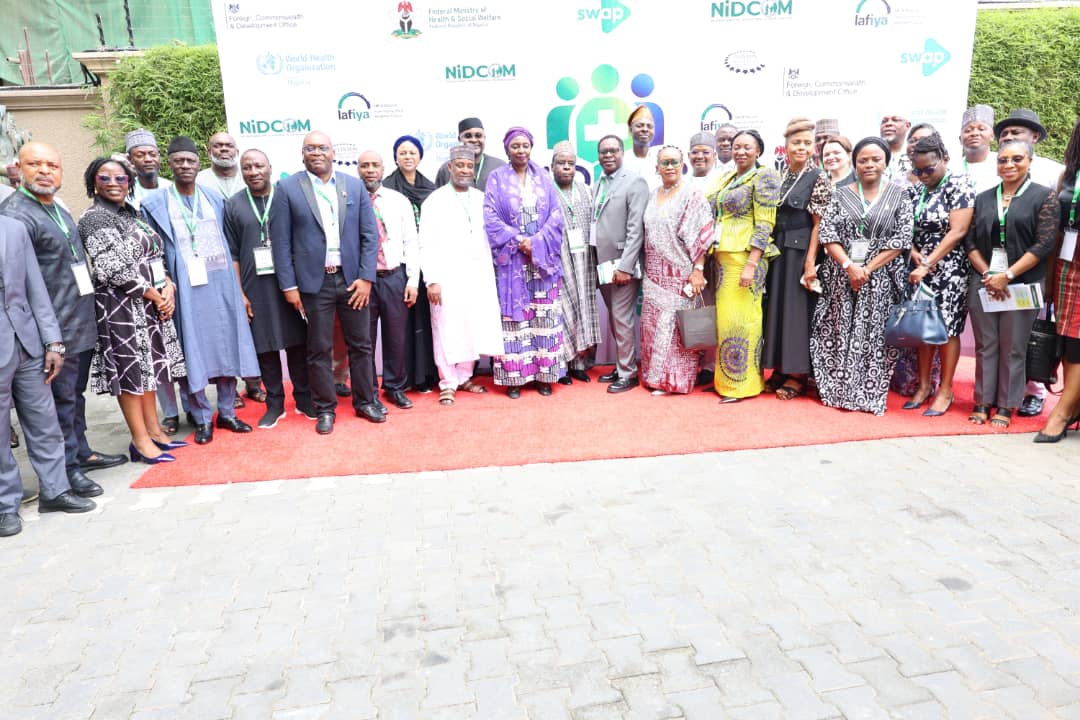
The Federal Government has launched the Nigerians in Diaspora Advanced Health Programme (NiDAH-P) alongside a digital portal to address Nigeria’s persistent shortage of healthcare workers by leveraging the expertise of medical professionals abroad.
The initiative, unveiled in Abuja by the Coordinating Minister of Health and Social Welfare, Prof. Muhammad Ali Pate, in collaboration with the Nigerians in Diaspora Commission (NiDCOM), is designed to convert the ongoing migration of health professionals—popularly known as “Japa”—into a strategic advantage for the country’s health system.
Represented by the Permanent Secretary of the ministry, Mrs. Daju Kachollom, Pate said the programme provides a structured platform for Nigerian doctors, nurses, pharmacists and other professionals in the diaspora to contribute to healthcare delivery, education, research and specialist services through both physical and virtual engagements.
He emphasised that the launch marks a shift from merely lamenting the exodus of skilled workers to building sustainable systems that reconnect them with Nigeria’s healthcare sector.
“For decades, Nigeria has grappled with shortages of healthcare workers while many of its professionals excel globally. Today, we begin to resolve that tension,” he said.
The minister disclosed that the programme, conceived from policy work dating back to 2016, draws from successful diaspora engagement models in countries such as the Philippines, India, Rwanda and Egypt.
He added that NiDAH-P will operationalise existing agreements between the ministry and several diaspora professional bodies, including the Medical Association of Nigerians Across Great Britain (MANSAG), the Association of Nigerian Physicians in the Americas (ANPA), and the National Association of Nigerian Nurses in North America (NANNNA), among others.
Pate noted that the NiDAH digital portal, developed with support from the UK Foreign, Commonwealth and Development Office (FCDO) Lafiya Programme, the Clinton Health Access Initiative (CHAI) and the World Health Organization (WHO), is now fully operational and open for global participation.
Also speaking, the Secretary of NiDCOM, Dr. Yakubu Bassi, representing Chairman Abike Dabiri-Erewa, described the programme as a strategic tool for transforming migration into national development.
“NiDAH-P is designed to turn brain drain into brain gain and brain circulation, particularly in the health sector,” he said, noting that the initiative had been in development for nearly a decade.
He invited stakeholders to participate in the upcoming National Diaspora Day activities scheduled for July 24 and 25 in Abuja, which will focus on health sector development.
Registrar of the Medical and Dental Council of Nigeria (MDCN), Prof. Fatima Kyari, said the council has established regulatory frameworks to support diaspora participation while ensuring patient safety.
She stressed that all medical practitioners providing care to Nigerians—physically or virtually—must be registered with the council, adding that global registration platforms have been created to ease engagement for professionals abroad.
Chairman of the Committee of Chief Medical Directors, Prof. Saad Ahmed, said Nigerian hospitals have already recorded success through diaspora collaborations, citing the open-heart surgery programme at the Federal Medical Centre, Abuja.
He expressed confidence that the rollout of NiDAH-P across 19 federal tertiary health institutions would yield measurable improvements within a year.
READ ALSO: NYSC, OCI Foundation Target 500,000 Corps Members Annually for Nationwide Cancer Awareness Campaign
MURIC Slams Christian Opposition to Bus-Preaching Ban, Urges Tinubu to Sign FRSC Bill
In a goodwill message, the World Health Organization reaffirmed its support for Nigeria, noting that an adequate and skilled health workforce remains critical to achieving universal health coverage.
The NiDAH-P initiative is widely seen as a major policy step in repositioning Nigeria’s health sector by harnessing global expertise to strengthen local capacity.
About The Author