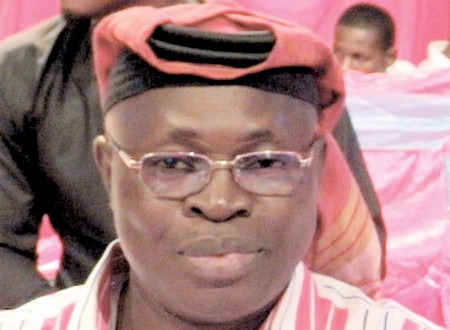

By Fatima Saka
A public affairs analyst, Dr. Ephriam Attah, has urged the Economic and Financial Crimes Commission (EFCC) to prioritise verifiable evidence over media narratives in handling corruption cases, stressing that prosecutions must be built on facts capable of withstanding judicial scrutiny.
Attah made the call on Wednesday while speaking with journalists in reaction to reports that former Minister of Petroleum Resources, Diezani Alison-Madueke, was acquitted of bribery charges by a United Kingdom court.
He said the outcome of the case highlights the need for anti-corruption agencies to conduct thorough and evidence-based investigations before initiating prosecutions.
According to him, allegations alone should not be treated as proof of guilt, warning that public opinion and media coverage must not replace due legal process.
“The fight against corruption is necessary, but it must always be anchored on facts, due process and the rule of law. Media narratives cannot replace evidence before a competent court,” Attah said.
He referenced reports that Alison-Madueke was cleared of six bribery-related charges at the Southwark Crown Court following a trial prosecuted by the UK’s National Crime Agency (NCA).
Attah noted that the development should serve as a lesson for Nigerian anti-graft agencies to strengthen the quality of their investigations and ensure that charges brought before the courts are supported by compelling and admissible evidence.
He also raised concerns over the reputational damage often suffered by individuals accused of corruption, even before cases are concluded.
Citing former Nigerian National Petroleum Corporation (NNPC) executive, Bernard Otti, Attah said individuals linked to corruption allegations frequently endure lasting public criticism regardless of the eventual outcome of legal proceedings.
According to him, Otti has remained under scrutiny due to alleged links to the Alison-Madueke administration, despite the need for such allegations to be properly tested through due process.
Attah emphasised that his position was not intended to weaken anti-corruption efforts but to advocate stronger investigative standards rooted in fairness, professionalism and justice.
On Nigeria’s economic reform agenda, the analyst called for greater emphasis on preserving institutional knowledge within public institutions, particularly in strategic sectors such as oil and gas.
He argued that experienced professionals like Otti possess valuable expertise that could support ongoing fiscal and governance reforms.
Attah noted that Otti’s experience as a former NNPC Group Executive Director (Finance and Accounts) exposed him to complex financial operations, including budget management, revenue reconciliation, audit compliance, and oversight of internal control systems.
He said such expertise would be beneficial as the Federal Government pursues reforms aimed at improving transparency, strengthening state-owned enterprises, boosting revenue generation, and enhancing public financial accountability.
“People like Bernard Otti understand how government financial systems work from the inside. His knowledge can help reduce implementation gaps that often undermine well-designed policies and reforms,” he said.
Attah further stressed that countries implementing difficult economic reforms often rely on seasoned technocrats to ensure institutional continuity, mentor younger professionals, and provide advisory support on complex governance issues.
He, however, observed that Nigeria lacks a structured framework for engaging retired senior public finance experts whose knowledge could support policy implementation without compromising accountability.
According to him, the challenge is not about promoting individuals but about preventing the loss of decades of institutional experience after retirement.
He warned that frequent leadership changes and administrative restructuring have weakened institutional memory across public institutions, thereby complicating reform implementation.
Attah recommended the establishment of advisory councils, reform committees, and fiscal governance panels to harness the expertise of experienced professionals while allowing younger leaders to emerge.
READ ALSO: Expert Urges Nigerians to Invest for Wealth Growth
FG Moves to End Catastrophic Health Costs in Nigeria
“Nigeria’s economic reform agenda will succeed not only because of new policies but because institutions have the capacity to implement and sustain those policies.
“That requires a combination of innovation, accountability and experienced professionals who understand the systems from within,” he said.
About The Author