By Ndudirim Sylvia Iloka
Media professionals from across Nigeria have called for stronger commitment to responsible journalism as a tool for bridging divisions and rebuilding public trust, during a two-day workshop in Abuja focused on social cohesion and ethical reporting.
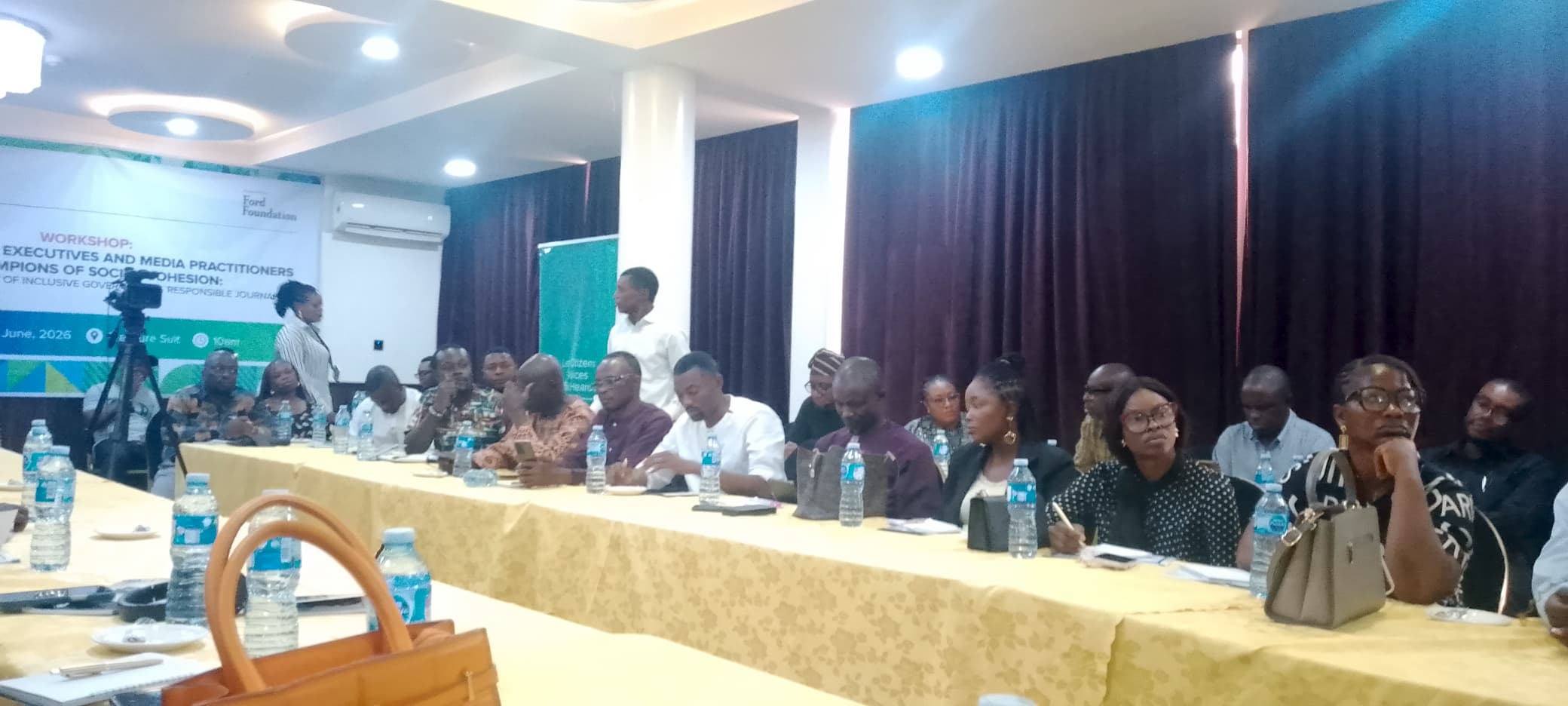
The training, themed Equipping Media Practitioners as Champions of Social Cohesion Towards the Promotion of Responsible Journalism, was organised by the Africa Polling Institute (API) with support from the Ford Foundation.
Held at the Treasure Suites and Conference Centre, the workshop brought together journalists, editors, broadcasters, communication experts, public information officers, social media influencers, and on-air personalities for discussions on the role of the media in shaping national unity and public understanding.
Participants examined how media narratives influence public perception, governance, and social relations, with sessions focusing on data-driven journalism, fact-checking, ethical storytelling, and conflict-sensitive reporting. Facilitators stressed the need for accuracy and context in reporting, particularly in a media space shaped by speed and misinformation.
Drawing from findings of the Nigeria Social Cohesion Survey, discussions explored how trust in institutions, governance, and community relations intersect, and how evidence-based reporting can strengthen national stability.
Executive Director of the Africa Polling Institute, Prof. Bell Ihua, said Nigeria’s diversity should be seen as a national asset, adding that deeper use of research data can help journalists produce more balanced and grounded reports.
Participants also reflected on the pressures of fast-paced news reporting and the spread of misinformation, agreeing that accuracy and fairness must remain central in editorial decisions. They noted the challenges of securing responses from public officials but maintained that balanced reporting remains a core professional duty.
A key focus of the workshop was the growing place of constructive journalism alongside investigative reporting. Participants agreed that while accountability remains essential, the media also has a role in highlighting solutions, community efforts, and positive development stories.
API Board Member, Mr. Olusoji Adeniyi, urged journalists to avoid stereotypes and ethnic profiling in reporting crime or social issues, stressing the need to focus on facts and individual responsibility.
Other facilitators, including Dr. Helen Emore and Dr. Obiora Chukwumba, emphasized ethical reporting, responsible language use, and conflict-sensitive storytelling, warning that careless framing can deepen social tensions.
Sessions on fact-checking and verification exposed participants to practical tools for identifying misinformation and strengthening credibility in news reporting. Facilitators noted that verification has become a central requirement in modern journalism.
Director of Special Duties and Head of Multimedia at the News Agency of Nigeria, Mr. Ismail Abdulaziz, highlighted the role of data and statistics in strengthening public trust in journalism, saying evidence-based
reporting credibility.
Concerns about journalists’ welfare also featured in the discussions. Chief Executive Officer of Akweya Television, Mr. Odoh Diego, linked the quality of reporting to the wellbeing of media practitioners, calling for better remuneration, insurance, and professional support systems.
READ ALSO: Tinubu Extends Tenure of Customs CG Adeniyi by Six Months
He also encouraged journalists to broaden their skills beyond traditional reporting into areas such as research, policy analysis, and communication consulting.
The workshop closed with participants receiving certificates of participation after two days of intensive sessions on social cohesion, ethical practice, and responsible journalism.
About The Author