
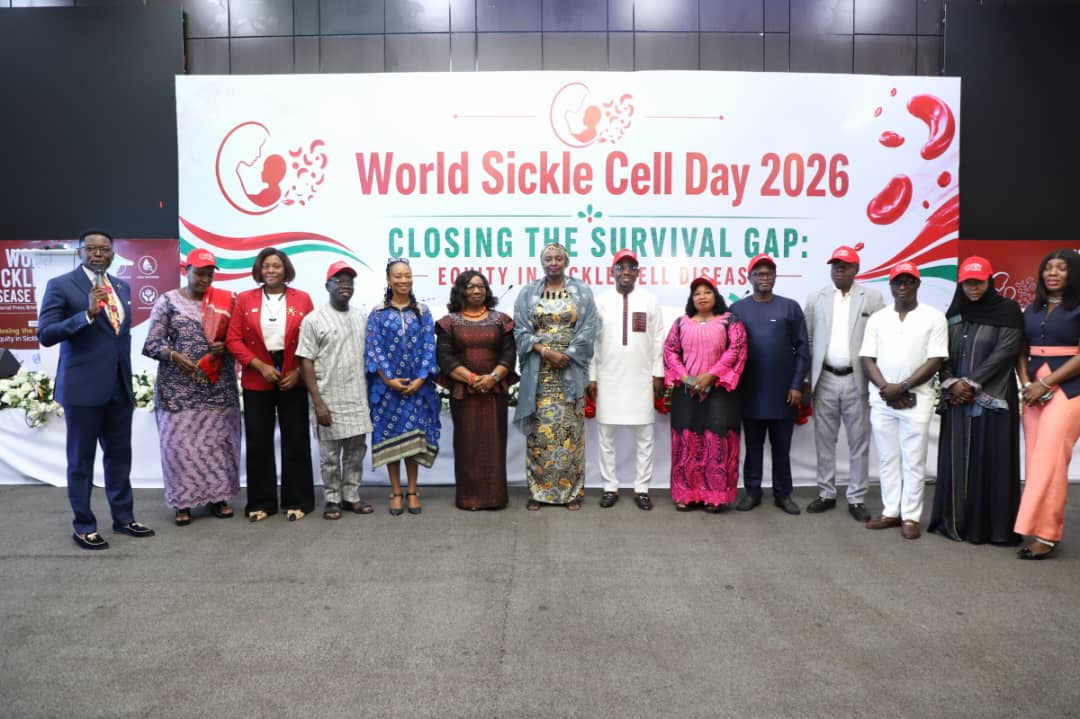
Abuja — The Federal Government has intensified efforts to tackle Nigeria’s sickle cell disease (SCD) burden by expanding nationwide access to screening, diagnosis, and treatment, with a focus on reaching underserved and vulnerable populations.
The Coordinating Minister of Health and Social Welfare, Professor Muhammad Ali Pate, stated this during the 2026 World Sickle Cell Day press briefing in Abuja, reaffirming the administration’s commitment to closing the survival gap and improving health outcomes for Nigerians living with the condition.
Represented by the Permanent Secretary, Daju Kachollom, the minister described sickle cell disease as a critical public health concern, noting that Nigeria accounts for the highest global burden, with approximately 25 percent of the adult population carrying the gene and about 100,000 infant deaths recorded annually due to related complications.
He stressed that disparities in access to early diagnosis and comprehensive care continue to drive preventable deaths, particularly in rural and low-income communities.
Pate said the government is addressing these gaps through the Nigeria Health Sector Renewal Investment Initiative (NHSRII), aligned with President Bola Ahmed Tinubu’s Renewed Hope Agenda, which prioritises equitable healthcare access, financial protection, and improved service delivery.
Among key interventions is the ongoing implementation of the Universal Newborn Screening Policy for sickle cell disease in Lagos, Kano, and the Federal Capital Territory, supported by development partners. Plans are underway to scale the programme nationwide to ensure early detection and prompt management.
The minister also announced the establishment of six Centres of Excellence across Nigeria’s geopolitical zones, equipped with advanced diagnostic technologies, including High-Performance Liquid Chromatography (HPLC) machines, to strengthen screening and treatment capacity.
He noted that updated national guidelines now promote the use of evidence-based therapies such as Hydroxyurea, while healthcare workers are being trained across the country to improve service delivery at the primary healthcare level.
In addition, the government has adopted Sicklescan, a rapid and cost-effective point-of-care testing technology, to expand access to screening services, particularly in resource-limited settings.
Pate further disclosed that sickle cell services are being integrated into primary healthcare systems and the Nigeria Package of Essential Non-Communicable Disease Interventions (Nigeria-PEN), ensuring that communities have access to counselling, screening, referral, and treatment services.
He added that discussions are ongoing with the National Health Insurance Authority (NHIA) to include newborn screening and subsidised treatment, including Hydroxyurea therapy, in the national health insurance package.
Calling for collective action, the minister urged Nigerians to know their genotype, seek genetic counselling before marriage, and support individuals living with sickle cell disease, while working to eliminate stigma and discrimination.
In his welcome remarks, the Director of Public Health, Dr. Charles Nzelu, highlighted the severity of the disease, noting that only about half of affected children survive beyond the age of five.
Also speaking, Professor Obiageli Nnodu revealed that more than 38,000 newborns have been screened in the FCT, with a national registry documenting over 10,000 patients, while over 700 genetic counsellors have been trained nationwide.
She said ongoing collaborations between government, researchers, and partners are strengthening Nigeria’s capacity in sickle cell research, screening, and treatment.
READ ALSO: Malnutrition, Drug Abuse Driving Insecurity, NUJ, IPI Urges Dialogue with Government
FG Moves to Sustain Zero Ebola Cases, Sets Sights on Leading Africa in Epidemic Preparedness
Stakeholders, including development partners and private sector organisations, pledged continued support for government initiatives aimed at reducing the burden of the disease and improving survival outcomes.
The Federal Government reiterated its resolve to build a health system that ensures every Nigerian living with sickle cell disease has access to timely, affordable, and quality care.
About The Author