By Fatima Saka
The Federal Government has called for stronger global collaboration to address development financing gaps in Nigeria and other emerging economies, as part of efforts to drive sustainable economic growth.
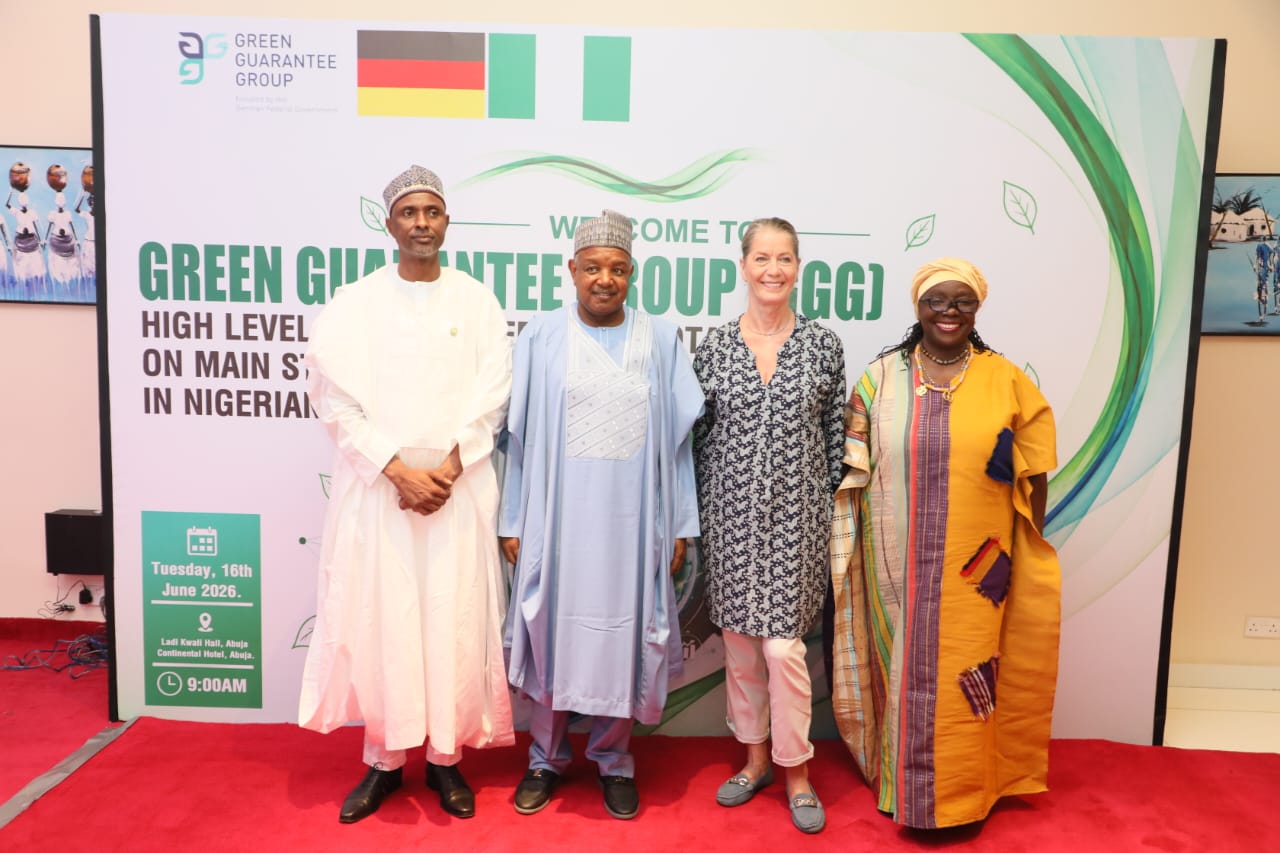
The Minister of Solid Minerals Development, Dr. Dele Alake, made the call on Tuesday while speaking virtually at the Green Guarantee Group (GGG) High-Level Stakeholders’ Roundtable on Mainstreaming Financial Guarantees in Nigeria, held in Abuja.
Alake emphasized that partnerships among governments, development institutions, private investors, and international stakeholders are critical to unlocking investments in green development, supporting small and medium-scale enterprises (SMEs), and accelerating economic transformation.
He stressed the need for innovative funding mechanisms that can reduce investment risks and promote long-term financing across key sectors such as renewable energy, mining, agriculture, infrastructure, and climate-resilient industries.
“To de-risk investments, mobilise private sector funding and enhance economic transformation and climate adaptation efforts, guarantee instruments are inevitable tools,” the minister said.
He added that while Nigeria is pursuing policies that encourage climate action and participation in global value chains, many viable projects still struggle to attract capital due to market uncertainties.
“Realising this vision requires substantial investment. Despite financing constraints, many viable projects struggle to attract capital due to concerns around market uncertainty. This is where guarantee instruments and innovative risk-sharing mechanisms become crucial,” he noted.
Alake further highlighted the importance of financing for Micro, Small, and Medium-Scale Enterprises (MSMEs), describing them as critical drivers of economic growth, job creation, and innovation.
He said the roundtable provided a strategic platform for policymakers, financial institutions, development partners, and private sector actors to exchange ideas and develop practical solutions to Nigeria’s financing challenges.
In his remarks, the Chair of the Green Guarantee Group, Mr. Lars-Hendrik Röller, said guarantees are globally recognised tools for reducing pricing risks, improving investor confidence, and unlocking private capital for climate and development projects.
Röller underscored the need to shift climate finance discussions from policy debates to practical implementation through coordinated national initiatives and stakeholder engagement. He disclosed that the GGG is working to establish a stronger global guarantee framework to support sustainable investments, particularly in developing countries.
He noted that Nigeria, as Africa’s largest economy and Co-Chair of the GGG, is strategically positioned to lead efforts in developing practical financing solutions for green industrialisation.
Also speaking, the Co-Chair of GGG and Permanent Secretary of the Ministry of Solid Minerals Development, Engr. Faruk Yabo, outlined three key objectives of the roundtable. These include building a shared understanding of guarantee instruments, assessing Nigeria’s existing financing architecture, and testing solutions against real investment opportunities.
Yabo said Nigeria already has institutions such as InfraCredit, NIRSAL, the Nigeria Credit Guarantee Company, the Nigeria Sovereign Investment Authority, and the Infrastructure Bank, which provide elements of the required guarantee framework.
He explained that the GGG was established to address the persistent gap between available global capital and the limited funding reaching viable projects in developing markets like Nigeria.
“Guarantees help bridge the gap between institutional investors seeking safe returns and development projects that are viable but perceived as risky,” he said.
The Permanent Secretary added that Nigeria’s role as Co-Chair of the GGG reflects both its significant investment needs and its potential to serve as a testing ground for innovative financing instruments.
The Ambassador of Germany to Nigeria and ECOWAS, Ms. Annett Günther, highlighted the importance of African-European partnerships in tackling climate and development challenges, noting that guarantees can mobilise up to six times more private financing than traditional instruments.
She reaffirmed Germany’s commitment to supporting Nigeria’s climate finance architecture through strategic partnerships aimed at boosting investment mobilisation.
Minister of Budget and Economic Planning, Sen. Abubakar Bagudu, described the roundtable as significant in advancing discussions toward achieving the Sustainable Development Goals (SDGs), noting that Nigeria is ready to take the conversation to the next level.
Similarly, the Resident Representative of the United Nations Development Programme (UNDP) in Nigeria, Ms. Elsie Attafuah, described guarantees as development accelerators capable of unlocking capital for Nigeria’s energy transition, industrial transformation, and inclusive growth.
“The conversation matters because it can mobilise investment that creates jobs, expands energy access, strengthens infrastructure, and accelerates industrialisation,” she said.
On his part, the President of the Africa Finance Corporation (AFC), Mr. Samaila Zubairu, represented by Dr. Musa Salwara, said Africa’s challenge is not lack of opportunities but limited bankable projects.
Stranded Nigerians in South Africa: NUSA Urges Tinubu to Intervene Over Delayed Repatriation
He stressed the need to strengthen project pipelines, enhance institutional capacity, and foster regional and global partnerships, adding that AFC is ready to support Nigeria in moving from ideas to actionable investments.
The roundtable also featured panel discussions and technical sessions on data transparency, low-cost capital mobilisation, local currency financing, regulatory frameworks, and investment pipeline development across key sectors.
About The Author