By Fatima Saka
The Nigeria Centre for Disease Control and Prevention (NCDC) has mobilised infection prevention experts and media professionals to strengthen Ebola preparedness, improve early detection and prevent infections in healthcare facilities as Nigeria intensifies efforts to contain the disease.
The initiative will involve trained infection prevention and control (IPC) professionals and media fellows working together to identify preparedness gaps, improve public awareness and ensure healthcare workers and communities receive timely, accurate information about Ebola prevention.
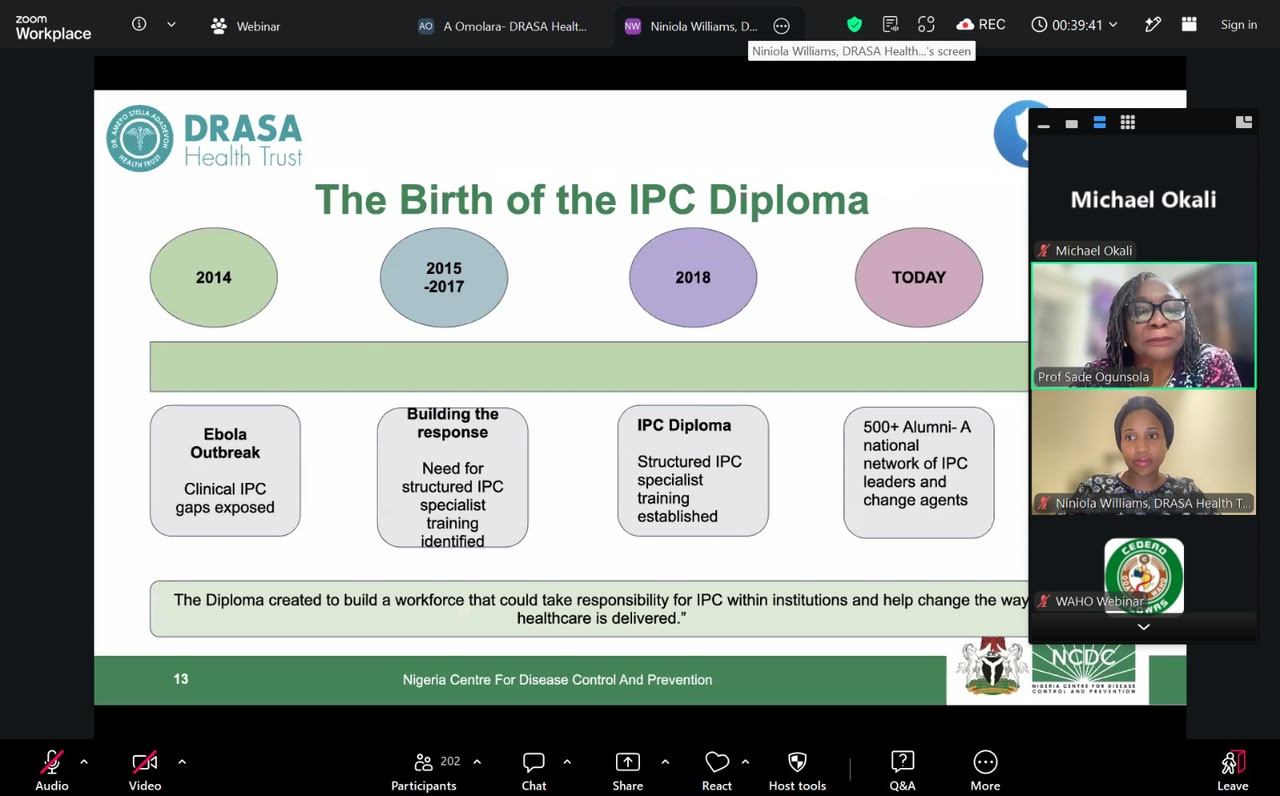
The Director-General of NCDC, Dr Jide Idris, made the call on Friday during the virtual IPC Alumni Assembly, organised under the theme, “One Network, Many Actions.”
Idris, represented by Dr Tochi Okwor, Head of Disease Prevention and Health Promotion at NCDC, urged trained professionals to deploy their expertise to prevent infections and strengthen facility-level preparedness before suspected cases arrive.
“We want active containment. We don’t want to be passive at all. We want to go at it with all that we have,” he said.
The assembly was supported by DRASA Health Trust, the Centre for Infection Control and Patient Safety (CICAPS), and the Media Epidemiology, Infodemiology and Social Behaviour Change/Risk Communication Fellowship (MEDIA-EIS).
Idris identified Nigeria’s population density, expanding urban centres and high population mobility as factors that could complicate Ebola containment if suspected cases were not promptly identified and managed.
He warned that Ebola symptoms could be mistaken for those of malaria and other common infectious diseases, potentially delaying diagnosis and exposing healthcare workers and patients to infection.
He called on healthcare facilities to strengthen screening and triage, observe standard infection prevention precautions, use personal protective equipment (PPE) according to assessed risks and report suspected cases promptly through established channels.
“Hand hygiene and risk-based PPE are non-negotiable,” he said.
The NCDC director-general also urged IPC professionals to assess gaps in protective equipment, isolation arrangements, environmental cleaning and referral pathways, while working with facility management to address identified weaknesses.
He said the centre planned to engage state commissioners for health and state IPC focal persons to encourage the deployment of trained professionals during the current outbreak and beyond.
According to him, graduates of the Diploma in Infection Prevention and Control (DIPC) programme are included in the NCDC health workforce database, which could support their identification for future engagements and capacity-building activities.
He encouraged the professionals to inform state authorities about their skills and contributions to strengthen health security.
On the Orange Network, which brings together healthcare facilities working towards excellence in infection prevention and control, Idris said applications must be initiated by facility leadership.
He advised medical directors and chief medical directors of interested facilities to write to the NCDC director-general to express their interest and obtain guidance on the application process.
Earlier, the Managing Director of DRASA Health Trust and moderator of the assembly, Ms Niniola Williams, outlined three priority activities for participating healthcare facilities to improve their readiness for Ebola and other infectious disease emergencies.
Williams said the first activity was refresher training on Ebola and IPC, focusing on early recognition, standard precautions, prevention of occupational exposure and immediate reporting procedures.
The second activity would require facilities to establish or strengthen screening and triage arrangements and practise their implementation for five consecutive days.
She said the exercise would enable healthcare facilities to test their procedures, document lessons, identify operational challenges and make necessary improvements.
The third activity would involve assessing facility readiness using an approved checklist based on the national IPC scorecard.
According to her, the assessment would help IPC focal persons identify weaknesses in infection prevention practices, referral procedures, exposure reporting and other critical areas of Ebola preparedness.
Williams urged participants to begin implementing measures that could be achieved with available resources while seeking management support for additional supplies and funding.
She said the facility-level activities were scheduled to begin on October 26, with a review meeting planned for the last week of November to assess progress, challenges and achievements.
She also announced plans to facilitate access to presentation slides and information, education and communication materials through a shared Google Drive, alongside refresher webinars and instructional videos on screening, triage and IPC procedures.
Speaking at the assembly, the Vice-Chancellor of the University of Lagos, Prof. Sade Ogunsola, said the 2014 Ebola outbreak exposed major weaknesses in Nigeria’s infection prevention systems, including inadequate facility-level leadership, insufficiently trained professionals and poor protection for healthcare workers.
Ogunsola, who has worked in IPC since the 1990s, said the outbreak created an opportunity to establish a structured, competency-based training programme that could strengthen infection prevention beyond emergencies.
She recalled that following the outbreak, her team secured support from the United States Centers for Disease Control and Prevention to develop the DIPC curriculum within 18 months.
According to her, the programme was designed to equip healthcare professionals with the skills to assess risks, establish and lead IPC programmes, influence clinical practices and prepare healthcare facilities for future outbreaks.
She stressed that infection prevention must remain a routine responsibility rather than a measure activated only when an outbreak occurs.
“IPC is really about the routine, I would say the boring work we do in healthcare facilities every day, where, like soldiers, you prepare for war in peacetime,” she said.
Ogunsola urged programme alumni to update their knowledge continually, mentor colleagues and strengthen infection prevention practices across primary, secondary and tertiary healthcare facilities.
She said the programme’s success should be measured by its impact on patient safety, healthcare worker protection and the ability of facilities to prevent the transmission of infections.
Meanwhile, Ms Racheal Abujah, a public health correspondent with the News Agency of Nigeria (NAN), called for stronger collaboration between infection prevention professionals and journalists to improve public understanding of Ebola and other public health threats.
Speaking on behalf of MEDIA-EIS, Abujah said IPC professionals possessed the technical knowledge required to guide infection prevention, while journalists could translate that expertise into clear, practical messages that the public could understand and act upon.
She identified four areas for collaboration: simplifying approved IPC guidance for public communication, amplifying expert voices through the media, sharing public concerns with response teams and reporting stories that promote healthcare worker safety.
She also proposed connecting IPC alumni and MEDIA-EIS fellows across states, establishing channels for sharing verified information and organising joint media engagements.
Abujah urged journalists to report the key messages from the assembly to raise awareness, counter misinformation and promote appropriate preventive behaviours.
“IPC protects people in healthcare settings; effective communication helps extend that protection to communities,” she said.
During the question-and-answer session, participants raised concerns about inadequate resources, including insufficient triage stations and handwashing facilities in some healthcare settings.
In response, speakers encouraged IPC professionals to engage facility management, identify immediate priorities and communicate additional resource requirements to the appropriate authorities.
They also emphasised that specialised infection prevention responsibilities should be assigned in line with professionals’ training and competencies.
READ ALSO: Ebola: FG Intensify Measures to Prevent Community Spread
Medical Academy to Induct 13 Researchers, Award ₦10m Gold Medal
The organisers said the campaign’s success would depend on sustained collaboration among healthcare workers, facility managers, government authorities and journalists to improve outbreak preparedness, protect healthcare workers and prevent the spread of infections.
The planned activities are expected to provide participating facilities with an opportunity to assess their readiness, address operational weaknesses and strengthen infection prevention practices before emergencies escalate.
About The Author