……..identifies five pillars for fair taxation as transport operators allege multiple charges, call for harmonised revenue collection
By Fatima Saka
The Chief Executive Officer and Tax Ombud of the Office of the Tax Ombud Nigeria, Dr. John C. Nwabueze, has identified five pillars for protecting taxpayers’ rights and improving Nigeria’s tax administration amid complaints by transport operators and business groups over multiple taxation, unauthorised levies and inadequate accountability.
Nwabueze identified fair taxation, procedural justice, quality service delivery, accountability and protection of vulnerable taxpayers as essential principles for ensuring that revenue collection is conducted transparently without compromising taxpayers’ rights and dignity.
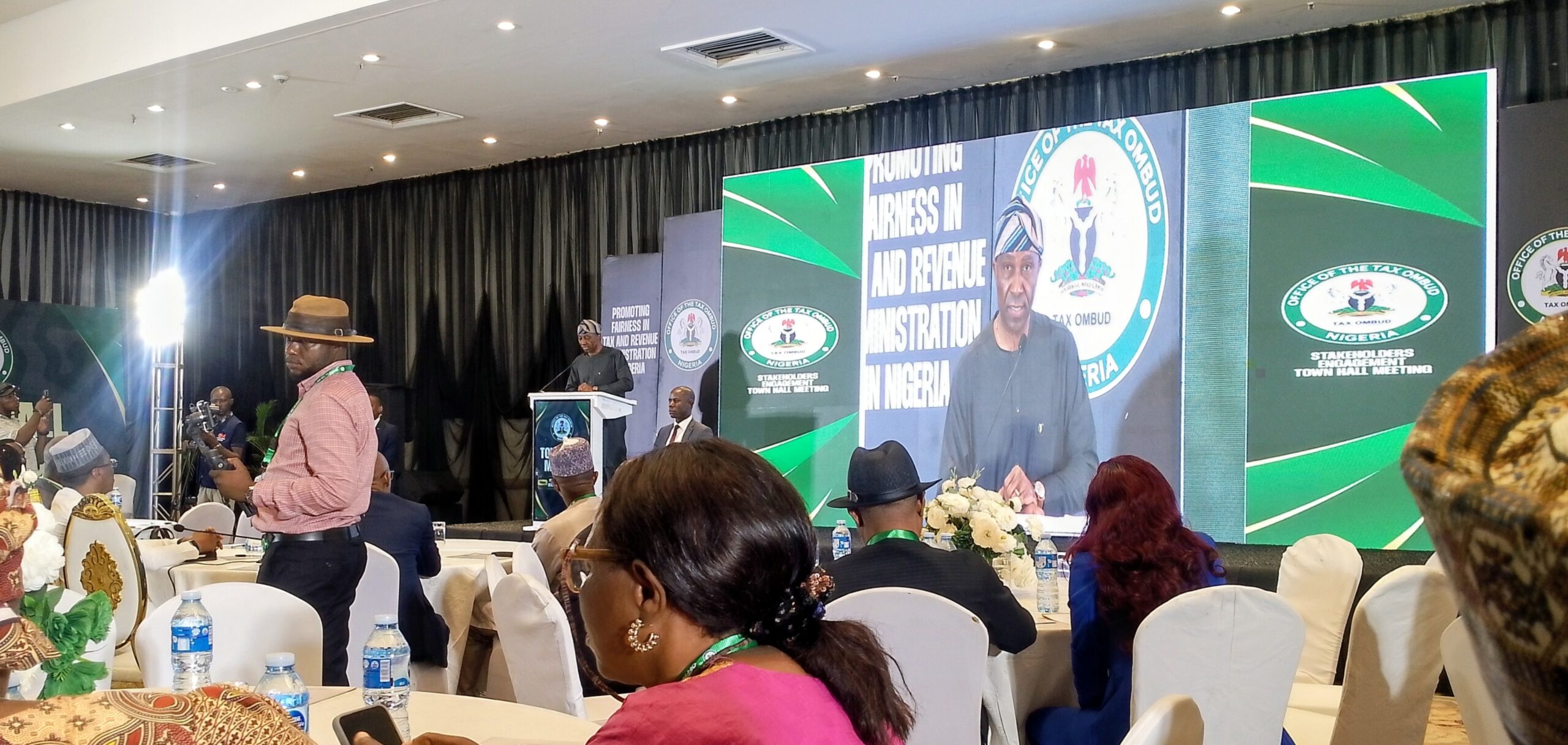
He spoke at a stakeholders’ town hall meeting organised by the Office of the Tax Ombud in Abuja, where representatives of business associations, professional bodies, market leaders, traders and transport operators called for greater transparency, coordinated revenue collection and practical solutions to longstanding tax-related challenges.
The Tax Ombud described the establishment of the office as an important milestone in protecting taxpayers’ rights and strengthening accountability in tax administration.
He explained that the office provides an independent and impartial avenue for receiving complaints, addressing administrative disputes, identifying systemic weaknesses and recommending corrective measures to relevant institutions.
According to him, the office is neither an adversary of tax authorities nor a replacement for existing tax institutions, but a bridge between taxpayers and revenue authorities.
He said its responsibility was to promote lawful, transparent, traceable and fair administrative processes while encouraging constructive dialogue between taxpayers and the institutions responsible for collecting revenue.
Outlining the office’s priorities, Nwabueze said the five pillars were designed to ensure that revenue mobilisation did not undermine taxpayers’ rights or dignity.
On fair taxation, he said tax obligations must be applied consistently and proportionately, while exemptions and reliefs provided by law, particularly those available to eligible small businesses, must be properly communicated and respected.
He warned against imposing unlawful or excessive administrative burdens on taxpayers, stressing that people should understand what they were required to pay and the legal basis for such payments.
On procedural justice, he said taxpayers must have a fair opportunity to present their concerns and receive appropriate responses to their complaints.
He added that administrative decisions must be transparent, procedures consistent and complaint-resolution mechanisms accessible to those seeking redress.
Addressing service delivery, Nwabueze said interactions between tax officials and taxpayers should be guided by professionalism, courtesy and respect.
He disclosed that the office was advancing a Taxpayer Charter intended to explain taxpayers’ rights and responsibilities in accessible languages, including English, Hausa, Igbo, Yoruba and Nigerian Pidgin.
According to him, the initiative would help improve public understanding of tax obligations and ensure that language barriers did not prevent people from accessing essential information.
On accountability, he said administrative decisions must be properly explained, procedures clearly communicated and recurring weaknesses addressed to strengthen institutional credibility.
The fifth pillar, protection of vulnerable taxpayers, focuses on helping small businesses, individual taxpayers and people facing barriers to information or administrative services understand and fulfil their tax obligations without unnecessary difficulty.
He clarified that protecting vulnerable taxpayers did not exempt them from lawful obligations but ensured that those obligations were communicated and administered fairly.
Nwabueze disclosed that the Office of the Tax Ombud had made progress in developing governance structures, complaint-handling procedures, a digital complaint-management framework, stakeholder partnerships, taxpayer education initiatives and dedicated call centres.
He said the office would focus on expanding these initiatives, strengthening its operational capacity and ensuring that taxpayers knew where to turn when they experienced administrative difficulties.
He emphasised that the office would remain impartial in handling complaints, facilitating fair administrative resolution and recommending improvements where systemic problems were identified.
The Tax Ombud urged revenue authorities to apply tax laws consistently, communicate obligations clearly and treat taxpayers with dignity.
He also encouraged taxpayers to fulfil their lawful obligations and use established channels to report genuine grievances.
He called on professional bodies, private-sector organisations, civil society groups and the media to support public awareness and constructive engagement on tax administration.
At the meeting, a representative of the National Union of Road Transport Workers (NURTW) called for harmonisation among revenue authorities, alleging that transport operators were subjected to multiple taxes and levies by different authorities and revenue collectors.
The representative, identified in the supplied material as S. A. Danzaki, Senior Special Assistant to the President of the NURTW, said transport operators frequently made several payments during their journeys without receiving clear explanations of the legal basis or purpose of some of the charges.
He maintained that transport workers were not opposed to paying taxes but wanted a transparent and coordinated system that eliminated duplication and ensured accountability.
Citing the example of a trailer travelling from Taraba State to Kano, he claimed that the vehicle could pay more than ₦350,000 in taxes and related charges.
He questioned the justification for such cumulative payments, arguing that transport operators often struggled to determine which authorities were legally entitled to collect particular levies.
The NURTW representative called for stronger collaboration among relevant authorities to establish a coordinated revenue collection system and reduce the financial burden on transport businesses.
He also urged the Office of the Tax Ombud to engage transport unions through seminars, consultations and sensitisation programmes to improve awareness of tax obligations and complaint-resolution procedures.
According to him, the cost of multiple taxation ultimately affects ordinary Nigerians because transport expenses influence the prices of goods and services and the cost of travelling to workplaces, schools and hospitals.
He further called for greater accountability in the collection and use of transport-related revenue, particularly funds intended for road maintenance and infrastructure.
Also speaking, Paul Bamba, Head of Finance and Accounts at Abuja Management Limited, representing the company’s Managing Director, Mr. Onyia Ocheji, commended the Office of the Tax Ombud for convening the stakeholders’ meeting.
Bamba said the success of Nigeria’s tax reforms would depend not only on what the law prescribed but also on how effectively fairness, transparency and accountability were reflected in taxpayers’ daily experiences.
He warned that unclear procedures, poor record-keeping, improper assessments and the activities of unauthorised revenue agents could erode public trust and weaken voluntary compliance.
He identified certainty, transparency and access to redress as essential elements of an effective revenue administration system.
According to him, taxpayers should know what they are required to pay, why they are paying it and whether their payments have been properly documented and receipted.
Bamba pledged Abuja Management Limited’s support for efforts to sensitise market leaders and traders about their rights and obligations, including the channels available for lodging complaints with the Office of the Tax Ombud.
He also promised to support collaboration with relevant revenue authorities to address multiple taxation and eliminate unauthorised levies within markets.
He said the company was prepared to bring the practical concerns of the market community to the attention of the office.
Bamba added that taxpayers were often less resistant to paying taxes than to perceived unfairness, uncertainty and the absence of visible accountability.
He said a revenue system that listened to taxpayers, explained its procedures and treated people fairly was more likely to achieve voluntary compliance at a lower administrative cost.
A representative of NASIMA also called for practical outcomes from the engagement, warning that stakeholders could become disappointed if discussions failed to produce meaningful improvements in tax administration.
The representative said the association had more than 75 city chapters across Nigeria and over 20 affiliated bilateral and professional entities. He also described NASIMA as a member of the International Chamber of Commerce.
He said the association’s broad membership enabled it to understand the challenges confronting businesses of different sizes and economic capacities.
The representative urged stakeholders to ensure that the issues raised at the town hall translated into tangible benefits for traders and business operators.
He stressed the need for a comprehensive approach to taxation, arguing that sustained engagement was essential to resolving the challenges affecting businesses across the country.
Another stakeholder also commended the organisers for providing a platform to discuss longstanding taxation challenges, describing the meeting as timely and necessary for developing coordinated solutions.
In his concluding remarks, Nwabueze said a fair tax system would encourage voluntary compliance, reduce avoidable disputes and create a more predictable environment for investment and economic growth.
He stressed that the success of Nigeria’s tax reform agenda would depend on ensuring that fairness and accountability were not merely stated in legislation but reflected in the everyday administration of tax laws.
READ ALSO: MURIC Petitions Oyo Police Over 2019 Mosque Murder, Demands Prosecution
MURIC Petitions Oyo Police Over 2019 Mosque Murder, Demands Prosecution
He urged stakeholders to work together towards a system characterised by fair rules, transparent processes, accountable decisions and respect for taxpayers’ rights.
The meeting ended with calls for sustained collaboration among the Office of the Tax Ombud, revenue authorities, business associations, market leaders, transport operators and other stakeholders to improve tax administration and strengthen public confidence in the tax system.
About The Author