……Launches Five-Year National Strategic Plan
By Fatima Saka
The Federal Government and key stakeholders have intensified efforts to eliminate lead poisoning in Nigeria, where an estimated 80 million children are exposed to the toxic substance, with the launch of a five-year strategic plan to strengthen prevention, surveillance and environmental health protection.
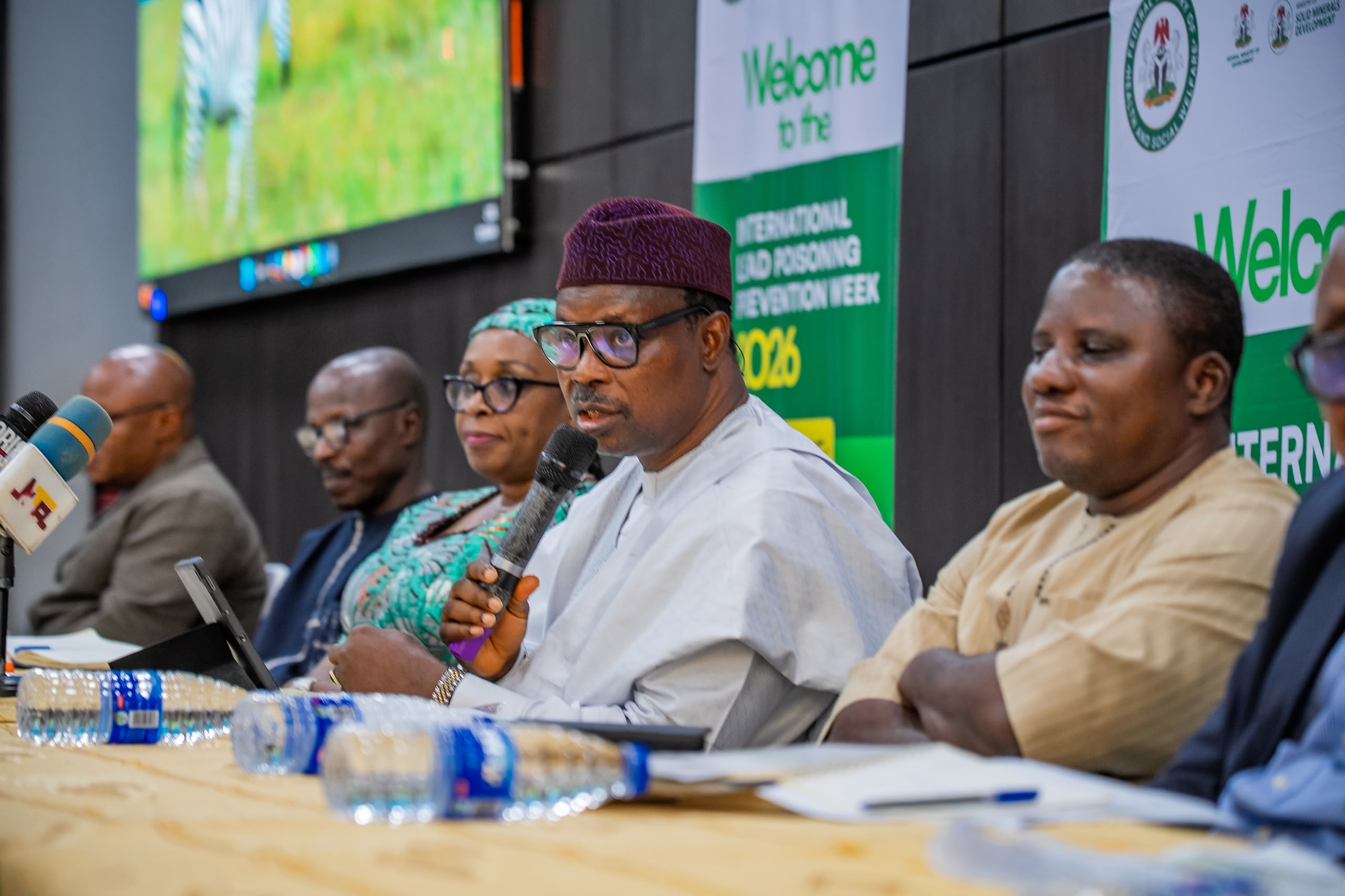
The Minister of State for Health and Social Welfare, Dr Iziaq Adekunle Salako, disclosed this on Wednesday in Abuja during the commemoration of the 2026 International Lead Poisoning Prevention Week, themed “From Detection to Prevention.”
Salako said the government was shifting its approach from detecting and responding to lead exposure to preventing contamination at its source through stronger surveillance, regulation, enforcement and coordinated interventions across relevant sectors.
He described lead poisoning as a major public health and environmental challenge, warning that exposure could damage multiple body systems, particularly among children, women of childbearing age and pregnant women. He noted that affected individuals might not show immediate symptoms, making prevention, early detection and timely intervention essential.
The minister said the Federal Government had strengthened its response through the establishment and operationalisation of the Inter-Agency Working Group on Lead Poisoning Prevention and Elimination, which brings together relevant ministries, departments and agencies (MDAs), development partners and other stakeholders.
According to him, the initiative provides a platform for coordinating interventions, reviewing emerging evidence and identifying priorities for tackling lead contamination from mining, industrial activities, consumer products and other sources.
Salako said experiences in Lagos, Ogun, Sokoto and Zamfara states had demonstrated the different pathways of lead exposure and the need for interventions tailored to local environmental and occupational risks.
He cited environmental investigations, blood lead level assessments and children’s environmental health studies in Lagos as important evidence for developing a state-specific prevention and control action plan.
He also highlighted the experience in Ogijo, Ogun State, stressing the need for stronger environmental and occupational safeguards, safer battery recycling practices, effective regulatory oversight and sustained compliance monitoring.
The minister said Nigeria could not eliminate lead poisoning through medical treatment alone, emphasising that identifying and controlling sources of exposure remained central to prevention.
“Detection remains important, but the ultimate objective must be to identify the sources and pathways of exposure and take decisive action to eliminate or control them,” he said.
He identified environmental surveillance of soil, dust, water and industrial emissions, alongside monitoring of potentially contaminated products and commodities, as critical components of the national prevention strategy.
Salako added that the government would strengthen occupational surveillance, laboratory testing capacity and the integration of available information into a national lead exposure surveillance and data-for-action system.
He also called for improved regulatory compliance and enforcement, including stronger testing capacity at points of entry and the development of appropriate standards where existing regulations were inadequate.
The minister stressed that detecting elevated blood lead levels must trigger a coordinated response involving clinical assessment, environmental investigation, risk reduction, referral and appropriate follow-up care.
He described the launch and dissemination of the Five-Year Strategic Plan on Lead Poisoning Elimination in Nigeria as a major milestone in the country’s efforts to address the problem through coordinated national action.
According to him, the plan, developed with relevant MDAs, provides a framework for strengthening surveillance, tackling environmental and occupational sources of exposure and promoting accountability across sectors.
He disclosed that a costed three-year national roadmap was being developed to translate the strategic plan into prioritised, time-bound and measurable interventions.
Salako urged state governments, development partners, industries, civil society organisations and communities to adopt and implement the plan, stressing that it must become a practical instrument for action rather than remain a policy document.
He identified the development of state-specific lead prevention and control action plans for Lagos, Ogun, Zamfara and Sokoto as a priority, explaining that the plans would address the specific sources and pathways of exposure in each state while aligning with the national framework.
The minister also called on traditional and religious leaders, researchers, professional bodies, the media and community-based organisations to intensify public awareness and promote safer practices.
He urged Nigerians to guard against potential sources of lead exposure, including lead-based paint dust, contaminated soil, unsafe water pipes, lead-glazed pottery, toys, cosmetics and some traditional remedies.
Salako advised workers involved in construction, painting and recycling to use protective clothing and prevent contaminated work clothes and footwear from being brought into their homes.
Other preventive measures he recommended included regular handwashing, washing children’s toys, wet-wiping floors and play areas instead of dry sweeping, and keeping children and pregnant women away from potentially contaminated industrial and battery recycling sites.
He added that diets rich in calcium, iron and vitamin C could help reduce the body’s absorption of lead, while emphasising that eliminating exposure remained the primary objective.
Meanwhile, representatives of government ministries, regulatory agencies and development partners pledged to strengthen collaboration towards eliminating lead contamination in Nigeria.
A representative of the Federal Ministry of Environment, Iku Nsatu Ikanil, reaffirmed the ministry’s commitment to working with other stakeholders to address lead exposure across mining, industrial operations and consumer products.
Ikanil said the ministry had participated in developing the national strategic framework and would continue to collaborate with relevant institutions and partners to eliminate lead poisoning.
The Federal Ministry of Agriculture and Food Security also pledged to promote responsible agrochemical management and plant health practices to prevent contamination of soil, crops and food.
Similarly, a representative of the Federal Ministry of Solid Minerals Development, Chike Ajaero, said the ministry was implementing interventions to improve safety in artisanal and small-scale mining communities.
He listed safer and sustainable mining programmes, the formalisation of informal mining operations, the provision of personal protective equipment to artisanal miners and capacity-building on sustainable mining practices among the measures being pursued.
Ajaero reaffirmed the ministry’s commitment to reducing lead contamination associated with mining activities.
The National Agency for Food and Drug Administration and Control (NAFDAC) also pledged to strengthen regulatory oversight to prevent lead-contaminated products from entering the supply chain.
A representative of the agency said collaboration with relevant stakeholders would remain essential to controlling lead poisoning and protecting consumers.
The National Environmental Standards and Regulations Enforcement Agency (NESREA) said it would continue to enforce environmental laws and standards through inspections, action against non-compliant facilities and implementation of regulations governing battery recycling and other activities associated with lead pollution.
The Nigeria Centre for Disease Control and Prevention (NCDC) reaffirmed its commitment to detecting and responding to lead poisoning incidents, noting that it had participated in the response to the 2010 lead poisoning outbreak in Zamfara State.
The Standards Organisation of Nigeria (SON) also disclosed that it had reviewed standards to establish permissible lead levels in products and was conducting tests to monitor compliance.
A representative of SON said the organisation had engaged paint manufacturers and provided training on reformulating paint to reduce the use of lead-containing raw materials.
The representative explained that the agency was working with manufacturers to promote compliance while encouraging the development and adoption of safer alternatives that protect public health and the environment.
Development partners also pledged continued support for Nigeria’s efforts to prevent lead exposure, strengthen surveillance and protect vulnerable populations.
Speaking on behalf of Resolve to Save Lives, the organisation’s Principal Adviser in Nigeria, Mrs Okeoma Obasi, commended the Federal Ministry of Health and Social Welfare for making lead poisoning elimination a national public health priority.
Obasi said the theme of the 2026 commemoration reinforced the need to move beyond identifying lead exposure to preventing it.
She said Resolve to Save Lives had supported efforts to strengthen surveillance systems, build laboratory testing capacity, generate evidence on sources of lead exposure, support policy development and promote public awareness.
According to her, prevention remained the most effective and cost-effective strategy for protecting children from lead poisoning.
She reaffirmed the organisation’s commitment to working with the Federal Ministries of Health and Social Welfare and Environment, regulatory agencies, academic institutions, civil society organisations and development partners to accelerate progress towards a Nigeria free from the devastating effects of lead poisoning.
The Federal Ministry of Water Resources also called for stronger multisectoral action, warning that lead exposure remained a serious public health threat requiring coordinated interventions across government institutions.
A representative of the ministry, speaking on behalf of the Minister of Water Resources, Professor Joseph Utsev, said reports of lead poisoning outbreaks in some states had reinforced the urgency of moving from detection to prevention.
The representative identified artisanal and small-scale mining, unsafe handling of lead-containing materials, batteries, consumer products and poor environmental management as major sources of concern.
The ministry stressed that addressing these risks required coordinated responses involving public health authorities, environmental regulators, mining agencies and other relevant institutions.
It identified stronger environmental surveillance, screening of at-risk populations and community-based reporting as important measures for early detection.
The ministry also called for stricter enforcement of regulations governing lead in consumer products, safer mining practices, remediation of contaminated sites and compliance with environmental standards.
It urged stakeholders to move from dialogue to decisive action by sharing best practices, aligning policies and strengthening national prevention and response systems.
The ministry said the ultimate objective should be to ensure that no Nigerian child suffers from preventable lead poisoning.
Salako reiterated the Federal Ministry of Health and Social Welfare’s commitment to providing leadership and working with relevant partners to establish a comprehensive and sustainable approach to lead poisoning prevention.
READ ALSO: NBTI Targets One Million Small Businesses for Solar Power
Breaking: Court Dismisses Suit Challenging Victor Umeh’s NDC Candidacy for Anambra Central
He urged stakeholders to use the International Lead Poisoning Prevention Week to translate public awareness into concrete action, strengthen institutional capacity and ensure the full implementation of the national strategic plan.
The minister stressed that protecting children, safeguarding communities and eliminating avoidable lead exposure required sustained government commitment and collective responsibility across all sectors.
About The Author