By Fatima Saka
The Chairman/CEO of the Nigerians in Diaspora Commission (NiDCOM), Hon. Abike Dabiri-Erewa, has called for a united global front among Muslim diaspora communities to tackle discrimination, hate speech and other challenges confronting migrants.
Dabiri-Erewa made the call while representing Nigeria at the First Muslim Diaspora Forum in Ankara, Türkiye, on the theme, “From Roots to Routes,” which attracted ministers, heads of delegations, policymakers and representatives from more than 47 countries.
A statement issued by Abdur-Rahman Balogun (mnipr), Director, Media, Public Relations and Protocols, NiDCOM, said Dabiri-Erewa made the call in her presentation titled “Unity in the Diaspora: Current Needs, Common Solutions.”
The NiDCOM boss stressed the need for stronger international cooperation and coordinated action among Muslim diaspora communities and institutions, particularly in combating discrimination and hate speech.
She said effective diaspora engagement must go beyond remittances to include knowledge and skills transfer, investment, innovation, humanitarian intervention, cultural exchange and stronger links with countries of origin.
Dabiri-Erewa identified public communication, humanitarian initiatives and joint action against discrimination and hate speech as key areas requiring greater collaboration.
She highlighted NiDCOM’s efforts to provide accurate information to Nigerians abroad, promote positive narratives, counter misinformation and support Nigerians affected by crises and vulnerable migrants.
The chairman noted that diaspora contributions extended beyond financial remittances to medical missions, educational projects, philanthropy and other developmental initiatives.
She stressed that migration should not sever the connection between citizens and their countries of origin, saying governments should create opportunities for citizens abroad to remain connected and contribute to national development.
According to her, the shared needs of diaspora communities, including dignity, safety, opportunity and freedom to practise their faith, require common solutions and stronger partnerships.
Dabiri-Erewa said the focus should not be on stopping migration but on keeping the diaspora connected to the motherland and ensuring they continue to give back.
She added that Nigeria would strengthen international cooperation on diaspora affairs and deepen relations with participating states while working with diaspora communities to harness their skills, knowledge, investment, culture and diplomatic influence for development.
The forum was declared open by Türkiye’s Vice President, Cevdet Yılmaz, who urged participants to promote fairness, transparency, inclusion and stronger cooperation in addressing issues affecting diaspora communities.
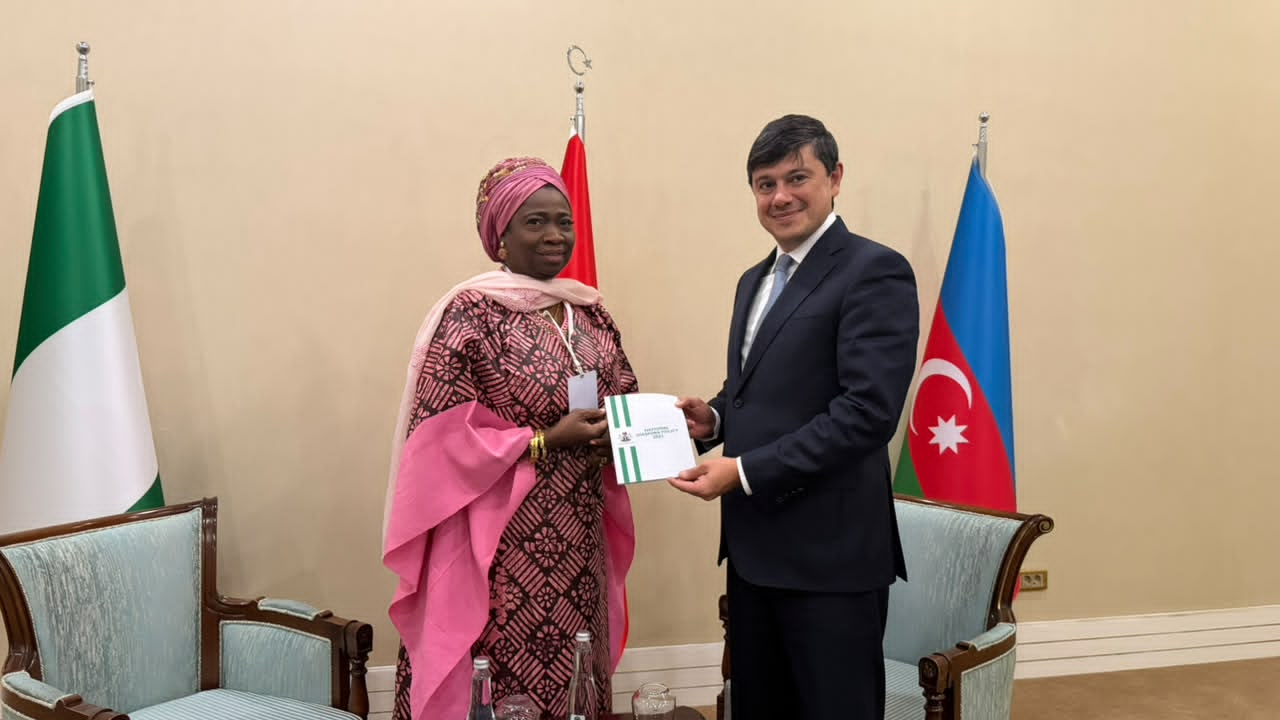
On the sidelines of the forum, Dabiri-Erewa held meetings with Fuad Muradov, Chairman of the State Committee on Diaspora Affairs of Azerbaijan; Sayed Ahmed, who heads Sudan’s diaspora organisation; and Zahra Zumrut, Director-General of SESRIC.
The meetings focused on exchanging experiences, strengthening relationships and exploring areas of cooperation in diaspora affairs and development.
Dabiri-Erewa also held a bilateral meeting with Ahmet Alemdar, Vice President of Türkiye’s Presidency for Turks Abroad and Related Communities (YTB).
The meeting focused on the Memorandum of Understanding between NiDCOM and YTB, with both sides stressing the need to translate the agreement into concrete and impactful programmes.
READ ALSO: Nigerian Govt Secures Amnesty for Thousands in India Prisons, Seeks Fresh Six-Month Window
Vitalux Foundation Reaffirms Commitment to Humanity, Empowerment in Nigeria
The YTB Vice President called for the identification and implementation of specific projects that Nigeria and Türkiye could jointly undertake, particularly in diaspora engagement, knowledge exchange, youth development and bilateral cooperation.
The forum’s communique, which stressed the need to sustain the theme and gains of the summit, was presented by the programme liaison, Ali Fahad, a Turkish-Nigerian.
About The Author