By Fatima Saka
The Federal Government has reaffirmed its commitment to repositioning traditional medicine as an important component of Nigeria’s healthcare system through stronger research, regulation, standardisation, local production and integration with orthodox medicine.
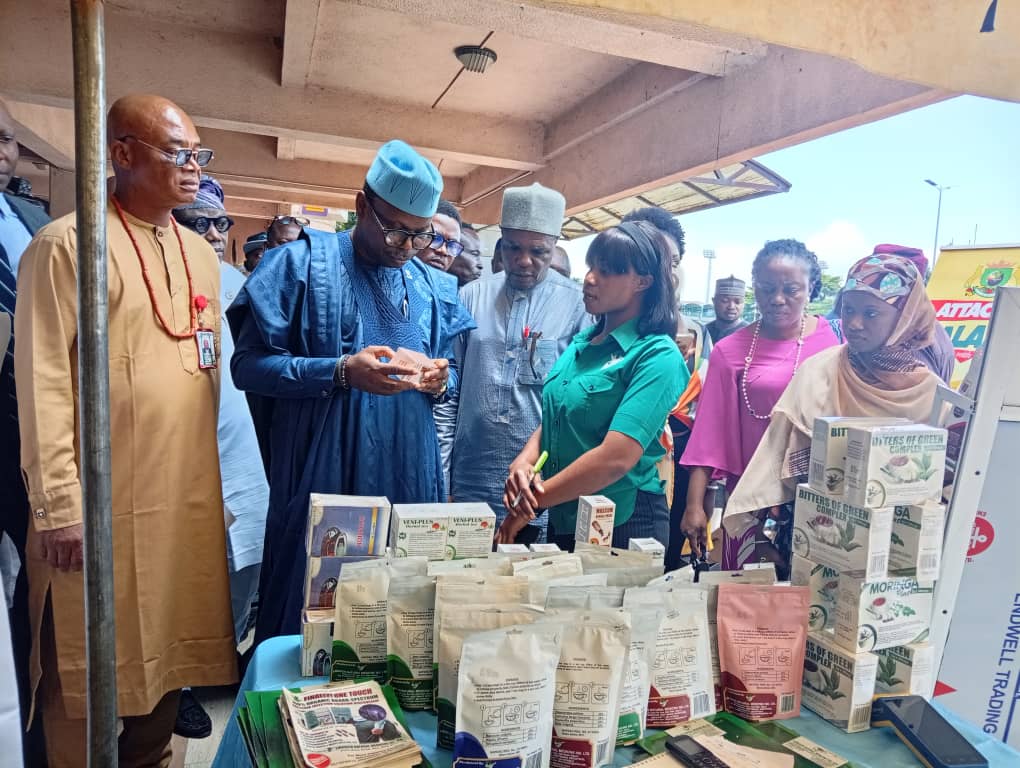
During the Ministerial press briefing, the Minister of State for Health and Social Welfare, Dr. Iziaq Adekunle Salako, stated this in Abuja on Monday at the commemoration of the 2026 African Traditional Medicine Day, organised by the Federal Ministry of Health and Social Welfare.
Salako said the Federal Government was determined to fully harness Nigeria’s rich traditional medicine heritage while ensuring that medicines and practices promoted to the public meet appropriate standards of safety, quality and effectiveness.
He said the size of the 2026 celebration should not be interpreted as a reflection of the importance attached to traditional medicine by the ministry, stressing that the sector remained a priority of the Federal Government.
“I want to assure you that traditional medicine is a priority, and I am therefore going to challenge the department that they have to start planning for next year very early, so that we can have a grander celebration of Traditional Medicine Day in 2027,” he said.
The Minister said the government would intensify efforts in five critical areas: research and evidence generation, regulation and quality assurance, documentation and preservation of indigenous knowledge, promotion of local production and efficiency, and deeper integration with the orthodox health system.
He also promised continued capacity development and expanded regional and international collaboration to strengthen Nigeria’s traditional medicine sector.
Salako recalled his experience as Commissioner for Health in Ogun State, where, according to him, the state was among the pioneers in establishing a traditional medicine board and worked with the National Agency for Food and Drug Administration and Control (NAFDAC) to properly position traditional medicine within the state’s health system.
He said efforts were also being made at the federal level to commercialise Nigeria’s rich phytomedicine resources, noting that a committee had been established for this purpose.
The Minister disclosed that 25 Nigerian participants recently undertook a two-week training programme in China, where policymakers, traditional medicine practitioners, researchers, entrepreneurs and health journalists were exposed to modern approaches to traditional medicine, phytomedicine development and commercialisation.
He said Nigeria also planned to explore similar collaborations with India and other countries with advanced traditional medicine systems.
Salako recalled that Nigeria had a history of pioneering traditional medicinal products, citing a herbal medicine developed in the country for sickle cell disease which he was taught about as a medical student.
He questioned why the country could not develop more medicines from its abundant phytomedicine resources.
FG: Cultural Acceptance Not Enough
The Minister stressed that although traditional medicine had remained an integral part of healthcare-seeking behaviour and cultural heritage across Nigerian communities, cultural acceptance alone could not constitute scientific evidence.
“The future of traditional medicine must be built on rigorous research, appropriate regulation, quality assurance, ethical practice, documentation and continuous evaluation,” he said.
He explained that the Department of Traditional, Complementary and Alternative Medicine was established within the Federal Ministry of Health and Social Welfare to develop and implement policies, promote the development and commercialisation of Nigerian traditional medicine and facilitate its integration into the national health system.
He added that the department’s research and development division was responsible for activities including the Nigeria Herbal Pharmacopoeia, evaluation of traditional medicine claims, development of standards and technical guidelines, and research collaboration to generate evidence for policies and programmes.
Salako said researchers must establish whether traditional medicines were safe for intended uses and appropriate doses, whether they produced claimed therapeutic benefits, and whether their composition, potency, purity and consistency could be assured.
He also urged stakeholders to examine how indigenous knowledge could contribute to developing new medicines, technologies and health products.
Permanent Secretary Seeks Scientific Validation
Earlier, the Permanent Secretary of the Federal Ministry of Health and Social Welfare, Daju Kachollom, represented by the Head of the Traditional, Complementary and Alternative Medicine Division, Dr. Kingsley Nnale, called for stronger scientific research, regulation and collaboration to harness traditional medicine in achieving universal health coverage.
Kachollom said indigenous knowledge, medicinal plants and traditional healing practices had served African communities for generations and represented an important component of the continent’s cultural heritage.
She noted that traditional medicine could contribute meaningfully to health outcomes when appropriately researched and safely practised.
The Permanent Secretary called for sustained collaboration among government institutions, traditional medicine practitioners, researchers, universities, pharmaceutical and biotechnology industries, regulatory agencies, development partners and communities.
She also stressed the need to protect the intellectual property rights of indigenous knowledge holders and ensure equitable benefit-sharing with communities that had preserved such knowledge.
Presidential Aide Wants Traditional Medicine Preserved
The Senior Special Assistant to the President on Women’s Health, Dr. Adanna Steinacker, also called for the preservation, documentation and scientific validation of traditional medicine.
Steinacker described traditional medicine as part of Africa’s living heritage, noting that it continued to influence the health-seeking behaviour of millions of Nigerians.
She said research should not diminish traditional knowledge but should help determine what works, establish appropriate dosage and usage, identify possible interactions and transform beneficial practices into solutions that could be deployed on a larger scale.
She stressed the importance of traditional medicine to women’s health but cautioned that it must not delay antenatal care, skilled delivery, emergency treatment or timely referral.
“Traditional medicine can complement quality healthcare, but must never delay antenatal care, skilled delivery, emergency treatment or timely referral when these are required. It is not an either/or; it is complementary,” she said.
Steinacker advocated stronger regulation, quality assurance, conservation of medicinal plants and biodiversity, protection of indigenous knowledge from exploitation and ethical referral pathways between traditional practitioners and recognised health facilities.
WHO Calls for More Research, Regulation
The World Health Organisation (WHO) urged Nigeria to intensify investment in research, clinical evaluation, regulation and quality assurance to transform traditional medicine into a scientifically validated component of healthcare.
The WHO representative said traditional medicine remained a vital source of healthcare for millions of people, particularly in communities where it was accessible, affordable, culturally accepted and trusted.
The organisation commended Nigeria for establishing the Department of Traditional, Complementary and Alternative Medicine and for developing instruments such as the National Traditional Medicine Policy and Nigerian Pharmacopoeia.
WHO also acknowledged the contributions of the National Institute for Pharmaceutical Research and Development (NIPRD), NAFDAC, universities and research institutions to research, product development, safety monitoring and quality assurance.
The organisation called for stronger collaboration between practitioners, researchers, academia, regulators and healthcare professionals.
NAFDAC, SON Back Stronger Standards
NAFDAC reaffirmed its commitment to strengthening the regulation, standardisation and quality assurance of traditional medicines.
The agency said traditional medicine had played an important role in meeting community healthcare needs for generations but warned that sustainable integration required continuous investment in research and development, standardisation and robust regulatory frameworks.
NAFDAC pledged to collaborate with practitioners, researchers, academia, industry and government agencies to ensure that traditional medicines meet appropriate standards of safety, quality and efficacy.
Similarly, the Standards Organisation of Nigeria (SON) called for stronger standardisation, conformity assessment and quality control in the sector.
Representing the Director-General and Chief Executive of SON, Dr. Ifeanyi Chukwuka Okeke, the SON representative said the organisation was developing standards covering the production, processing, testing, packaging, storage and utilisation of traditional medicine products.
He disclosed that SON, through its National Technical Committee on African Traditional Medicine, had established a Data Standardization Working Group to facilitate collaboration among standards bodies, research institutes and academia.
Prof Iwu: Focus Research on Evidence
Professor Maurice M. Iwu, Professor of Pharmacognosy and Chairman, Bioresources Development Group (BDG), urged stakeholders to focus research on generating evidence rather than trying to prove traditional medicine right or wrong.
Iwu, who had chaired the SON committee on traditional medicine and the African Union committee on traditional medicine, said Nigeria had made progress in evidence generation but needed to improve regulation, integration and collaboration.
He identified evidence, regulation, integration and collaboration as critical pillars for the development of traditional medicine.
According to him, technological advances, including artificial intelligence and network pharmacology, now offer opportunities to better understand, standardise and develop traditional medicine products.
He also stressed the importance of access to evidence-based traditional medicine, saying universal health coverage should ensure that people have access to appropriate healthcare options.
Practitioners Seek Recognition, Documentation
The National Association of Nigerian Traditional Medicine Practitioners, represented by its President, TMP Shaba Meguni, called for greater recognition, documentation and scientific validation of indigenous healthcare practices.
The association said it represented more than two million registered community-based traditional medicine practitioners across Nigeria.
Meguni said the association was working with government and research institutions to document indigenous knowledge and develop practice guidelines aimed at improving safety and efficacy.
He commended the Federal Ministry of Health for establishing the Department of Traditional, Complementary and Alternative Medicine, saying it had helped build trust between government and traditional medicine practitioners.
He recalled that practitioners were previously reluctant to share their knowledge with government and researchers because of fears that their knowledge would be stolen, but said engagement through the department had helped improve the relationship.
PCN Supports Safe Integration
The Pharmacy Council of Nigeria (PCN), represented by its Registrar, Pharmacist Ibrahim Babashir Ahmed, reaffirmed its support for the scientific, ethical and regulated integration of traditional medicine into Nigeria’s healthcare system.
The Council said meaningful progress towards universal health coverage could not be achieved without harnessing the potential of traditional medicine, but stressed that such integration must be guided by science, ethics and effective regulation.
The PCN also pledged to support policies and programmes promoting the rational use of medicines, whether conventional or traditional.
The stakeholders agreed that Nigeria’s rich indigenous knowledge and biodiversity provide significant opportunities for healthcare and economic development, but stressed that the future of traditional medicine must be anchored on research, evidence, safety, quality, regulation, innovation and responsible integration.
READ ALSO: IHR Appoints Jigawa Gov Namadi National Patron, Cites Support for Hajj Pilgrims
FG Debunks Rumour of Lagdo Dam Water Release, Says Cameroon Is Still Impounding Water
Salako urged all stakeholders to move from reflection to action by investing in research, strengthening institutions, protecting indigenous knowledge, supporting innovation and local production, and creating stronger linkages between traditional medicine practitioners, researchers, regulators and conventional healthcare providers.
“Our ultimate goal is clear: to harness the best of our indigenous knowledge, validated by science and meaningful to universal health coverage and better health outcomes for Nigerians and Africans,” the Minister said.
About The Author