By Fatima Saka
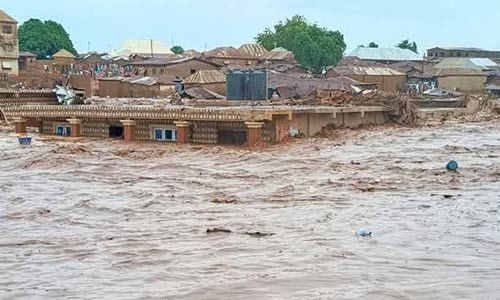
The Nigeria Hydrological Services Agency (NIHSA) has issued a high flood risk alert for Adamawa, Lagos and Borno states, warning of imminent riverine flooding between July 2 and July 8, 2026.
The warning, contained in the agency’s National Flood Advisory (Alert No. NFA-2026-183) released on Thursday, highlights rising river water levels as the primary driver of the looming flood threat across vulnerable floodplain communities.
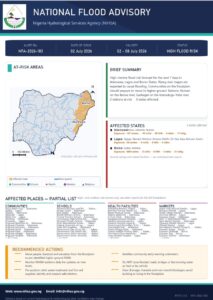
According to NIHSA, critical hydrological stations already under pressure include the Numan Station on the River Benue and the Gashager Station on the Komadugu–Yobe River. The agency cautioned that sustained increases in water levels at these locations could lead to widespread overflow, putting adjoining settlements and infrastructure at significant risk.
In Adamawa State, Numan and Lamurde Local Government Areas have been identified as high-risk zones, with an estimated 147 communities exposed to potential flooding. The agency warned that essential public infrastructure—including 49 schools, 40 health facilities, six markets and 17 religious centres—could be adversely affected if the situation escalates.
Lagos State, Nigeria’s commercial hub, is also on alert, with multiple densely populated LGAs listed among vulnerable areas. These include Agege, Ajeromi-Ifelodun, Amuwo-Odofin, Eti-Osa, Ikeja, Ikorodu and Kosofe. NIHSA estimates that 26 communities, alongside nine schools, eight health facilities and six markets, face possible flood impact, raising concerns about disruption to livelihoods and urban mobility.
Borno State presents the most severe exposure, with as many as 680 communities in Gubio and Mobbar LGAs at risk. The agency noted that the potential impact extends to critical services and social infrastructure, including eight schools, six health facilities, five markets and 21 religious centres.
In response to the heightened risk, NIHSA has called for urgent preventive measures. Residents in flood-prone areas are advised to immediately relocate people, livestock and valuable property to safer, higher ground to minimise potential losses.
The agency further urged state and local authorities to intensify preparedness efforts by pre-positioning relief materials, potable water supplies, and first-aid resources, while ensuring the availability of safe temporary shelters for displaced persons.
Communities were also encouraged to activate early-warning systems by mobilising local volunteers to disseminate timely information and monitor changing water levels.
As part of safety precautions, NIHSA warned residents against attempting to cross flooded roads, bridges or fast-flowing waters, noting the high risk of accidents and fatalities. Authorities were equally advised to clear drainage systems and remove blockages along waterways to facilitate the free flow of water.
Osun Killings and the tragedy of governance
Emphasising the need for sustained vigilance, NIHSA urged the public to closely follow its flood bulletins and comply with directives from emergency management agencies throughout the advisory period.
The agency reiterated that proactive action and community awareness remain critical to reducing the potential loss of lives, property and essential services in the days ahead.
About The Author