By Fatima Saka
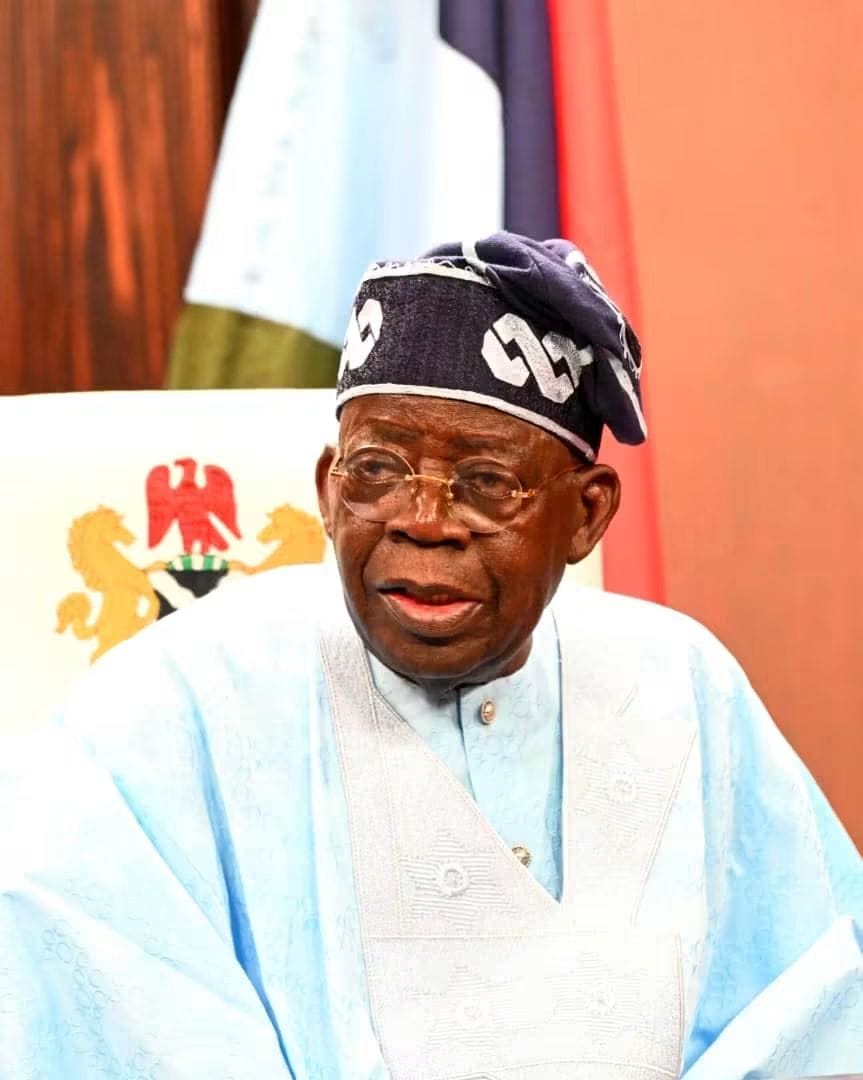
President Bola Ahmed Tinubu has declared that Nigeria has moved beyond the era of difficult economic reforms and entered a new phase focused on shared and widespread prosperity.
Tinubu made the declaration in his Independence Day address to Nigerians on Thursday, marking the country’s 66th anniversary of independence, with the theme, “From Reforms to Prosperity.”
The President said the administration’s economic reforms had corrected the country’s economic direction and laid the foundation for sustained growth, insisting that the government would now concentrate on translating the gains of the reforms into improved living conditions for Nigerians.
He said the next phase would focus on reducing the cost of living, creating productive jobs, expanding industries, strengthening social protection and ensuring that the benefits of economic growth reach citizens across the country.
Tinubu said, “The age of reform has done its work. Now begins the age of prosperity. An age in which the promise of this great nation must finally become the lived experience of Nigerians from all walks of life.”
He said the country had reached a turning point after three years of difficult economic adjustments, stressing that the government’s central economic task had shifted from correcting the nation’s course to delivering prosperity.
According to him, Nigeria’s economy has grown by more than four per cent in 2026, while both oil and non-oil sectors have contributed to the period of stable growth.
He also cited lower oil theft, a substantial decline in inflation from its peak, rebuilt foreign reserves and greater stability in the foreign exchange market as evidence of improved economic conditions.
The President further disclosed that Nigeria recorded its highest-ever non-oil export revenue in 2025, exceeding $6 billion.
Tinubu said the government would prioritise measures capable of lowering production and transportation costs, including mechanised irrigation, dry-season farming, improved access to seeds and fertiliser, mechanisation, storage facilities and transportation infrastructure.
He said the administration was also building and completing roads, railways and ports to improve connections between farms, factories and markets.
The President said the government would place jobs, enterprise and industrial growth at the centre of its policies, including the use of gas to power industries, support for businesses seeking to revive factories, expanded digital connectivity and investment in skills.
He said the government would also support Nigerian businesses with infrastructure and finance to enable them to expand and compete globally.
Tinubu, however, acknowledged that millions of Nigerians were still struggling with food, school fees, medical bills and transportation costs.
He said his administration would strengthen direct support for poor households, improve the National Social Register and expand programmes such as the Nigerian Education Loan Fund and CREDICORP.
According to him, the measures were intended to provide a bridge for vulnerable Nigerians while the wider economy moves towards prosperity.
“We cannot erase in four years what accumulated over generations. But we can change its course,” he said.
The President said the government’s objective was not merely to manage poverty more efficiently but to “defeat it,” adding that achieving the goal would require sustained economic growth, discipline and the creation of millions of productive opportunities.
Tinubu urged Nigerians to look forward with renewed confidence, declaring that the country had “corrected its course” and should not return to the challenges that necessitated the reforms.
“Nigeria has corrected its course. We have passed through our own Red Sea. This is not the time to look back. Let us go forward together, with faith in ourselves, faith in our country, and faith that the sacrifices we have made will yield their reward,” he said.
READ ALSO: A Comedy of Errors of the Framework Il-literati
Nigeria at 66: Citizens Must Take Responsibility for Nation-Building — Adaramodu
He described the Nigeria ahead as a “Promised Land” of abundance and opportunity, where prosperity would be broadly shared and every child could aspire beyond the circumstances of birth.
“Our destination is in sight. Our foundations are strong. Our direction is clear. So let us go forward. No looking back,” Tinubu declared.
About The Author