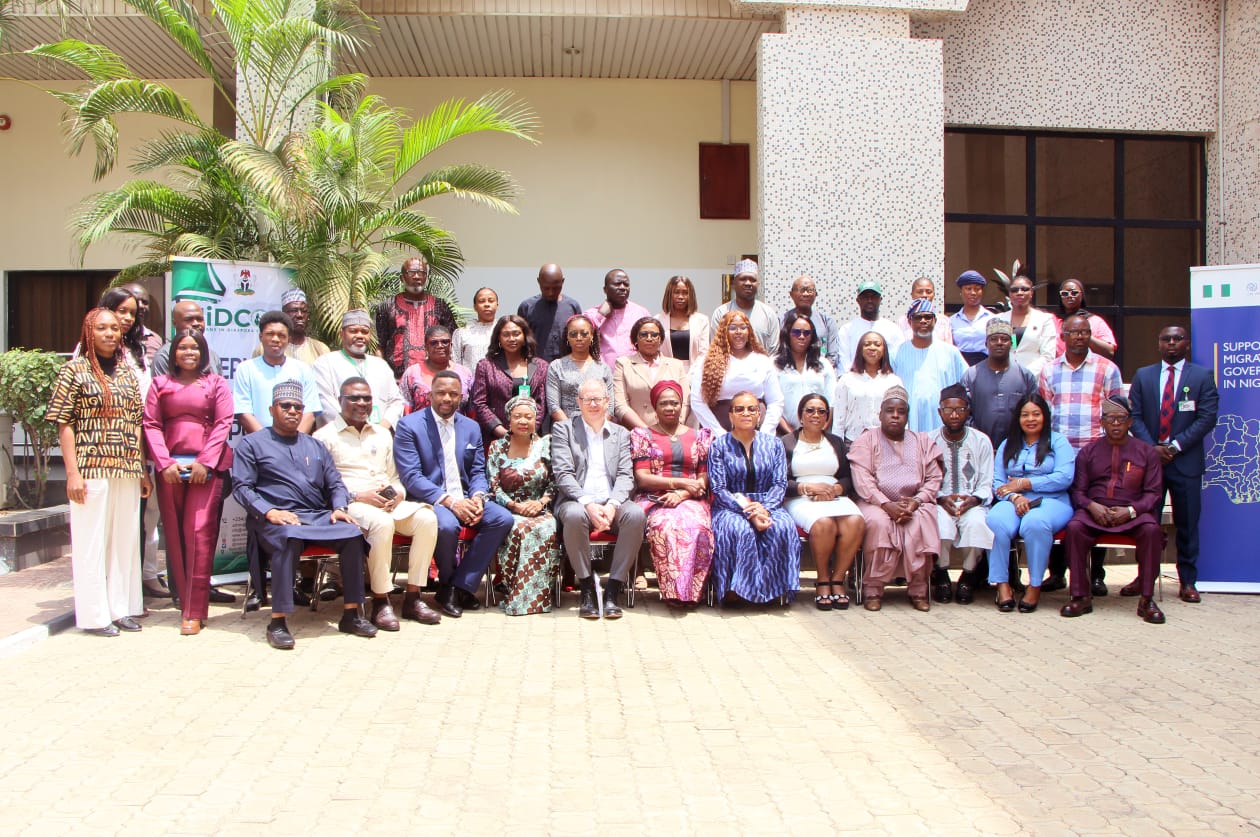
Abuja, Nigeria — The Nigerians in Diaspora Commission, in partnership with the International Organization for Migration and the European Union, has convened a high-level stakeholders’ meeting to review and strengthen the implementation of Nigeria’s National Diaspora Policy 2021.
The strategic session, held in Abuja, brought together members of the Standing Committee on Diaspora Matters (SCDM), government agencies, civil society groups, and development partners to assess progress, identify gaps, and chart actionable pathways for a more structured and results-oriented diaspora engagement framework.
Chairman/CEO of NiDCOM, Abike Dabiri-Erewa, stressed the urgency of translating diaspora potential into tangible outcomes, describing Nigerians abroad as critical partners in national development.
“The diaspora is not just a community abroad, but a development partner—a force for progress,” she said, calling for deliberate and strategic efforts to harness diaspora contributions beyond remittances, particularly in investment, innovation, and global influence.
Dabiri-Erewa acknowledged funding constraints as a major challenge but reaffirmed the Commission’s institutional relevance. She also advocated stronger legislative backing for diaspora-focused initiatives, including diaspora voting, the establishment of a Diaspora Investment Trust Fund, and improved funding mechanisms.
Highlighting sub-national efforts, she commended states such as Lagos, Abia, and Cross River for setting up diaspora engagement structures, urging other states to follow suit. She also pointed to ongoing initiatives such as the Diaspora Data Portal, National Diaspora Day (July 25), and the upcoming Nigeria Diaspora Economic Conference in Canada.
Speaking on behalf of the IOM Chief of Mission in Nigeria, Ms. Sharon Dimanche, representative Ms. Ukamaka Anyanechi emphasized the need for coordinated and institutionalised diaspora engagement.
She described Nigeria’s diaspora as one of its most significant yet underutilised development assets, with contributions spanning healthcare, ICT, academia, entrepreneurship, and the creative industry. She noted that under the EU-funded Support to Migration Governance Programme, IOM is working closely with NiDCOM to strengthen institutional frameworks, improve coordination, and support the ongoing policy review.
Also speaking, EU Programme Officer Ron Hendrix described the Nigerian diaspora as a “global force of progress” that bridges Nigeria with the international community while driving innovation and socio-economic transformation.
At the legislative level, the Senate Committee on Diaspora and NGOs reaffirmed its commitment to strengthening diaspora engagement. Represented by Clerk Abubakar Adam, Chairman Senator Aniekan Bassey highlighted the diaspora’s role in remittances, investments, knowledge transfer, and humanitarian support.
He called for improved protection of Nigerians abroad, particularly those facing challenges in countries like South Africa, stressing the need to uphold their dignity and safety.
Similarly, the House Committee on Diaspora Matters, represented by Dr. Ademola Adewale Taofeek on behalf of Hon. Tochukwu Okere, underscored the importance of measurable outcomes in migration governance.
“Migration, when well governed, is a catalyst for development. When poorly managed, it becomes a source of vulnerability,” he said, noting that diaspora remittances surpass foreign direct investment but should be complemented by intellectual and network contributions.
In her remarks, Catherine Imaji Udida of the National Commission for Refugees, Migrants and Internally Displaced Persons called for more inclusive policy frameworks that reflect the realities of diverse diaspora groups, including those in irregular or short-term migration situations. She also emphasised the need for regular coordination meetings to improve policy outcomes.
The meeting featured presentations from State Diaspora Focal Point Officers, including representatives from Abia, Lagos, and Cross River states, showcasing sub-national initiatives to deepen diaspora engagement.
READ ALSO: BSN to mark National Bible Day on May 5 Bible
Civil society organisations and non-governmental groups also contributed to discussions, reinforcing the need for a whole-of-society approach to diaspora policy implementation.
The high-level engagement marks a renewed push by key stakeholders to reposition Nigeria’s diaspora as a central pillar of national development through structured policies, stronger institutions, and measurable outcomes.
About The Author