
SPECIAL REPORT
By Fatima Saka
The National Assembly management has defended its decision to shut down informal eateries, popularly known as shanties, within the parliamentary complex, explaining that the move is part of efforts to replace them with modern restaurants, banks and other essential service facilities.
However, the decision has triggered concerns among affected food vendors and some National Assembly staff, with operators counting their losses and appealing for more time, while workers question the affordability of the proposed replacement restaurants.
The Clerk to the National Assembly (CNA), Kamoru Ogulana, said parliaments across the world serve not only as legislative institutions but also as tourist centres and security zones, stressing that Nigeria’s parliament should not be an exception.
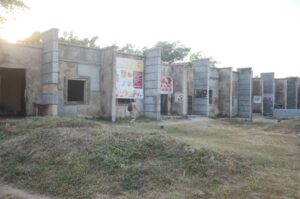
According to him, the location previously occupied by the food vendors is an abandoned project that has remained incomplete for about nine years but is now being renovated and completed to accommodate facilities befitting the status of the National Assembly.
He said the project, expected to be completed within two months, would accommodate standard restaurants, banks and other essential service providers to improve service delivery and the general outlook of the parliamentary complex.
Ogulana assured the affected operators that they were not being permanently denied the opportunity to conduct business within the complex, explaining that they would have an opportunity to apply to occupy the new facilities after the renovation.
He, however, said interested operators would be required to complete the necessary documentation to secure legal approval to operate within the premises.
Staff worry over affordability of new restaurants
Beyond the concerns of the displaced food vendors, the planned replacement of the chanties with standard restaurants has also generated reactions among some National Assembly staff, who fear that the new facilities may not provide the affordable meal options they have enjoyed over the years.
Some staff members expressed dissatisfaction with the decision, arguing that informal eateries remain important in government institutions because they provide relatively cheap meals for workers who cannot afford to patronise expensive restaurants daily.
They noted that other government institutions still maintain canteen where staff members can purchase meals at affordable prices, questioning why the National Assembly should completely eliminate such facilities.
According to some of the workers, introducing sophisticated restaurants without providing affordable alternatives could make it difficult for junior and middle-level staff to access meals within the complex.
They stressed that the National Assembly should consider the financial circumstances of its workforce in planning the new facilities, insisting that modernisation should not come at the expense of affordability.
For them, the issue goes beyond improving the appearance of the parliamentary complex to ensuring that workers across different salary grades can conveniently afford meals during working hours.
Vendors count losses, seek December extension
The management’s plan to upgrade facilities within the National Assembly has brought an abrupt end to business activities at the usually busy eateries, which provide affordable meals to legislative staff, lawmakers’ aides, visitors and other workers.
The once-lively food vending area has now become largely deserted following the directive asking operators to discontinue business activities.
Some of the affected operators, who spoke on condition of anonymity, said they were caught unprepared when officials reportedly directed them last Friday to vacate the premises and stop operations.
One of the operators appealed to the management to allow them to remain until December or provide an alternative location where they could continue their businesses.
“We want to know what is happening today. They just came last Friday and said we should pack, just like that, that we should stop business. They just said they don’t want to see any of us here again.
“It affects our business adversely because we have already bought things. We plead with them to give us till December to pack our things or give us an alternative place. Some people are owing us and we owe others in the market,” she said.
The operators explained that they had already invested in food items and other supplies, some of which were perishable, warning that an abrupt closure could expose them to avoidable financial losses.
They also expressed concern that the timing of the directive, with the year gradually drawing to a close, could worsen their financial difficulties, particularly as they have outstanding obligations to suppliers and customers.
Operators write CNA, PASAN
In a move to secure intervention, the affected business owners said they had written to the Clerk to the National Assembly and officials of the Parliamentary Staff Association of Nigeria (PASAN) on Monday, requesting an extension of time.
They said they were awaiting responses from the authorities and appealed to the management to consider their request in the interest of fairness and business continuity.
Beyond seeking additional time, the operators are also asking the National Assembly to provide an alternative space where they can continue serving the parliamentary community while the renovation is underway.
Years of relocation and uncertainty
The current development is the latest in a series of relocations experienced by some of the food vendors operating within the National Assembly environment.
Some of the operators said they initially conducted their businesses around the Secretary to the Government of the Federation (SGF) axis before they were moved to the Berger area, where the National Assembly Clinic is being constructed.
They subsequently operated from the abandoned project site opposite the Fire Service, behind the National Assembly Annex, which is now undergoing redevelopment.
The repeated relocations have created uncertainty for the operators, many of whom have continued to invest in their businesses despite the changing locations.
Modernisation versus affordability and livelihoods
The National Assembly management’s plan to introduce standard restaurants, banking services and other essential facilities reflects its determination to improve the appearance, security and functionality of the complex.
However, the development has raised questions about how institutional modernisation can be balanced with the economic interests of small-scale operators and the welfare of parliamentary workers.
While the management is seeking facilities that befit the status of the National Assembly, staff members insist that affordable food services should remain part of the arrangement.
For the affected vendors, the immediate concern is the need for adequate notice, a reasonable transition period and clarity about their future opportunities.
With the renovation expected to be completed within two months, the operators are hoping that the management will grant their request for an extension until December or provide an alternative location pending the completion of the project.
READ ALSO: Senate Receives Tinubu’s Bill to Decriminalise Attempted Suicide, Support Survivors
BPP Trains Procurement Officers to Uphold Due Process Ahead of 2026 Promotion Exam
The central question now is whether the proposed modernisation will accommodate both the institutional standards the management seeks and the everyday financial realities of the people who work within the National Assembly.
For now, the food vendors are awaiting the management’s response, while the once-busy eateries remain deserted.
About The Author