
By Fatima Saka
Abuja, Nigeria — The Federal Government has reiterated its commitment to strengthening chemical safety, public health security, and emergency preparedness as part of efforts to safeguard Nigerians from the risks associated with chemical incidents.
This assurance was given by the Director of the Food and Drugs Services Department at the Federal Ministry of Health and Social Welfare, Mrs. Olufowobi-Yusuf Adeola, during the Second Quarter 2026 meeting of the National Committee on Chemical Surveillance and Emergency Systems (NCCSES) in Abuja.
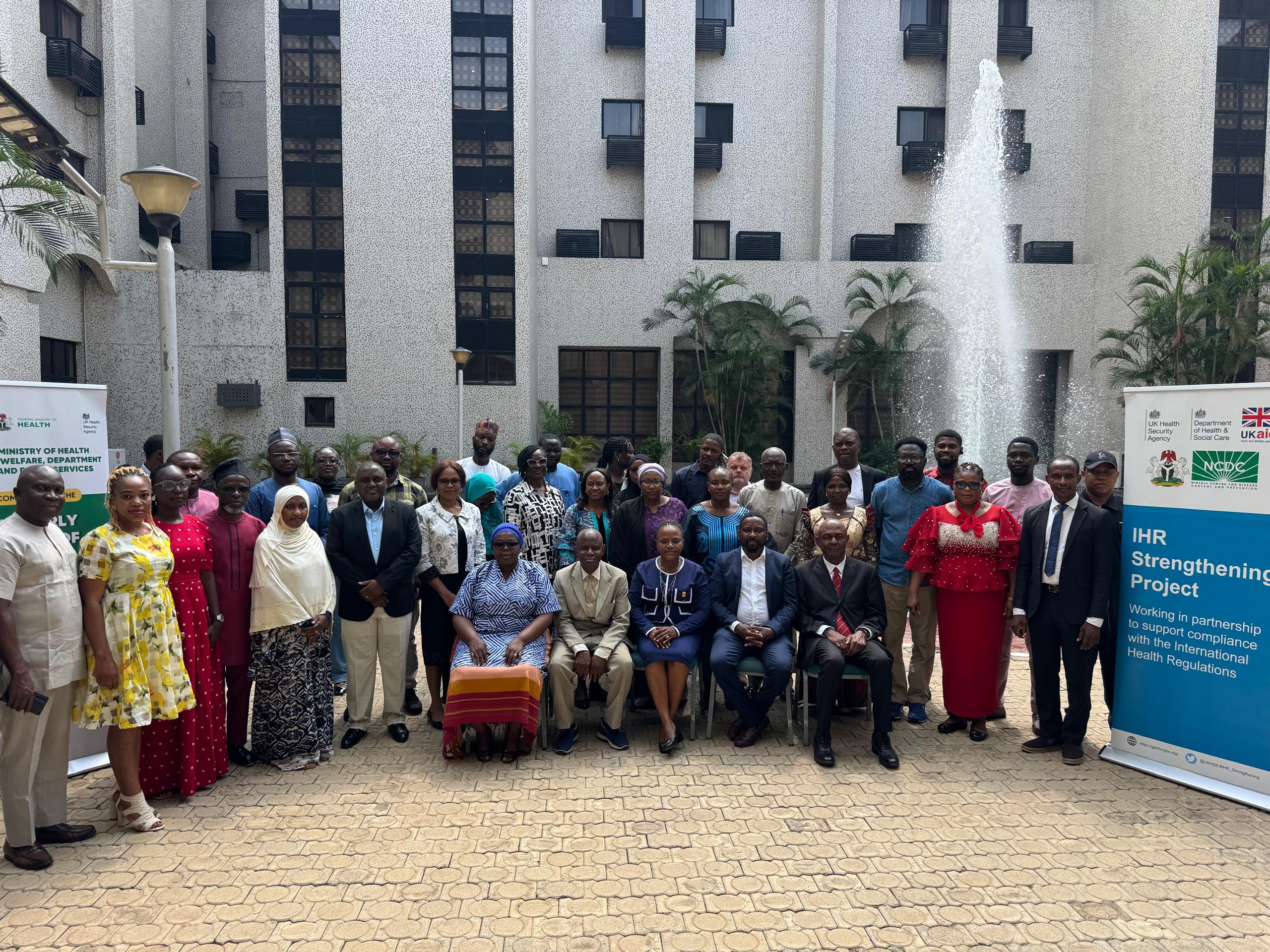
The meeting focused on reviewing the draft implementation strategy for the National Guidelines for Chemical Event Surveillance in Nigeria and was convened by the Ministry with support from the UK Health Security Agency. It brought together key stakeholders, including representatives from federal ministries, departments and agencies, development partners, academia, research institutions, regulatory bodies, and emergency response organisations.
Adeola noted that chemical incidents continue to pose significant threats to human health, the environment, livelihoods, and national development. She explained that in response to these challenges, and in line with the International Health Regulations (2005), Joint External Evaluation (JEE) recommendations, and the One Health approach, the Ministry established NCCSES to strengthen surveillance and response systems nationwide.
Highlighting progress made so far, she cited the development and launch of the National Guidelines for Chemical Event Surveillance, laboratory mapping and capacity assessments, improved multi-sectoral collaboration, advancement toward establishing Poison Information Centres, and increased awareness of chemical hazards and their public health implications.
She stressed the need for a coordinated and sustainable roadmap to ensure effective implementation of the guidelines, urging stakeholders to contribute meaningfully to the deliberations.
In a goodwill message, the Country Lead of the UK Health Security Agency, Dr. Ayo Oyinloye, expressed confidence in Nigeria’s capacity to meet the World Health Organization’s minimum standards for global health security. He emphasized that building competencies to address chemical and infectious threats is essential for ensuring a safe and secure world while promoting trade and peace.
Oyinloye reaffirmed the agency’s commitment to providing technical support to partner countries and underscored the importance of local ownership in achieving success.
“You are not just here on behalf of your organisation; you are here on behalf of millions of Nigerians who depend on you to keep them safe,” he said.
Discussions at the meeting included a review of first-quarter progress, assessment of key action points, strengthening multi-sectoral collaboration, improving reporting mechanisms for chemical incidents, and promoting integrated surveillance through the One Health approach. Participants also identified priority areas for enhancing national preparedness and response systems.
READ ALSO: AFNIS 2026 Closing: Alake Urges African Unity on Minerals, Honoured with Gavel
AFA, Steron Seal Landmark Deal to Boost Lithium, Rare Earth Development in Nigeria
The meeting underscored the Ministry’s leadership in coordinating multi-sectoral action for effective chemical safety governance and marked another milestone in Nigeria’s efforts to strengthen health security through an integrated chemical surveillance system.
It also reflects the government’s commitment to protecting citizens from the health, environmental, and socio-economic consequences of chemical incidents while fulfilling obligations under the International Health Regulations (2005), the One Health framework, and the Sustainable Development Goals (SDGs).
About The Author