By Fatima Saka
The Federal Government has unveiled measures to expand the role of pharmacists in primary healthcare, digital health, pharmaceutical manufacturing and medicine safety, while acknowledging the shortage of pharmacies and pharmacists across the country.
The government also said it was strengthening collaboration among regulatory agencies and other stakeholders to tackle the circulation of substandard and falsified medicines, illicit diversion of controlled drugs and other threats to medicine safety.
The Coordinating Minister of Health and Social Welfare, Prof. Muhammad Ali Pate, who was represented by Mrs. Teshoma Dafeta, Director of Human Resource Management, said pharmacists remained essential to building a resilient, sustainable and future-ready health system.

Pate, in his address at the 2026 World Pharmacists Day ministerial press briefing, said the theme of the celebration, “Empowering Pharmacists for Healthier Futures,” aligned strongly with Nigeria’s health sector priorities.
He said pharmacies were among the most accessible and trusted points of healthcare in communities, adding that pharmacists were increasingly contributing beyond procurement, supply and dispensing of medicines to clinical care, scientific innovation and public health delivery.
According to him, pharmacists were contributing to preventive and primary healthcare through community screening, immunisation, health promotion and wellness education, while also playing important roles in the management of hypertension, diabetes and other chronic diseases.
Pate said pharmacists were equally critical to patient safety and the rational use of medicines through medication reviews, therapeutic monitoring and appropriate clinical interventions.
He said the Federal Ministry of Health and Social Welfare, under President Bola Tinubu’s Renewed Hope Agenda, was advancing reforms to strengthen Nigeria’s health system and improve access to quality healthcare.
The minister said the reforms included expanding the scope of pharmacy practice, strengthening pharmacists’ contribution to primary healthcare, immunisation and specialised pharmaceutical care.
He added that the government was developing and regulating e-pharmacy and digital health platforms to ensure the safe, transparent and traceable distribution of medicines.
Pate said the government was also strengthening incentives, infrastructure and regulatory frameworks under the National Drug Policy to increase local pharmaceutical production and improve medicine supply security.
He said stronger regulatory enforcement would support the Pharmacy Council of Nigeria and the National Agency for Food and Drug Administration and Control (NAFDAC) in preventing and controlling the circulation of substandard and falsified medical products.
The minister said the government would continue to support pharmacy education, clinical training, residency programmes and continuing professional development, while creating safe and supportive work environments for pharmacists.
He said greater integration of pharmacists with physicians, nurses and other health professionals was necessary to provide comprehensive, patient-centred care.
Earlier, the Director, Food and Drug Services, Federal Ministry of Health and Social Welfare, Mrs. Olufowubi-Yusuf Adeola, mni, said pharmacists were no longer merely dispensers of medicines but frontline health professionals central to prevention, patient safety and stronger health systems.
She said pharmacists ensured the safe and effective use of medicines, counselled patients on adherence and helped prevent harmful drug interactions.
Adeola said their accessibility within communities made them important public health partners in areas such as vaccination awareness, chronic disease management and health promotion.
She, however, identified antimicrobial resistance, inappropriate medication practices and counterfeit medicines as some of the challenges requiring stronger collaboration among government, regulators and professionals.
Representing the Director-General of NAFDAC, Prof. Mojisola Christianah Adeyeye, the Director, Greater FCT, Pharm. (Mrs.) Chizoba Maduagwuna, said pharmacists were indispensable members of the healthcare team because of their role in ensuring the quality, safety and efficacy of medicines.
She said NAFDAC remained committed to working with pharmacists and other stakeholders on regulatory compliance, pharmacovigilance and efforts to combat substandard and falsified medicines.
Also, representing the Director-General/Chief Executive Officer of the National Health Insurance Authority, Dr. Kelechi Ohiri, Pharm. Yusuf Alhassan, Director, North Central Zone, said universal health coverage could not be achieved without access to safe, affordable and efficacious medicines.
He said pharmacists played important roles in protecting the clinical and financial integrity of healthcare through correct dispensing, adherence counselling and prevention of adverse drug reactions.
Alhassan said the NHIA would continue to partner with pharmacists to optimise medicine formularies, streamline reimbursement and integrate pharmaceutical care into quality assurance.
A representative of the Presidential Initiative for Unlocking the Healthcare Value Chain (PIVAC) said pharmacists were integral to the industrialisation of Nigeria’s pharmaceutical sector.
The representative of PVAC Muhammad Balarabe, head of ecosystem enablement team, said PVAC was mandated to support the industrialisation of the pharmaceutical industry and would continue to collaborate with pharmacists to achieve the objective.
“Without pharmacists, there is no pharmaceutical industry,” the representative said.
A representative of Results for Development (R4D) said pharmacists were the critical link between medicines and the people, from procurement and supply chain management to dispensing and patient counselling.
The representative said pharmacists’ work had a direct bearing on whether quality and affordable health commodities reached Nigerians, particularly women, children and adolescents.
At the press interaction, speakers also acknowledged the shortage of pharmacies and pharmacists in the country, describing the situation as a major concern.
A speaker at the briefing said although there appeared to be a proliferation of pharmacies in some communities, the establishment and location of pharmacies were subject to regulatory requirements, including prescribed distances between outlets.
The speaker explained that the Pharmacy Council of Nigeria regulates pharmacy practice and that pharmacies were established to serve communities and improve access to medicines.
The speaker urged parents to encourage their children to study pharmacy to help address the shortage of pharmacists in the country.
Providing further clarification, a participant at the briefing said available statistics showed that Nigeria had approximately one pharmacy serving between 13,000 and 15,000 people.
The participant said that, despite Nigeria’s population of more than 200 million, only about 7,000 registered and licensed pharmacies were currently operating in the public sector, describing the number as grossly inadequate.
The shortage, the participant said, could be linked partly to the migration of trained professionals, popularly described as the “brain drain,” among other factors.
The participant called for an enabling environment that would encourage pharmacists and other professionals to remain in the country and provide adequate services to Nigerians.
On the circulation of fake, substandard and falsified medicines, officials at the briefing said the Federal Ministry of Health and Social Welfare had mechanisms for monitoring controlled and narcotic medicines and worked closely with regulatory agencies to prevent diversion and misuse.
An official explained that once reports of suspected fake products were received, the ministry could transmit the information to NAFDAC for further regulatory action and enforcement.
The official said the Pharmacy Council of Nigeria and NAFDAC were also carrying out enforcement activities to address violations involving medicines and pharmaceutical products.
On controlled medicines, the official said Nigeria had documentation and control mechanisms for scheduled narcotics to ensure that they were imported, distributed and used appropriately.
The official said the ministry worked closely with NAFDAC and other relevant agencies to prevent illicit diversion of controlled medicines.
On substandard products, the official said NAFDAC had quality assurance and traceability mechanisms to monitor pharmaceutical products along the supply chain.
He said spot checks were also conducted at premises and facilities handling medicines, while sanctions were available for violations of relevant policies and guidelines.
Representing NAFDAC, Maduagwuna said the agency was doing considerable work to prevent the circulation of substandard and falsified medicines and narcotic products, but stressed that the task required collaboration.
She said NAFDAC worked closely with the Nigeria Customs Service because some falsified medicines entered the country through porous borders.
Maduagwuna said NAFDAC had a memorandum of understanding with the Nigeria Customs Service to strengthen efforts to prevent the entry of substandard and falsified medicines.
She added that intelligence from members of the public was important to NAFDAC’s surveillance and enforcement activities.
According to her, the agency has different directorates, including the Post-Marketing Surveillance Directorate, Investigation and Enforcement Directorate and Pharmacovigilance Directorate, which work together to monitor and address medicine safety concerns.
She said NAFDAC was also deploying technology through its track-and-trace system to monitor pharmaceutical products from the manufacturer through the supply chain to the point of use.
Maduagwuna said the system was designed to improve accountability and traceability and help prevent fake medicines from entering the legitimate pharmaceutical supply chain.
She, however, acknowledged that it was not possible to completely eliminate the problem, stressing that sustained surveillance, intelligence gathering, enforcement and collaboration remained necessary.
Dr Ochechukwu Louis Smooker of Smooko Nigeria Ltd. said pharmacists played an important role in protecting patients and ensuring the safe use of medicines.
He said pharmacists were trusted health advisers and partners in disease prevention and healthcare delivery, adding that they needed adequate training, equipment, digital tools and integration into the wider health system.
Smooker said his organisation, a healthcare solutions company and authorised Nigerian distributor of BioPanda reagents manufactured in Northern Ireland, supported healthcare professionals through diagnostics, strategic partnerships and innovation.
Pharmacist Kim Jakin of Intact Products Incorporated, a global manufacturer of rapid diagnostic test kits for public health, stressed the importance of linking diagnostics with pharmaceutical care.
Jakin advocated wider use of point-of-care testing and a “test before treatment” approach, particularly in malaria management, to promote rational medicine use and reduce antimicrobial resistance.
In her vote of thanks, the Director, Pharmaceutical Services Division, Federal Ministry of Health and Social Welfare, Pharm. Talatu Kassim, expressed appreciation to government officials, pharmacy professionals, development partners, stakeholders and members of the press for participating in the celebration.
Kassim said the 2026 World Pharmacists Day celebration provided an opportunity to recognise the contributions of pharmacists to Nigeria’s healthcare system and to reflect on the future of the profession.
She described pharmacy as a noble and resilient profession, saying the pharmacists’ uniform symbolised resilience, agility and commitment to the healthcare system.
She said pharmacists must continue to embrace technology, research and innovation to develop solutions to Nigeria’s healthcare challenges.
Kassim also highlighted recent policy initiatives, including the National Drug Policy and the launch of e-pharmacy, as part of efforts to modernise pharmaceutical services.
She said the ministry was also working towards a sustainable drug revolving financial system that would reduce dependence on donor funding.
Kassim urged stakeholders to work closely with the ministry and understand its activities across different parts of the country, noting that the Pharmacy Council of Nigeria also regulates Proprietary Patent Medicine Vendors (PPMVs).
READ ALSO:FGN,Germany Deepen Steel Partnership on Technology, Mineral Processing
Nigeria, Partners Launch OneSCD to Tackle Global Sickle Cell Inequities
She said although the country still faced challenges, the ministry was working towards a future in which pharmacists would be adequately empowered and the circulation of falsified and substandard medicines reduced to the barest minimum.
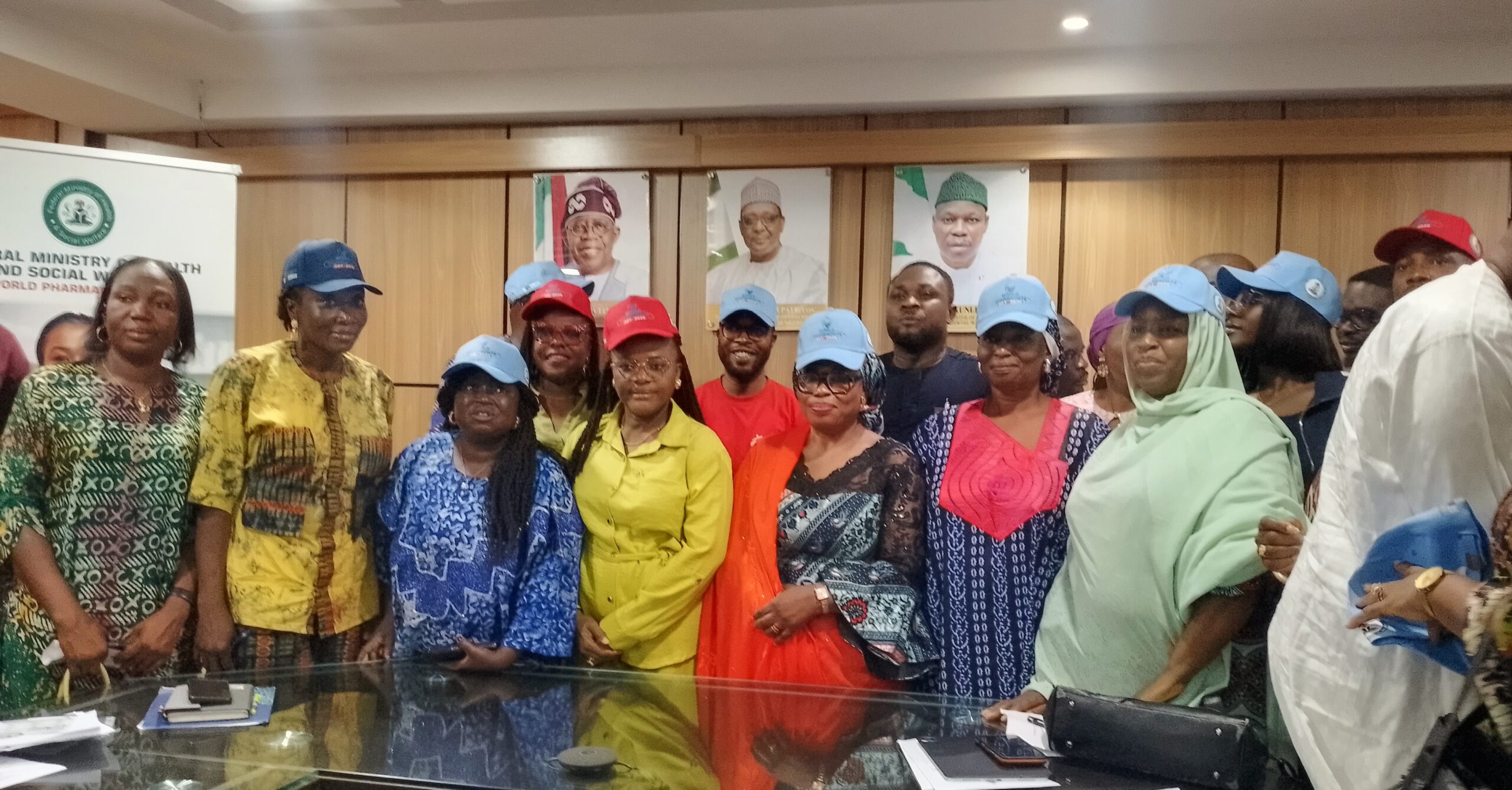
The event also featured a group photograph and health screening activities, including blood pressure, blood sugar and malaria testing for participants.
About The Author