By Fatima Saka
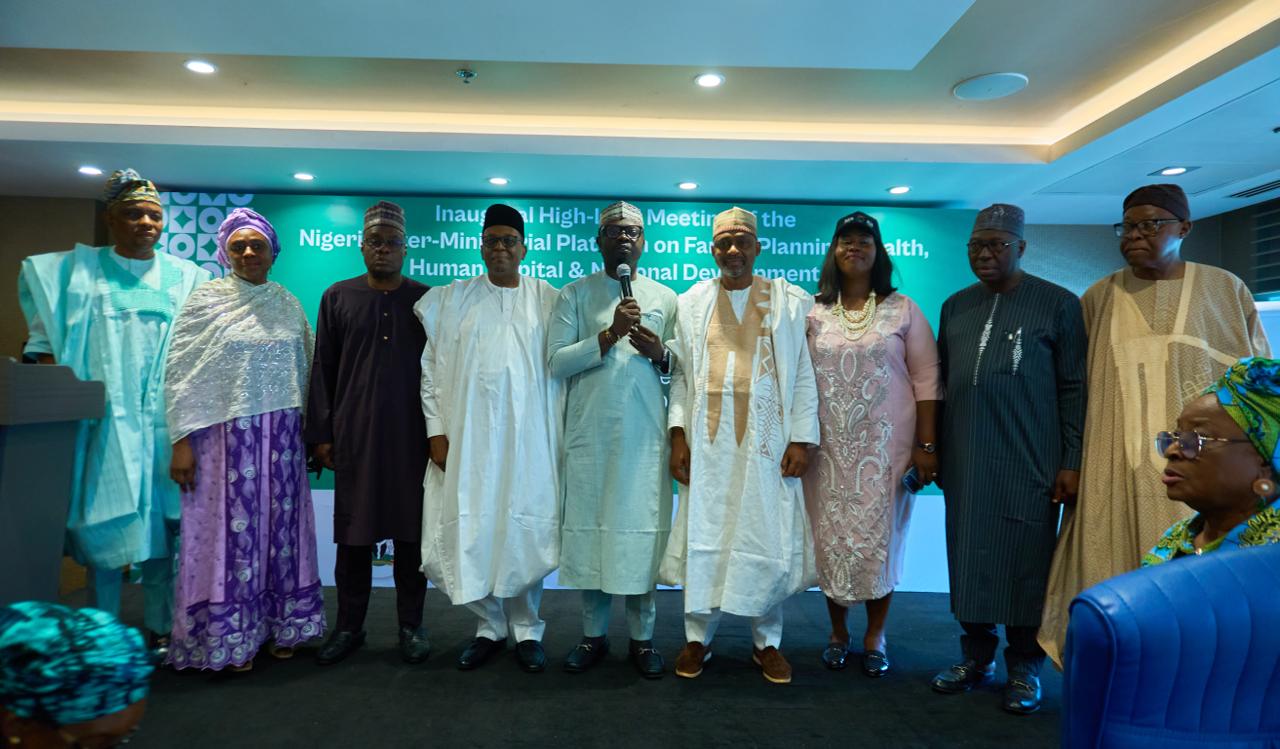
Abuja, Nigeria — The Federal Government has inaugurated a High-Level Inter-Ministerial Platform on Family Planning, Health, Human Capital and National Development to strengthen coordination across sectors and harness Nigeria’s growing population for sustainable economic growth.
The Coordinating Minister of Health and Social Welfare, Prof. Muhammad Ali Pate, while inaugurating the platform in Abuja, described Nigeria’s population as the country’s greatest asset, stressing that it must be transformed into a productive force for national prosperity.
Pate said the initiative aligns with President Bola Ahmed Tinubu’s vision of a prosperous and people-centred Nigeria, noting that the country’s rapidly growing population could either be an asset or a liability depending on investments in health, education and economic empowerment.
With Nigeria’s population estimated at about 230 million and projected to reach between 450 and 500 million by 2050, the minister emphasised the need for deliberate investments in human capital to ensure citizens are healthy, skilled and economically productive.
He explained that the platform would adopt a life-course approach, integrating efforts across ministries to address citizens’ needs from adolescence to old age. According to him, the Federal Ministry of Health and Social Welfare will lead efforts to strengthen healthcare systems and improve access to essential services, while other ministries will support planning, financing and social development interventions.
Pate highlighted the roles of key ministries including Finance, Budget and Economic Planning, Women Affairs, Education and Youth Development, stressing that issues such as reproductive health, girls’ education and youth empowerment are interconnected and critical to national development.
He also identified the National Population Commission as a strategic partner in demographic planning, fertility management and efforts to harness Nigeria’s demographic dividend.
On primary healthcare, the minister underscored the importance of improving maternal, newborn and child health services, linking reduced child mortality to better family planning decisions.
He further called for increased public awareness through the National Orientation Agency to address misinformation and build trust in health interventions.
Pate announced progress toward local production of family planning commodities, noting that it would reduce import dependence, create jobs and boost economic value within Nigeria.
He stressed that achieving the platform’s objectives would require collaboration across all levels of government, civil society and the private sector, urging stakeholders to prioritise measurable actions and improved funding, particularly at subnational levels.
Also speaking, Managing Director of FP2030 West and Central Africa Office, Dr. Alain Damiba, commended the Federal Government for the initiative, describing it as a critical step toward strengthening collaboration and accountability in Nigeria’s human capital development efforts.
Damiba emphasised that family planning is not solely a health issue but a key driver of education, economic growth and overall wellbeing, adding that empowering women and young people to make informed reproductive health decisions has far-reaching benefits.
In her welcome address, Permanent Secretary of the Federal Ministry of Health and Social Welfare, Daju Kachollom, represented by the Director of Family Health, Dr. Ahmad Muhammad Ozi, called for stronger inter-agency collaboration to improve health outcomes and national development.
READ ALSO: Flooding: FG, Lagos Intensify Joint Action to Prevent Future Disasters
Sanwo-Olu Urges NYSC Members to Drive National Transformation
She urged stakeholders to move beyond dialogue to concrete, coordinated actions that will strengthen partnerships and deliver measurable impact.
Stakeholders from relevant ministries, agencies and civil society organisations pledged support for the platform, reaffirming that family planning remains central to improving maternal and child health, empowering women and accelerating Nigeria’s socio-economic development.
About The Author