By Fatima Saka
The Federal Government has intensified efforts to establish an effective system for identifying vulnerabilities in Nigeria’s health sector, strengthening institutional controls and ensuring accountability for every investment in primary healthcare facilities.
The initiative followed the inauguration of a Joint Task Team by the Federal Ministry of Health and Social Welfare and the Independent Corrupt Practices and Other Related Offences Commission (ICPC) to implement their Memorandum of Understanding (MOU) on the prevention of corruption in the health sector.
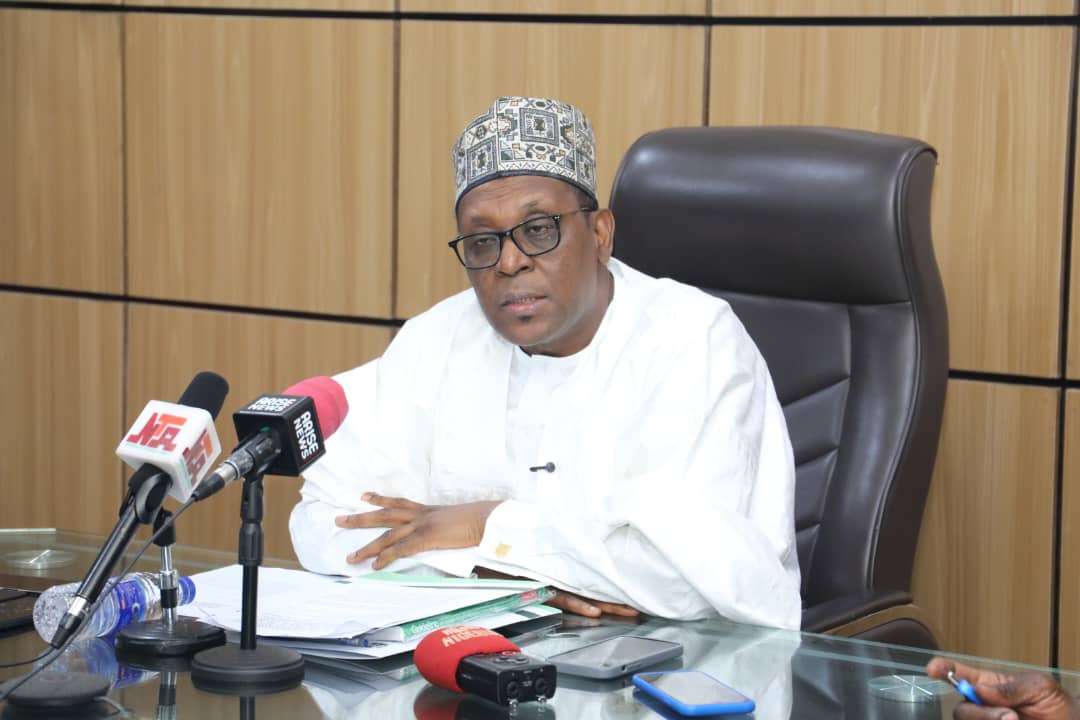
Speaking at the inauguration on Tuesday in Abuja, the Coordinating Minister of Health and Social Welfare, Prof. Muhammad Ali Pate, said the partnership was designed to ensure that every naira invested in the health system reaches the facility, health worker and Nigerian whose life depends on it.
Pate said the government was moving beyond reacting to corruption after it had occurred to a preventive system capable of identifying weaknesses early and closing loopholes before public resources were lost.
“Corruption costs lives. It is a systemic issue,” the minister said, stressing that diverted resources could result in medicines not reaching facilities, equipment being unavailable when needed and healthcare services falling below acceptable standards.
He described the Joint Task Team as an “instrument for institutional change,” particularly in monitoring the Basic Health Care Provision Fund (BHCPF), one of the major channels through which the Federal Government invests in primary healthcare across the country.
According to him, the government has deployed 774 performance and financial management officers under BHCPF 2.0, one to each local government area, to independently verify how funds are received and utilised.
He said verified National Identification Numbers were being used to authenticate beneficiaries and reduce duplication, while digital systems were being introduced to track resources transparently from allocation to utilisation.
The minister added that the Ministry had directed the implementation of accounting management software to provide end-to-end tracking of funds, while Nigeria Health Fellows were being engaged to provide additional independent oversight at the grassroots.
Pate said accountability must be treated as a system-wide responsibility covering health financing, procurement, infrastructure, medicines and service delivery.
He warned against the diversion of funds at primary healthcare facilities, including situations where officers in charge collect resources meant for facilities and channel them elsewhere, stressing that such practices deprive communities of healthcare services.
He also called on communities, traditional and religious leaders, development partners and other stakeholders to speak up whenever they observe diversion of public resources, closed facilities or the sale of commodities meant to be provided free to beneficiaries.
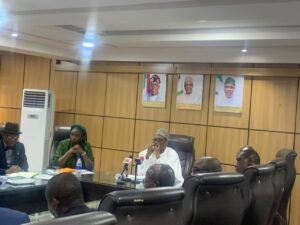
Speaking on the responsibilities of the Task Team to Track Funds Across Health System, earlier, the Permanent Secretary of the Ministry, Daju Kachollom, said effective stewardship of health resources was fundamental to achieving better health outcomes for Nigerians.
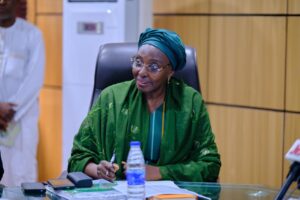
She said the responsibility of the Ministry was ultimately to save lives, reduce the physical and financial burden of ill-health and produce better health outcomes for Nigerians.
According to her, every resource entrusted to the health sector must therefore be protected and directed towards its intended purpose.
Kachollom said the Joint Task Team would be co-chaired by the Director of Hospital Services, Dr Abisoye Adegoke, and Mr Shehu Gambo of ICPC, with members drawn from relevant supervising offices and departments, including the Department of Human Resource Management and the Ministry’s Anti-Corruption and Transparency Unit.
She explained that the team would conduct assessments following each quarterly disbursement of the BHCPF, while the BHCPF Secretariat would serve as its secretariat.
She added that the MOU between the two institutions would run for two years, subject to renewal.
“In other words, this team is designed to be embedded in how the Ministry already works, not to sit outside of it,” Kachollom said.
She stressed that the focus would be on prevention and institutional strengthening by identifying gaps before they become failures, strengthening systems where vulnerabilities exist and ensuring that resources allocated to health deliver value to Nigerians.
The Permanent Secretary directed all relevant officials and units within the Ministry to provide the task team with the information and access required to carry out its mandate objectively and effectively.
She further urged members of the task team to approach their assignment with professionalism, independence and objectivity and to work within existing Ministry structures to develop practical solutions for improving public resource management and healthcare delivery.
In Tracking the funds to Cover National, State, LGA Levels, Providing further details on the implementation framework, Dr. Uzoma Uwankuo, Secretary MOC of the BHCPF oversight explained that the MOU originally covered corruption prevention across the entire health sector but would initially focus on the BHCPF before expanding to other priority interventions overseen by the Ministerial Oversight Committee (MOC).
The MOC Secretary said the collaboration would include information sharing, joint training and workshops, capacity building, advocacy, outreach, quarterly review meetings and, where necessary, joint investigations.
The fund-tracking exercise, he said, would cover the national, state, local government and service-delivery levels, reflecting the way BHCPF resources move through the health system.
He explained that several gateways are involved in the flow of funds, including the National Health Insurance Authority (NHIA), National Primary Health Care Development Agency (NPHCDA), National Emergency Treatment Committee, Nigeria Centre for Disease Control and Prevention (NCDC), and the Ministerial Oversight Committee Secretariat.
According to him, these structures are replicated at state and local government levels, while hospitals and primary healthcare centres also form part of the fund flow and accountability chain.
He said NHIA handles resources for insurance coverage, while NPHCDA channels direct facility financing to primary healthcare centres.
At the facility level, the various resources are deployed to meet eligible expenditure under the BHCPF, including essential health services and interventions intended to prevent avoidable deaths, particularly among vulnerable populations.
The National Emergency Treatment Committee, he said, is responsible for emergency transport interventions, while NCDC resources support epidemic preparedness through public health departments at the state level.
He said the objective was to establish a sustainable and institutionalised fund-tracking framework that would operate within both the Ministry and ICPC.
The framework, he added, would be continuously reviewed and adapted to the peculiarities of healthcare service delivery, which differs from infrastructure projects that can be more readily identified and physically assessed.
Uwankwo, said the Joint Task Team had already undertaken preliminary work ahead of its formal inauguration.
He explained that the team would conduct field deployments based on BHCPF disbursement cycles, with findings submitted to the co-chairs for onward reporting to the Minister and ICPC leadership through established oversight structures.
Uwankwo said the exercise was expected to strengthen the BHCPF and other priority interventions overseen by the MOC and eventually extend to other areas of the health sector.
He added that the initiative would also help train healthcare workers who handle resources at facility level, particularly clinicians who may not have adequate knowledge of financial management requirements.
According to him, the objective is to ensure that health workers do not unknowingly engage in improper financial practices.
He said evidence of wrongdoing could trigger audits and, where necessary, ICPC investigations, while the overall system would improve deterrence against the misuse of public resources.
Speaking of Corruption in Health Measured in Lives Lost, representing the ICPC Chairman, the Executive Secretary of the Commission, Mr Clifford Oparaodu, said the Joint Task Team gave practical expression to the MOU signed between the two institutions in October 2025.
He described the agreement as a shared commitment to strengthening transparency, accountability and integrity in Nigeria’s health sector.
Oparaodu said funds allocated for primary healthcare must reach the facilities and people for whom they were intended and must be utilised transparently, efficiently and in accordance with due process.
He said prevention through identifying weaknesses in government processes was one of ICPC’s important mandates and represented a cheaper, less intrusive and more sustainable approach to fighting corruption.
He stressed that corruption in healthcare was not measured only by financial losses or accounting irregularities.
According to him, its consequences could be reflected in maternal and infant mortality, immunisation rates, deaths from preventable diseases and the ability of Nigerians to access affordable healthcare.
“For many Nigerians, particularly those in rural and underserved communities, a properly functioning primary healthcare centre can determine whether an illness is treated early, whether childbirth is safe, and ultimately whether a life is saved,” he said.
Oparaodu said integrity in healthcare was reflected in medicines being available on shelves, functional equipment, working generators, health workers being present and paid, and facilities being capable of responding when citizens need them.
He charged members of the Joint Task Team to undertake credible, evidence-based and nationwide assessments of the flow and utilisation of BHCPF resources, verify claims, examine what has been delivered, identify vulnerabilities and recommend practical remedies.
He said the team must also follow through to ensure that corrective measures are implemented.
Giving Records Increase in Primary Healthcare Utilisation, Pate further disclosed that utilisation of primary healthcare services had risen from about 10 million in 2023 to more than 40 million per quarter in 2025–2026.
He attributed the improvement partly to better utilisation of resources, noting that when funds are properly deployed, health workers are more likely to be available, medicines supplied and facilities functional.
The minister said functional facilities would encourage Nigerians to seek healthcare earlier, allowing diseases to be detected and treated before they become more serious.
He said improved accountability would also give the government greater confidence to increase investments in the health sector and encourage development partners to support government systems.
Pate said the Federal Government, under President Bola Tinubu, remained committed to building a health system Nigerians could trust, where public resources are used for their intended purposes and institutions operate transparently and accountably.
He charged members of the task team to ensure that the safeguards they develop outlive the life of the team and become institutionalised within the health system.
The co-chair of the Joint Task Team, Mr Shehu Gambo, Assistant Director, Financial Investigation, ICPC, in his vote of thanks, expressed appreciation for the confidence reposed in the team.
READ ALSO: Fire Guts Six Shops at Aswani Mechanic Village, Lagos
Tonlagha Receives Top 100 African Women Honour, Pledges More Humanitarian Service
He pledged that members would work diligently to uphold integrity, accountability and the objectives of the partnership.
The Joint Task Team is expected to provide a continuous mechanism for tracking health-sector resources, identifying vulnerabilities, strengthening preventive controls and ensuring that public investment in primary healthcare translates into measurable services and better health outcomes for Nigerians.
About The Author