By Fatima Saka
The Federal Government has hailed the launch of a robotic surgery programme at Redeemer’s Health Village (RHV), describing the investment as a major step towards improving advanced healthcare delivery, reducing outbound medical tourism and strengthening Nigeria’s healthcare value chain.
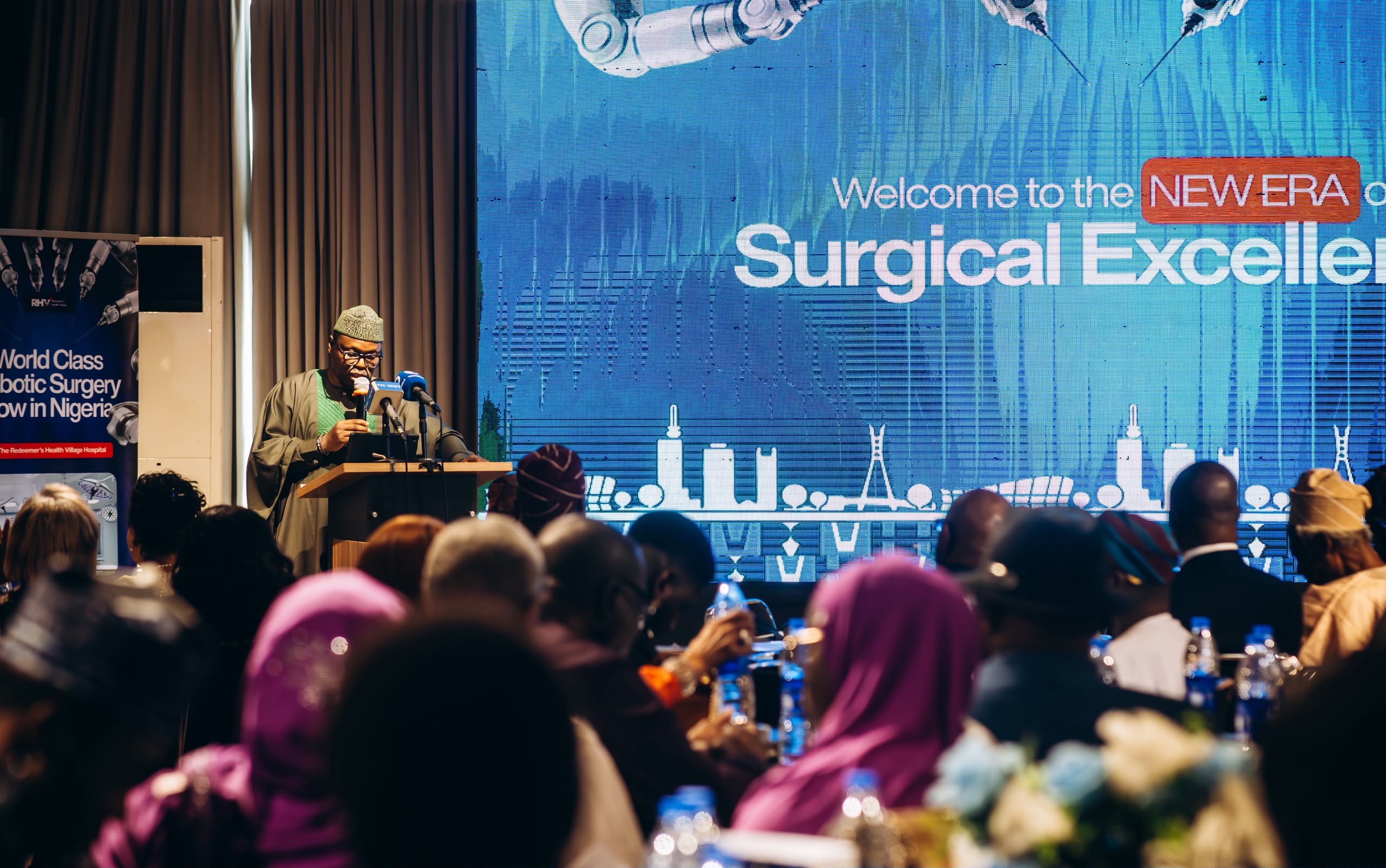
Minister of State for Health and Social Welfare, Dr Iziaq Adekunle Salako, stated this on Saturday at the dinner luncheon for the launch of the Redeemer’s Health Village Robotic Surgery Programme in Lagos.
Salako said robotic surgery would provide patients with greater precision, faster healing, earlier discharge and improved treatment outcomes, while also expanding access to minimally invasive surgical care within Nigeria.
According to him, the initiative aligns with the Federal Government’s health transformation agenda, particularly efforts to improve health outcomes and unlock the healthcare value chain.
“The vision of robotic surgery being translated into reality today will no doubt help to save lives and add value to the country,” he said.
He noted that the programme could also support the government’s ambition to reverse the prevailing trend of medical tourism from outbound to inbound healthcare, thereby conserving scarce foreign exchange.
Salako commended the leadership of the Redeemed Christian Church of God and the management of Redeemer’s Health Village for investing in infrastructure, personnel and cutting-edge technology.
He particularly congratulated the Chief Executive Officer of RHV, Dr Ademola Dada, and his team for pursuing what he described as an ambitious pathway towards building a world-class healthcare institution.
The minister said the Federal Government recognised the critical role of the private sector, which delivers more than half of healthcare services in Nigeria, in expanding access to high-end medical services.
He said government had continued to promote policies and incentives designed to attract private investment into the health sector.
Among such interventions, he listed the Presidential Initiative on Unlocking Healthcare Value Chain (PVAC) and the Presidential Executive Order for the Pharmaceutical and Allied Sectors.
According to him, the initiatives are aimed at strengthening health security, promoting local manufacturing, creating jobs and accelerating the transformation of Nigeria’s healthcare value chain.
He said the policies also support domestic production of medicines and medical commodities, including syringes and rapid diagnostic test kits.
Salako added that the government would continue to create an enabling environment for institutions such as Redeemer’s Health Village and other private healthcare providers to thrive.
The minister also welcomed the structured training component of the robotic surgery programme, which he said would allow interested surgeons across the country to acquire the necessary certification to practise robotic surgery safely.
He described the training opportunity as an important pathway for updating the clinical skills of Nigerian surgeons in line with emerging medical technologies.
“I hope that the opportunity will be optimally utilised,” he said.
Salako also acknowledged RHV’s partnership with RoboMed Global Inc. of the United States, a Nigerian diaspora-led enterprise, describing the collaboration as an example of how diaspora professionals could contribute to the transformation of Nigeria’s health sector.
He said the administration was increasingly viewing Nigerian health professionals abroad as resources that could contribute to national development through the right partnerships and engagement channels.
The minister said this informed initiatives such as the Diaspora Health Impact Initiative and the recently launched Diaspora Advance Health Programme Portal, designed to enable Nigerian health professionals abroad to formally contribute to healthcare development at home.
“With this new addition to robotic surgical care, the capacity to offer advanced, precise and minimally invasive care, delivered by Nigerian hands trained to global standards in a Nigerian institution, is being enhanced,” Salako said.
He said the development meant that more Nigerians would be able to access world-class surgical interventions without travelling abroad.
Salako urged Nigerians to increasingly have confidence in quality healthcare services available within the country, stressing that investments in advanced medical technology could help make Nigeria a destination for specialised healthcare.
He disclosed that about $4 million had been invested in the robotic surgery initiative, describing the investment as a demonstration of confidence in Nigeria’s economy and ongoing reforms under President Bola Ahmed Tinubu’s administration.
The minister urged other Nigerians in the diaspora to emulate the example by investing in the country, creating jobs and contributing to national prosperity.
READ ALSO: ECHITAB Seeks Tinubu’s Support to Cut Cost of Locally Produced Anti-Snake Venom
He thanked Dr Dada, Professor Ekwenna and other partners involved in the project, saying the initiative demonstrated what could be achieved when vision, innovation and strategic partnerships came together.
Salako said Nigeria must continue building a fully functional health system anchored on equity, affordability and the capacity to meet the health needs of citizens wherever and whenever they require care.
About The Author