By Fatima Saka
ABUJA — The Federal Government has announced plans to take the rising Afrophobic attacks against African nationals in South Africa to the next session of the African Union Assembly of Heads of State and Government, as Nigeria and Ghana seek urgent continental action to halt the violence.
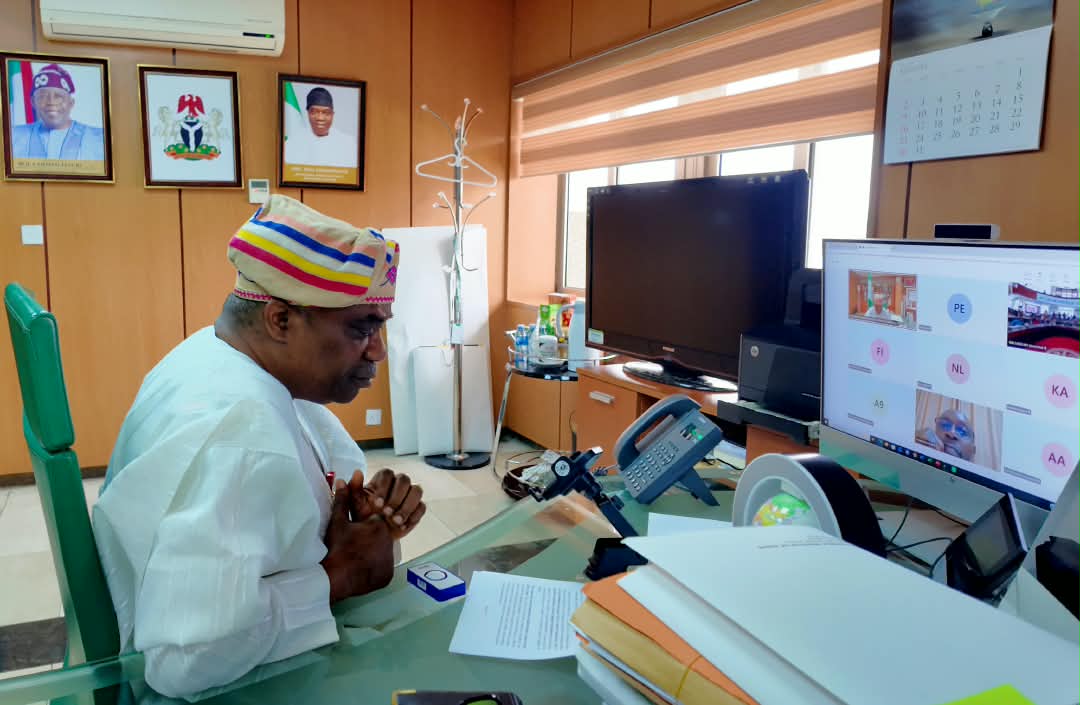
The Minister of State for Foreign Affairs, Ambassador Sola Enikanolaiye, disclosed this at a virtual roundtable on “South Africa’s Xenophobia in Comparative Perspective,” convened by the Nigerian Institute of International Affairs on Tuesday.
According to a statement signed by Raphael Oni, Special Assistant on Digital Media and Public Diplomacy to the Minister, Enikanolaiye said Nigeria and Ghana would present the matter before African leaders, insisting that priority attention must be given to hate-driven violence and attacks causing anguish among African nationals in South Africa.
The minister described the violence as having “a particularly African, post-colonial and post-apartheid character,” arguing that the term Afrophobia more accurately captures the crisis.
He said Nigeria was deeply concerned by the continued killings, attacks and displacement of African nationals, noting that about 90 Nigerians had been killed in Afrophobic violence since June 2022, with fresh attacks and displacements recorded in 2026.
Enikanolaiye warned that the continued violence could damage South Africa’s international reputation, weaken investor confidence, threaten regional integration and diminish the moral authority the country earned during its liberation struggle.
He described as troubling the targeting of citizens from countries that supported South Africa during the anti-apartheid struggle, saying Nigeria’s relationship with South Africa was built on decades of sacrifice and solidarity.
The minister disclosed that the Ministry of Foreign Affairs had directed the Nigerian Institute of International Affairs to conduct a comprehensive study documenting Nigeria’s support for South Africa’s liberation struggle, estimated at more than $60 billion.
He said Nigeria’s support also included the nationalisation of British Petroleum, scholarships and hospitality extended to South African leaders.
“The relationship between Nigeria and South Africa is not reducible to trade statistics or diplomatic communiqués. There is history in that relationship. There is blood, sacrifice and solidarity in that history,” Enikanolaiye said.
To address the crisis, the minister urged South African authorities to strengthen migration systems that are transparent and humane and ensure that immigration laws were enforced solely by state institutions.
He cautioned against vigilantism and called on political leaders to avoid rhetoric portraying migrants as criminals or job thieves, warning that such language could create an environment in which violence thrives.
Enikanolaiye also advocated public discourse grounded in facts and data rather than misinformation and social media rumours.
He urged the full activation of existing Nigeria-South Africa early-warning and rapid-response mechanisms to detect and defuse tensions before they escalate.
Beyond government action, the minister stressed the need to deepen people-to-people diplomacy by mobilising businesses, universities, religious and traditional institutions, youth groups, civil society and the media to rebuild trust and promote a shared African identity.
He said Africa must move beyond mere tolerance towards a culture of belonging where a Nigerian in Johannesburg and a South African in Lagos are regarded first as Africans with equal dignity.
Enikanolaiye also reaffirmed President Bola Ahmed Tinubu’s commitment to the welfare and protection of Nigerians abroad, citing the President’s direct intervention in the recent repatriation of Nigerians from South Africa.
READ ALSO: Abuja Flash Floods: NiHSA DG Calls for Urgent Drainage Waterways Reform in Nigeria
MURIC Requests Visit to El-Rufai in ICPC Custody
He commended the Nigerian missions in Pretoria and Johannesburg, as well as other stakeholders, for ensuring that the evacuation exercise was carried out promptly.
The minister reaffirmed Nigeria’s resolve to work with South Africa, the African Union, ECOWAS and other partners to ensure that the continent’s pursuit of integration is matched by unity in practice and stronger protection for Africans across borders.
About The Author