By Fatima Saka
President Bola Ahmed Tinubu, GCFR, has called on Nigerians in the diaspora to move beyond remittances and become active investors in Nigeria’s productive sectors, saying their capital, expertise and global networks are critical to making the country great.
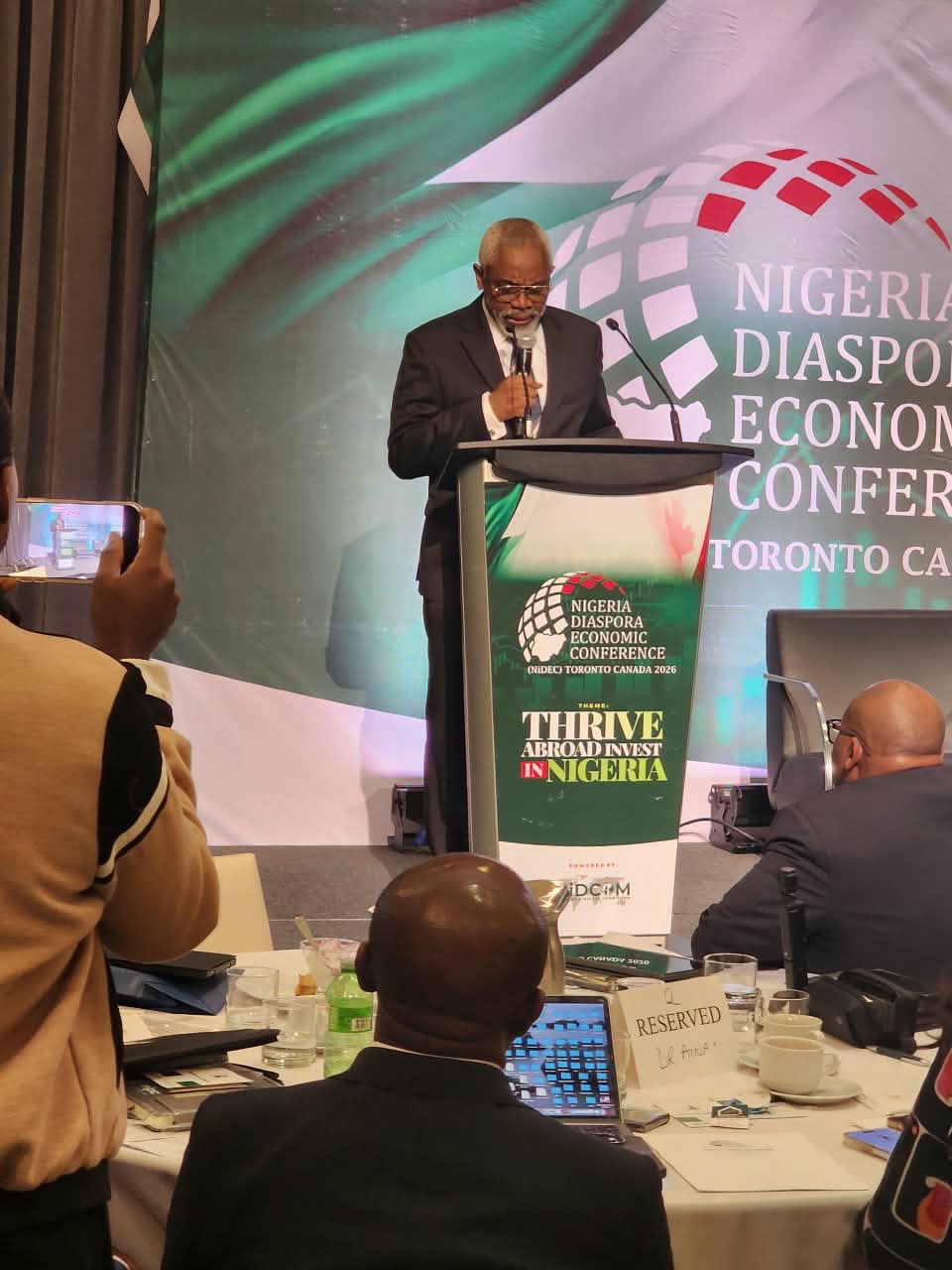
Tinubu, represented by his Chief of Staff, Rt. Hon. Femi Gbajabiamila, CFR, made the call in the President’s keynote address at the Nigeria Diaspora Economic Conference (NIDEC) 2026, held at the Apollo Convention Centre, Toronto, Canada, from August 13 to 15.
Speaking on the theme, “Thrive Abroad, Invest Nigeria,” Gbajabiamila said Nigerians should be able to prosper wherever they live while ensuring that their success abroad contributes to Nigeria’s economic development.
He said the prosperity of Nigerians abroad should not be separated from Nigeria’s progress, stressing that properly connected diaspora resources could become one of the country’s most powerful engines of growth.
Gbajabiamila said the conference theme was significant because it challenged the prevailing trend of Nigerians thriving in Nigeria while investing abroad.
He argued that investment was closely linked to economic power, which could translate into greater influence in national and international affairs.
“Economic power earns you a right of passage and a seat and voice at the conversation table,” he said, adding that such influence could strengthen issues of concern to Nigerians in the diaspora, including diaspora voting.
The Chief of Staff highlighted the contributions of Nigerians in Canada and other parts of the world in medicine, technology, academia, entrepreneurship, public service and the arts, describing their achievements as evidence of the capacity of Nigerians to compete globally.
He said the Tinubu administration’s Renewed Hope Agenda was aimed at creating a productive, competitive and inclusive economy capable of generating foreign exchange through production, manufacturing, agriculture and exports rather than dependence on crude oil extraction.
Gbajabiamila said the administration’s target of building a $1 trillion economy by 2030 reflected the scale of investment required in jobs, infrastructure, skills and productivity.
He acknowledged that the economic reforms undertaken by the administration had imposed hardship on families and businesses, but maintained that the government chose reform over postponement to address structural weaknesses in the economy.
He said recent economic indicators showed signs of recovery, citing real GDP growth of 3.89 per cent in the first quarter of 2026, manufacturing growth of 3.29 per cent and inflation of 15.91 per cent.
According to him, Nigeria ended 2025 with foreign reserves of $45.4 billion, alongside improved exchange-rate stability and sustained trade surpluses.
He also cited projections by the International Monetary Fund and acknowledgements by the World Bank as evidence that Nigeria’s economic reforms were improving macroeconomic stability and resilience.
However, Gbajabiamila stressed that the indicators did not mean the country’s challenges had disappeared, saying the next phase of reforms must focus on accelerating productivity, creating jobs, reducing living costs and ensuring that economic gains reach ordinary Nigerians.
He said Nigerians abroad had for decades supported families and communities through remittances, but urged them to move beyond sending money for consumption towards structured investments capable of expanding production.
“Remittances sustain consumption. Investment expands production. Expertise builds institutions. Networks open markets. Nigeria now needs all four,” he said.
Gbajabiamila urged diaspora investors to consider sectors including agro-processing, healthcare, technology, energy, housing, logistics, mining, education, creative industries and export manufacturing.
He further encouraged Nigerians abroad to leverage the African Continental Free Trade Area to use Nigeria as a platform for accessing the wider African market.
He stressed the need for diaspora investors to organise professionally through investment clubs, sector funds, co-investment vehicles, venture networks and institutional partnerships, while demanding proper governance, audited accounts and due diligence.
Beyond financial investment, he urged Nigerians in the diaspora to contribute their expertise by mentoring entrepreneurs, supporting universities and hospitals, establishing research partnerships, opening foreign markets to Nigerian products and transferring international standards and systems.
“Investments of time and talent may be even more transformative than money,” he said.
The Chief of Staff also said the government had a responsibility to create an enabling environment for diaspora investment through predictable regulations, transparent project pipelines, credible counterparties, efficient consular services, stronger property rights and faster dispute resolution.
He cited the Non-Resident Nigerian Ordinary Account, Non-Resident Nigerian Investment Account and non-resident Bank Verification Number as practical measures designed to make it easier for Nigerians abroad to participate in the Nigerian financial system.
Gbajabiamila also called for a broader interpretation of “Nigeria First” and “Local Content” to accommodate Nigerians in the diaspora investing in the country.
He urged diaspora Nigerians to remain constructive in their criticism of the government, stressing that disagreement with an administration should not translate into actions capable of undermining Nigeria’s peace, institutions or economic future.
According to him, political campaigns are temporary, while citizenship is permanent, adding that Nigerians should ensure that political differences do not become a permanent obstacle to national development.
He said the success of the diaspora conference should ultimately be measured by tangible commitments, including funding enterprises, strengthening institutions, mentoring young Nigerians, opening export routes, establishing research partnerships and transforming communities.
Gbajabiamila concluded by calling on Nigerians abroad to connect their personal success to national development, saying, “Making Nigeria great is a task that must be done.”
He said diaspora Nigerians had a major role to play in accomplishing the task, stressing that Nigeria’s vast natural resources, agricultural potential and human capital provided significant investment opportunities.
READ ALSO: Africa’s Green Transition To Create 7.9m Jobs by 2030 – FSD Africa
United Nigeria Airlines Crew Member Commended for Professionalism in Handling Unruly Passenger
“Thrive abroad. Invest Nigeria. Speak of Nigeria with truth. Correct her with love. Build her with confidence,” he said.
He assured the gathering that the Federal Government remained committed to strengthening the relationship between Nigeria and its diaspora, while expressing optimism that a stronger partnership would contribute to the country’s economic transformation.
About The Author