By Fatima Saka
The National Library of Nigeria (NLN) and the Qatar National Library (QNL) have signed a landmark Memorandum of Understanding (MoU) to strengthen cooperation in knowledge exchange, research, digital transformation, cultural heritage preservation and professional development.
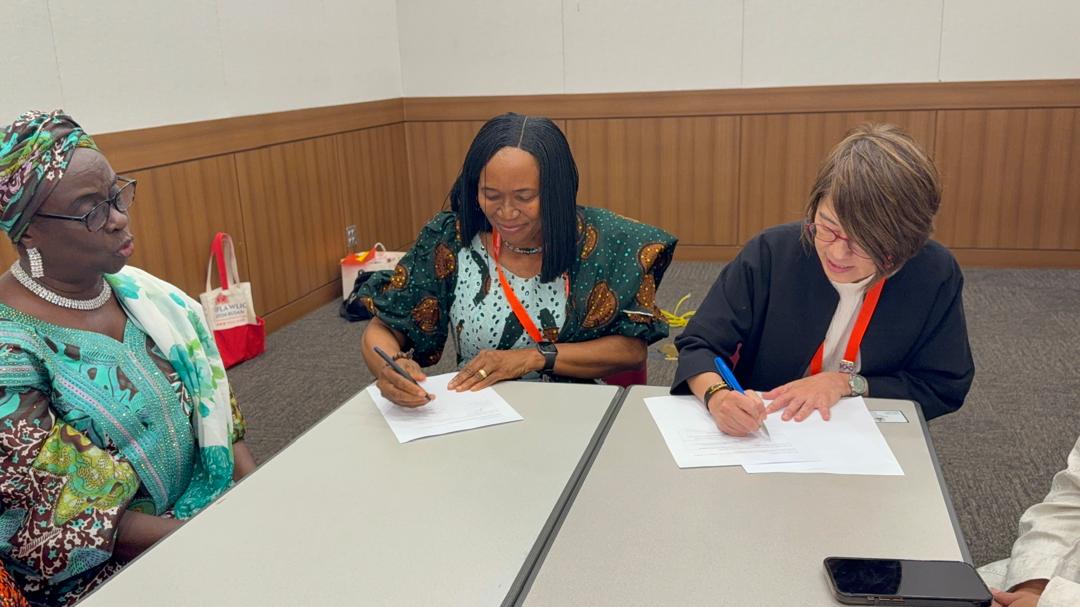
The agreement, signed on Wednesday, August 12, 2026, provides a formal framework for collaboration between the two national institutions in scientific, technical and cultural fields, including the exchange of educational and research materials, publications, professional expertise and joint development of programmes and digital content.
The MoU was signed by Prof. Chinwe Veronica Anunobi, National Librarian and Chief Executive Officer of the National Library of Nigeria, and Huism Tan, Executive Director of the Qatar National Library, in the presence of Prof. Nora Ladi Daduut, Nigeria’s Ambassador to the Republic of Korea.
The partnership followed the visit of Nigeria’s First Lady, Senator Oluremi Tinubu, to the Qatar National Library in Doha, where she expressed admiration for the institution’s modern facilities and approach to knowledge, research and cultural preservation.
During the visit, the First Lady highlighted the need for Nigeria to properly document and preserve its rich cultural heritage for future generations.
Following the visit, the Minister of Education, Dr. Maruf Tunji Alausa, advanced discussions on the proposed partnership, identifying technical cooperation with QNL as an opportunity to strengthen Nigeria’s national library through digital services, preservation, staff development and innovative library technologies.
The Minister subsequently facilitated a visit by Prof. Anunobi and her team to the Qatar National Library, where Nigerian and Qatari library professionals exchanged knowledge on digital transformation, conservation, electronic resources, digital repositories, automation, smart library systems and public library services.
A major focus of the MoU is digital preservation and the protection of Nigeria’s cultural heritage, including historical records, indigenous knowledge, publications, manuscripts, photographs and other materials that constitute the country’s collective memory.
The agreement is expected to provide the National Library of Nigeria with opportunities to draw from Qatar’s experience in modern library technologies and sustainable digital preservation strategies, while also creating avenues for joint research, cultural exchange, public engagement and professional development.
The Ministry of Foreign Affairs said the partnership underscores the evolving role of national libraries beyond the traditional collection of books, noting that modern libraries serve as custodians of national memory, facilitators of research and education, and important institutions for protecting cultural identity.
The presence of Ambassador Daduut at the signing also highlighted the diplomatic value of the partnership, with libraries increasingly serving as instruments of cultural and knowledge diplomacy through professional exchanges, heritage preservation and shared intellectual resources.
The Ministry described the development from Doha to Busan as a progression from inspiration to institutional action, with the First Lady’s visit providing the initial impetus, the Minister of Education consolidating the discussions, the National Librarian’s visit deepening professional engagement, and the signing of the MoU establishing a framework for sustained cooperation.
For Nigeria, the agreement represents an opportunity to expand international cooperation in digital transformation, research, cultural preservation and professional capacity building.
READ ALSO: Experts Urge Africa to Cut Imported Animal Genetics, Invest in Livestock Innovation
OPHK Records 213% Surge of Terrorists
The partnership is also expected to create a stronger channel of engagement between Nigeria and Qatar while promoting greater access to knowledge and ensuring that important elements of Nigeria’s intellectual and cultural heritage are preserved for generations to come.
The Ministry of Foreign Affairs said the agreement reflects a shared commitment by both countries to strengthening libraries, preserving knowledge and ensuring that the memory and heritage of nations remain accessible to future generations.
About The Author