By Fatima Saka
For residents of Owode-Yewa in Ogun State, electricity is not merely unreliable, it is almost nonexistent. In this bustling border town known for trade and agriculture, prolonged power outages have quietly eroded livelihoods, deepened poverty, and left vulnerable residents cut off from the rest of the world.
Among those affected is a visually impaired retiree, Mr. Yusuf Otitilaye, widely known as Baba Soldier. For over four decades, he has lived in Owode-Yewa, but his daily reality is shaped by persistent darkness and isolation.
Electricity supply in the community is sporadic at best, sometimes available for only a few hours within weeks. For Baba Soldier, who depends on a mobile phone and radio for communication and information, this means constant disconnection. Charging these basic devices has become a daily struggle, often requiring reliance on neighbours or costly alternatives.
The situation is further compounded by years of exploitation. Baba soldier recount how a local electricity agent collected monthly payments ₦3,000, without remitting them to the appropriate authorities., The extortion persisted for over seven years, at some point becoming a family routine, with his wife occasionally sent to collect the payments.
Despite attempts to find solutions, including efforts to acquire prepaid meters, Baba Soldier says he was repeatedly defrauded. Even when metering became available, stable electricity remained out of reach.
Owode-Yewa, located in Yewa South Local Government Area, is strategically positioned near Nigeria’s border with the Republic of Benin. Once a thriving commercial hub driven by cross-border trade and agriculture, the town is now grappling with economic decline linked to poor power supply.
With the population of over 286,000 people (2006 census), the community’s economic potential is steadily undermined by chronic power outages
Small businesses have suffered significantly. Skilled workers are abandoning their trades, unable to operate without electricity. A local cobbler, Mr. Abiodun Alouge, said the situation has forced many into alternative means of survival, including commercial tricycle riding.
Similarly, a resident, Mr. Nuru Bakole, described the situation as worsening across nearby communities, noting that while Owode-Yewa occasionally experiences brief electricity supply, areas such as Oke-Odan and Ajilete have reportedly gone years without any power.
Across the community, young people are leaving in search of better opportunities, as unreliable electricity continues to stifle enterprise and innovation.
For Baba Soldier, a turning point came when his daughter visited and experienced firsthand the hardship of living without electricity. Unable to cope, she invested in a small solar system, including panels, a battery, inverter, and controller.
The impact was immediate. Baba Soldier explained that the installation restored his ability to charge devices, stay informed through radio broadcasts, and communicate with loved ones. However, he noted that while solar energy has proven more stable for his needs, it remains a personal solution that many residents cannot afford.
He also called on government authorities to intervene more decisively in the electricity sector, stressing that current supply challenges exceed the capacity of private operators.
Energy experts say such reliance on solar reflects deeper structural issues. Professor Jide Jimoh, Dean of the Faculty of Communication and Media Studies at Lagos State University, noted that while solar energy is a viable alternative, it should not replace a functional national grid.
He emphasized the need for government-led reforms, including decentralized electricity systems and targeted interventions for rural communities. According to him, renewable energy should complement, not substitute to reliable public power supply.
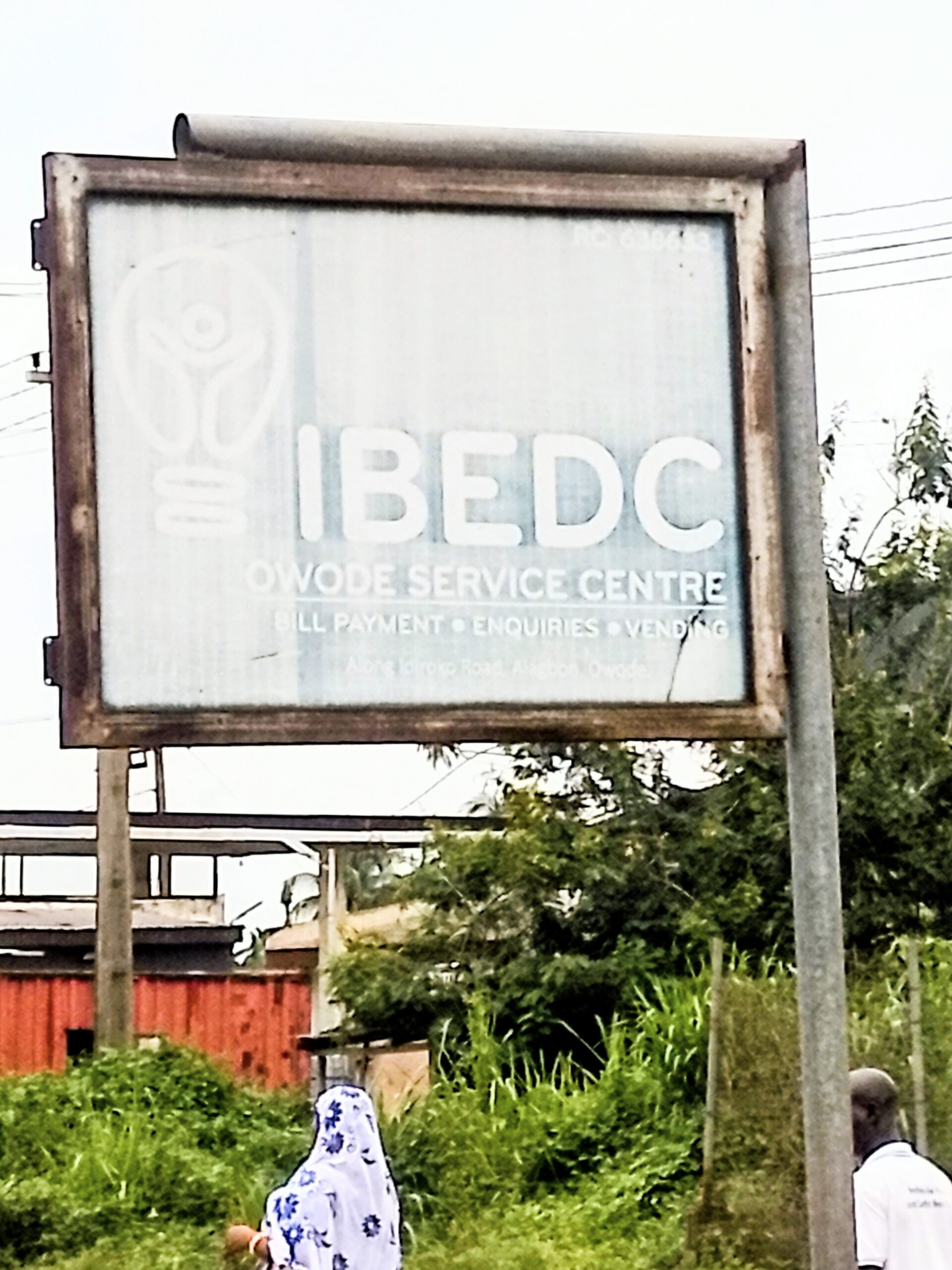
Industry officials attribute the crisis in Owode-Yewa to systemic limitations. The Service Centre Manager of the Ibadan Electricity Distribution Company (IBEDC), Mr. Geoffrey Machukwu, explained that inadequate load allocation from the Transmission Company of Nigeria (TCN) and overstretched feeders are major factors behind the erratic supply.
He noted that the Lusada 33KVA feeder currently serves multiple communities, placing areas like Owode Yewa at a disadvantage due to their distance from the source. This imbalance has led to rationing, with some communities experiencing prolonged outages.
Machukwu disclosed that several communities, including Okeneja, Orinjori, Uweye, Ipake, Agilete, and Okeodo, have remained without electricity since 2024 due to insufficient supply.
He, however, revealed that a new dedicated feeder project facilitated by Senator Solomon Olamilekan Adeola is underway and over 50 percent completed. The project, once finished, is expected to significantly improve electricity supply in the area.
Also speaking, the Special Adviser on Energy to the Ogun State Governor, Engr. Babajide Onakoya, attributed the persistent power challenges to structural issues within Nigeria’s electricity sector.
He explained that distribution companies are primarily responsible for extending infrastructure to underserved communities, while the Transmission Company of Nigeria manages bulk electricity allocation. According to him, state governments play a supportive role by enabling investments and occasionally providing infrastructure such as transformers.
Onakoya further noted that rural electrification efforts are partly driven by the Rural Electrification Agency (REA), which promotes off-grid solutions like solar power. However, he stressed that such interventions require sustainable financing and private sector participation.
For business owners, the impact is immediate. The Chief Executive Officer of AR-RACHID Ventures Ltd, Mr. Rasheed Adegbite, described the operational challenges caused by unreliable electricity, noting that frequent damage to power infrastructure forces reliance on generators.
He advocated for expanded solar installations, improved metering systems, and faster maintenance responses.
Adegbite also highlighted the risks associated with poor metering, which he said has enabled unauthorized billing practices in some communities.
The Experts agree that addressing the crisis will require a combination of improved grid infrastructure, renewable energy expansion, and policy reforms aimed at ensuring affordability and access.
The situation in Owode-Yewa reflects a broader national challenge. Nigeria continues to struggle with energy poverty, despite commitments under Sustainable Development Goal 7, which seeks to ensure universal access to affordable, reliable, and sustainable energy.
READ ALSO: Diaspora Expertise Must Drive Youth Health Innovation, ARCO GMD Urges Stakeholders i
In communities like this, the absence of electricity extends beyond inconvenience, it shapes economic realities, limits access to information, and deepens social isolation.
As night falls over Owode-Yewa, the hum of generators competes with the quiet glow of solar-powered lights in a few homes. For Baba Soldier, the darkness is no longer absolute, but it remains a constant reminder of a power system that has yet to serve those who need it most.
About The Author