By Fatima Saka
The Federal Government has reaffirmed its commitment to reducing Nigeria’s cancer burden by 30 per cent by 2030, as it called for stronger Pan-African collaboration to tackle the growing cancer crisis across the continent.
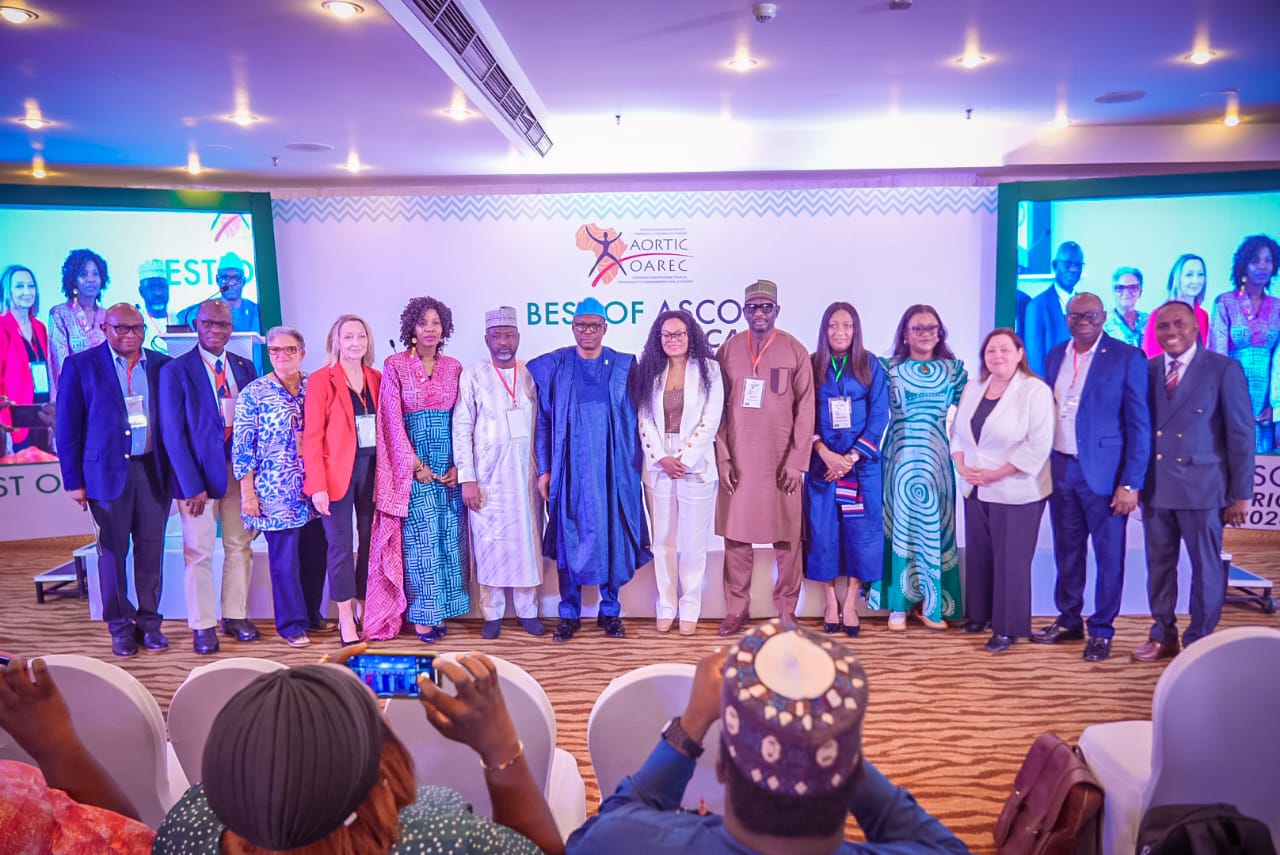
The Honourable Minister of State for Health and Social Welfare, Dr. Iziaq Adekunle Salako, made this known on Friday in Abuja during his address at the African Organisation for Research and Training in Cancer (AORTIC) Best of ASCO Africa 2026 conference held at the Transcorp Hilton Hotel.
Salako described cancer as a major public health threat in Africa, citing 2024 data from the Global Cancer Observatory (GLOBOCAN), which recorded 1,187,697 new cases and 721,629 deaths across the continent. He noted that cancer now kills more Africans than AIDS, malaria, and tuberculosis combined.
“Nigeria accounts for about 10.5 per cent of the cancer burden in Africa, ranking among the top three countries alongside Egypt and South Africa,” he said.
He attributed the rising burden to lifestyle and environmental risk factors, ageing populations, weak early detection systems, and inadequate treatment infrastructure, further worsened by health inequities.
The minister, however, stressed that the situation is not hopeless, noting that Nigeria is implementing a comprehensive National Cancer Control Plan (2026–2030) aimed at addressing prevention, diagnosis, treatment, research, and survivorship.
According to him, the plan also incorporates data management, artificial intelligence, workforce development, partnerships, and resource mobilisation to ensure a holistic response to cancer care.
“To drive effective implementation, a National Technical Working Group comprising experts, survivors, clinicians, and development partners has been inaugurated to translate the plan into measurable impact,” Salako added.
He emphasised that the theme of the conference, “From Global Discovery to Local Recovery: Driving Africa to the Cutting Edge of Cancer Care,” reflects the need to adapt global scientific breakthroughs to African realities.
Salako urged African researchers and clinicians not to adopt foreign findings without validation but to replicate studies within local contexts to ensure relevance and effectiveness.
He further called for a shift in continental priorities, advocating for “Healthcare Pan-Africanism” to complement traditional focus areas such as politics, trade, and security.
“Africa must rise to tackle cancer not just as a health issue, but as a matter of human security, economic growth, and sustainable development,” he said.
The minister also highlighted the political will of the current administration under President Bola Ahmed Tinubu, noting that cancer care is receiving increased attention under the Renewed Hope Agenda.
He commended AORTIC and the conference organisers for creating a platform that bridges global oncology research with African healthcare needs, while reaffirming Nigeria’s readiness to lead efforts in advancing cancer research, education, and advocacy across the continent.
READ ALSO: Troops Foil Midnight ISWAP Infiltration Attempts in Borno, Force Terrorists to Retreat
Troops Intercept Foreign Drug Courier Supplying Terrorists in Lake Chad, Seize Illicit Consignment
Salako further urged stakeholders to leverage the conference outcomes to improve clinical practices, enhance patient outcomes, and reduce cancer-related mortality in Africa.
The Best of ASCO Africa conference brings together oncology professionals, researchers, policymakers, and advocates to review and contextualise key findings from the American Society of Clinical Oncology (ASCO) annual meeting for application within African health systems.
About The Author