
By Fatima Saka
Nigeria’s disaster management architecture is undergoing a significant transformation as the National Emergency Management Agency (NEMA) intensifies efforts to prevent flood disasters through early warning systems, grassroots engagement and coordinated preparedness strategies.
This shift, driven by the Director-General, Zubaida Umar, marks a departure from the traditional reactive approach to emergencies, placing greater emphasis on anticipatory action and risk reduction to safeguard lives and livelihoods.
Flooding has long remained one of Nigeria’s most destructive natural disasters, annually displacing thousands, damaging infrastructure and crippling local economies. However, recent interventions by NEMA indicate a gradual decline in the scale of devastation in several high-risk areas, attributed largely to improved preparedness and timely dissemination of information.
Central to this progress is the agency’s strengthened flood early warning system, which now prioritises direct communication with vulnerable communities. Rather than limiting flood predictions to technical reports within government institutions, NEMA has adopted a decentralised approach—simplifying alerts and delivering them in accessible formats to those most at risk.
The agency has partnered with state governments, traditional rulers, local emergency committees, women and youth groups, as well as the media, to ensure that early warnings reach grassroots populations promptly. This people-centred model underscores the principle that disaster information is only effective when it is understood and acted upon at the community level.
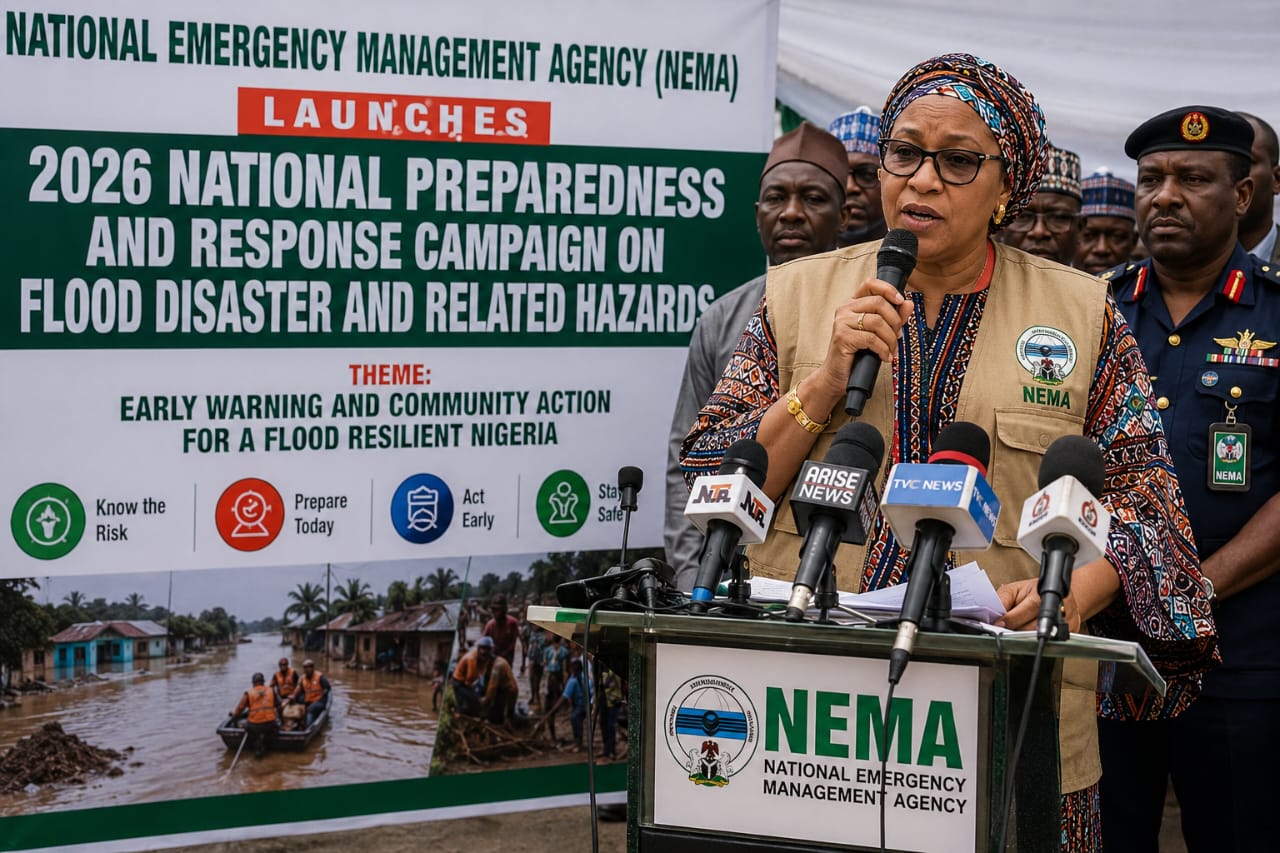
NEMA’s commitment to proactive disaster management was further demonstrated during the flag-off of the 2026 National Preparedness and Response Campaign on Flood Disaster and Related Hazards in Adamawa State. During the event, Governor Ahmadu Umaru Fintiri commended the agency’s efforts, noting improved awareness and preparedness across communities.
Umar disclosed that the agency had developed a comprehensive 2026 Climate-Related Risk Management, Preparedness and Mitigation Framework, alongside detailed flood vulnerability maps covering at-risk communities nationwide. According to her, these tools are designed to guide decision-making, enhance coordination and reduce the human and economic toll of flooding.
The nationwide campaign has already been launched in several states, including Adamawa, Katsina, Anambra, Bayelsa, Jigawa and Delta, with further rollouts planned across other flood-prone regions. The initiative focuses on educating communities on evacuation procedures, safe relocation, environmental sanitation and drainage management.
At the grassroots level, NEMA is also promoting the establishment and strengthening of Local Emergency Management Committees (LEMCs), aimed at fostering community ownership of disaster preparedness. Residents are being encouraged to take preventive actions such as clearing waterways and maintaining proper sanitation to mitigate flood risks.
Findings indicate that communities previously vulnerable to annual flooding are now more responsive to evacuation advisories and better organised in implementing safety measures. State governments, too, are increasingly adopting proactive measures following sustained engagement by the agency.
Experts note that the evolving approach aligns Nigeria’s disaster management framework with global best practices, particularly at a time when climate change continues to intensify extreme weather events worldwide.
Governor Fintiri’s endorsement reflects growing confidence among subnational governments in NEMA’s operational direction, with many acknowledging the agency’s role in strengthening resilience and reducing disaster impact.
READ ALSO: MURIC Congratulates Hamzat, Urges Inclusive Politics After APC Primaries Victory
Nigeria, China Strengthen Police Alliance to Tackle Cybercrime, Boost Intelligence Sharing
Analysts emphasise that while disaster management often gains attention during crises, its true success lies in prevention. The relative reduction in flood-related casualties and damage in recent years is being credited to sustained planning, stakeholder collaboration and community sensitisation led by the agency.
As Nigeria faces increasing climate-related risks, stakeholders say continuity in proactive policies will be critical. NEMA’s current trajectory, under Umar’s leadership, is widely seen as a model for how strategic planning, institutional coordination and grassroots engagement can collectively reduce disaster risks and protect vulnerable populations.
About The Author