By Fatima Saka
The Africa Centres for Disease Control and Prevention has declared the ongoing Bundibugyo Ebola outbreak in the Democratic Republic of the Congo and Uganda a Public Health Emergency of Continental Security (PHECS), warning of increasing infections and a heightened risk of regional spread.
The declaration, announced Tuesday following recommendations from the agency’s Emergency Consultative Group, enables the Africa CDC to coordinate a continent-wide response aimed at containing the outbreak and preventing further transmission.
According to the agency, as of May 18, approximately 395 suspected cases and 106 deaths have been recorded in affected areas of eastern DRC. In Uganda, authorities have confirmed two cases and one death in the capital, Kampala.
Director-General of Africa CDC, Jean Kaseya, said the declaration was critical to mobilising urgent and collective action across Africa.
“Africa’s health security is indivisible. We must act early, act together, and act based on science,” he said.
Kaseya noted that the outbreak, driven by the Bundibugyo strain of the Ebola virus, is unfolding in a challenging environment marked by insecurity, fragile health systems, and high population mobility—particularly in mining regions.
He warned that cross-border movements, alongside the proximity of affected areas to neighbouring countries such as Rwanda and South Sudan, significantly increase the risk of wider regional transmission.
In response, the Africa CDC is collaborating with the World Health Organization and other partners to activate an Incident Management Support Team (IMST). The effort is guided by the “4 Ones” principle—one team, one plan, one budget, and one monitoring framework—to streamline coordination.
The agency has also deployed multidisciplinary teams, including experts in epidemiology, laboratory systems, infection prevention and control, and risk communication. An initial $2 million has been committed to support response efforts.
Chair of the Emergency Consultative Group, Salim Abdool Karim, said the declaration followed a comprehensive assessment of epidemiological trends and regional risks.
“The interconnected transmission between DRC and Uganda requires urgent, coordinated continental action,” Karim said.
Health experts have expressed concern over the outbreak due to the limited availability of approved vaccines and treatments for the Bundibugyo strain. In response, the Africa CDC is accelerating research and evaluation of potential medical countermeasures.
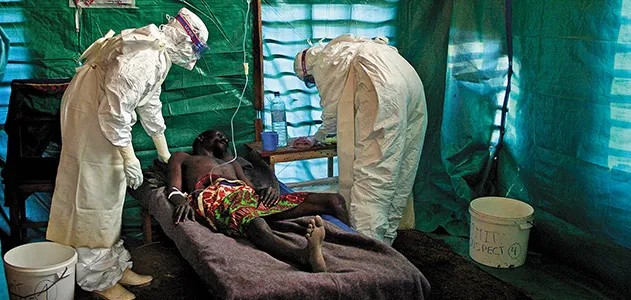
Ebola, a severe and often fatal disease, spreads through direct contact with bodily fluids of infected individuals, contaminated materials, or the remains of deceased victims. Public health measures such as early detection, isolation, contact tracing, and safe burial practices remain critical to controlling its spread.
READ ALSO: MURIC Urges Pilgrims to Secure Saudi SIM Cards, Shares Hotel WiFi Access Details
The declaration comes amid growing calls for increased investment in Africa’s health security systems, as authorities work to avert a repeat of previous large-scale Ebola outbreaks.
The Africa CDC said it will continue to monitor the situation and provide updates as response efforts intensify.
About The Author