By Fatima Saka
Abuja, Nigeria — the Federal Government of Nigeria has declared malaria elimination an urgent national priority, with the Federal Government unveiling an ambitious plan to cut malaria prevalence and deaths by 50 percent by 2030.
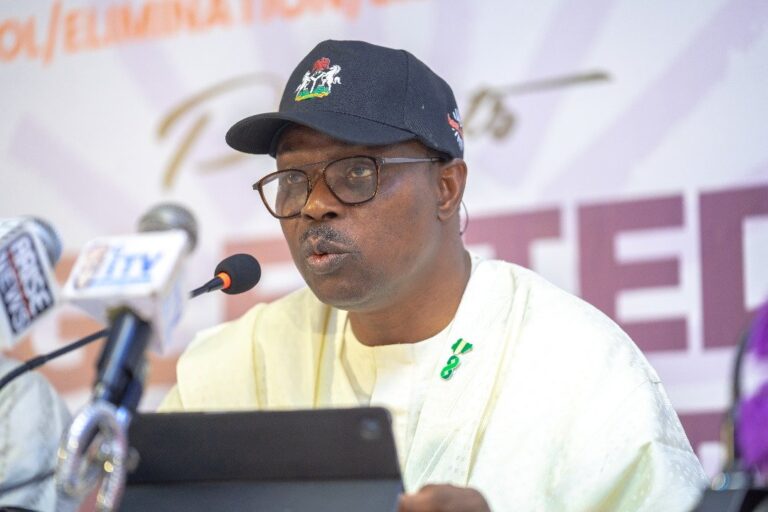
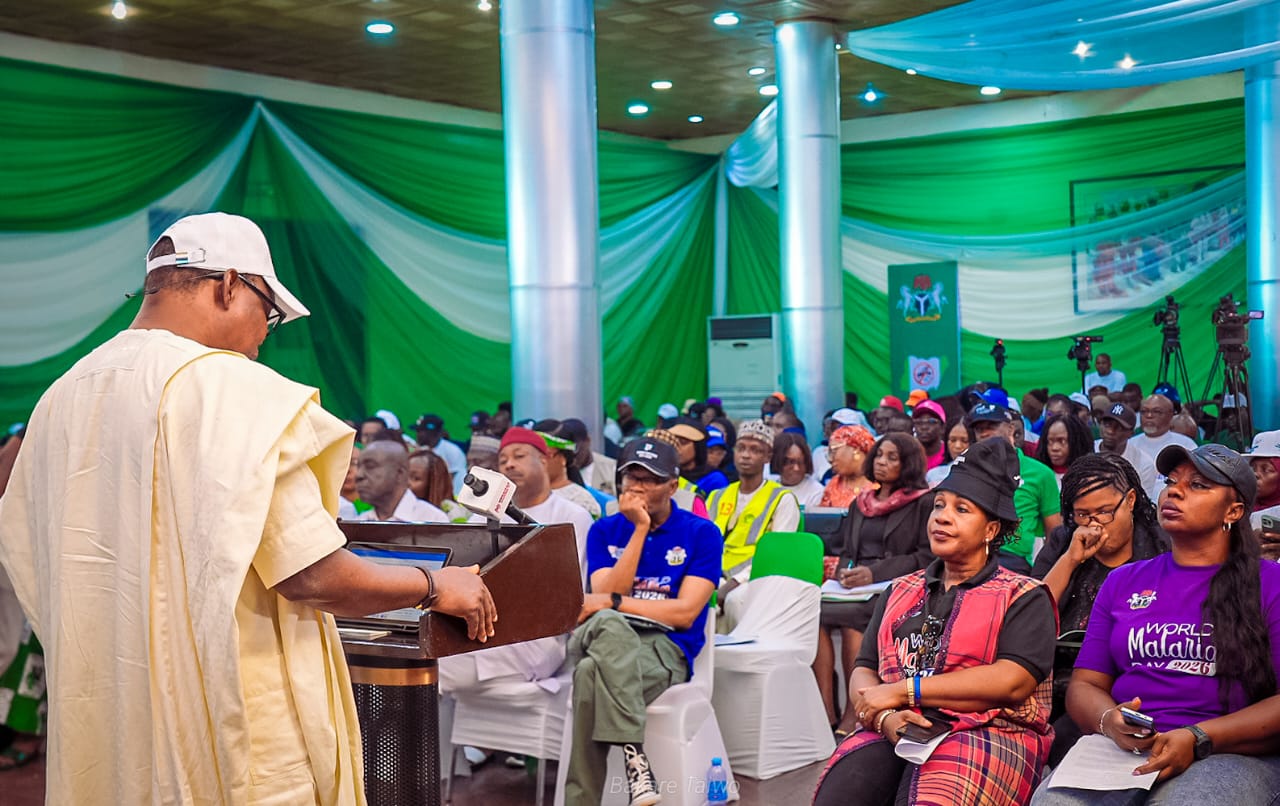
Speaking at a press briefing to commemorate World Malaria Day 2026 in Abuja, the Minister of State for Health and Social Welfare, Dr. Iziaq Adekunle Salako, described malaria as a “national emergency” that continues to threaten millions of lives, particularly children and pregnant women.
The event, held at Rockview Hotel, underscored Nigeria’s renewed push to eliminate one of its most persistent public health challenges.
Citing the World Malaria Report 2025, Salako revealed that Nigeria accounts for 24 percent of global malaria cases and 31 percent of deaths—figures he said represent “grieving families and lost national potential.”
“Malaria is not ordinary. It weakens families, reduces productivity, and imposes heavy costs on our health system and economy,” he said.
Despite the burden, the government reported notable progress. According to the 2025 Malaria Indicator Survey, prevalence has dropped from 42 percent in 2010 to 15 percent in 2025. No state is currently classified under high transmission, with most now falling within moderate and low transmission categories.
Salako cautioned, however, that “progress is not victory,” stressing the need for sustained urgency.
The minister credited Bola Ahmed Tinubu for prioritising malaria elimination under the Renewed Hope Agenda, noting that the government’s response is now anchored on concrete strategies rather than rhetoric.
Central to this is the newly developed National Malaria Strategic Plan (2026–2030), aligned with global and national health frameworks, aimed at significantly reducing malaria burden through targeted, state-specific interventions.
As part of ongoing interventions, over 500 million insecticide-treated nets have been distributed since 2015. In 2026, distribution is being expanded across 11 states, including the Federal Capital Territory.
Additionally, Seasonal Malaria Chemoprevention will reach about 29 million children under five across 21 states—one of the largest child-focused malaria prevention programmes in Africa.
Nigeria is also scaling up malaria vaccination, which began in 2024 in Kebbi and Bayelsa states and has now expanded to Bauchi and Ondo. Over 700,000 children have already benefited.
In a major innovation, the country is piloting Larval Source Management in six states, targeting mosquito breeding sites as part of an integrated control strategy.
Salako emphasised that malaria elimination cannot be achieved by government alone, calling for stronger collaboration with donors, private sector players, civil society, and the media.
He urged Nigerians to adopt preventive measures, including sleeping under treated nets, maintaining clean environments, and seeking proper diagnosis before treatment.
With the 2026 theme, “Driven to End Malaria: Now We Can,” the minister called for sustained investment, stronger partnerships, and collective action.
READ ALSO: Senator Victor Umeh: Power, Persistence and Influence Beyond Rhetoric in Nigerian Politics
Awa Ibraheem Donates ICT Hub: MURIC Urges Wealthy Nigerians to Support Education
“Malaria is preventable, treatable, and eliminable,” he said. “The cost of delay is too high. Nigeria must act with speed and unity.”
He reaffirmed that with coordinated efforts, Nigeria can decisively reduce malaria burden and move toward a malaria-free future.
About The Author