By Fatima Saka
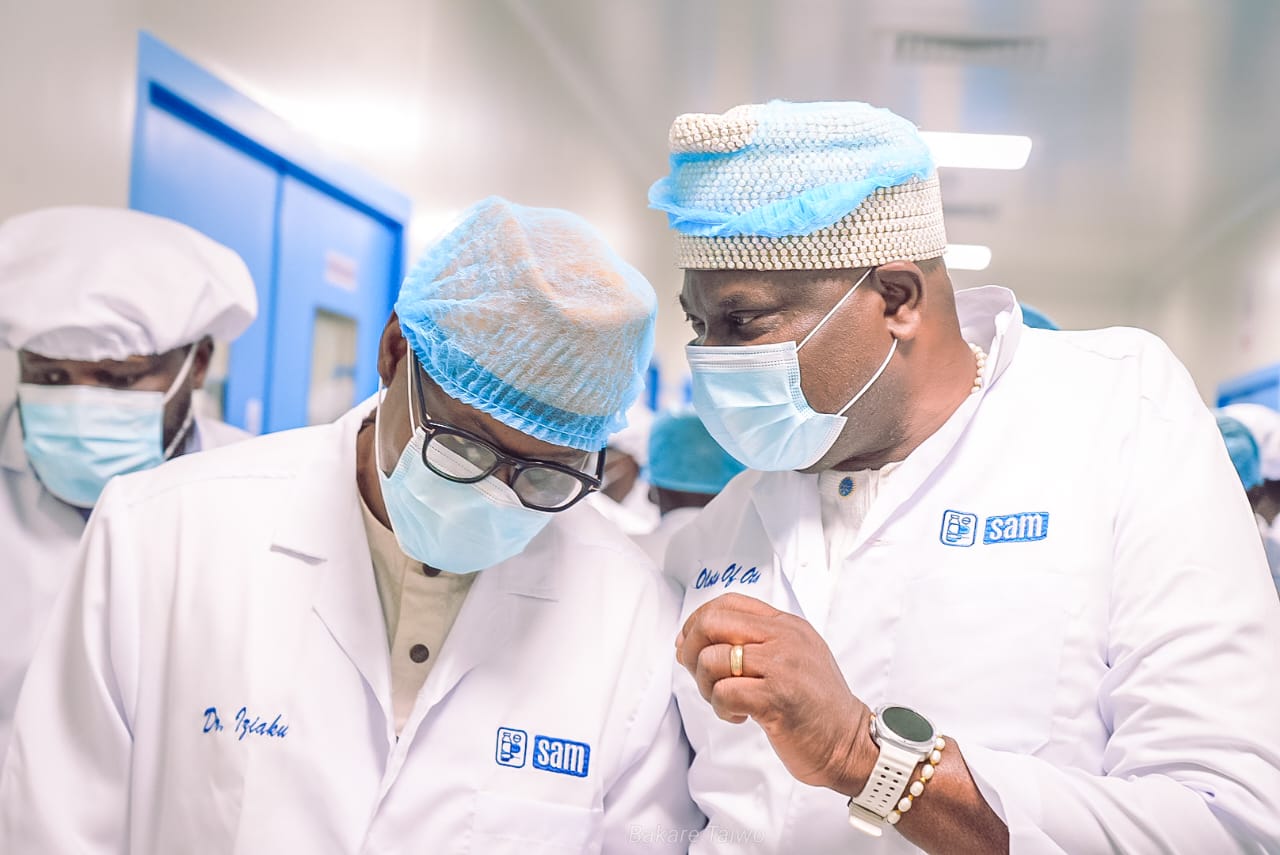
Ota, Ogun State — The Federal Government has intensified its drive for medicine sovereignty and reduced dependence on imports, as a new state-of-the-art pharmaceutical manufacturing plant was inaugurated in Ogun State.
The Minister of State for Health and Social Welfare, Dr Iziak Adekunle Salako, said the expansion of local drug production capacity is critical to Nigeria’s health security, especially amid global supply disruptions and shifting international funding dynamics.
Speaking at the grand opening of Sam Pharmaceutical Ltd’s facility in Ota, Salako stressed that the COVID-19 pandemic exposed the risks of overreliance on foreign medicines, noting that “pharmaceutical nationalism” during the crisis threatened access to essential drugs in Nigeria.
He added that recent global healthcare funding shifts, including restrictions linked to United States foreign aid, have further underscored the urgency of building a resilient domestic pharmaceutical industry.
The minister said the administration of Bola Ahmed Tinubu is prioritising local manufacturing through key reforms such as the Presidential Initiative to Unlock Healthcare Value Chains (PVAC) and targeted executive orders designed to incentivise production.
According to him, the government’s zero-tariff policy on pharmaceutical machinery, active ingredients, and excipients is already benefiting at least 87 local manufacturers, helping to boost production capacity and attract investments into the sector.
Salako highlighted recent milestones, including Nigeria’s first World Health Organization (WHO) prequalified products in West and Central Africa, the establishment of rapid diagnostic test production facilities, and ongoing efforts to begin local manufacturing of Active Pharmaceutical Ingredients (APIs).
He noted that the government is also advancing research and development through partnerships with international organisations, including a €18 million Manufacturing and Access to Vaccines, Medicines and Health Technologies (MAV+) project aimed at strengthening local capacity.
The minister further called for increased investment in phytomedicine, pointing out that Nigeria’s rich plant resources could play a major role in developing affordable treatments for diseases such as malaria, cancer, and sickle cell disorder.
He urged pharmaceutical companies to collaborate with the National Institute for Pharmaceutical Research and Development (NIPRD), which is establishing a new zonal office in Ogun State to support innovation and drug development using local raw materials.
While commending Sam Pharmaceuticals for expanding from just nine products at inception to over 110, Salako challenged industry players to align with the national target of increasing local drug production from about 30–40 per cent to 70 per cent by 2030.
He also emphasised that government incentives must translate into lower medicine prices for Nigerians, placing patients at the centre of all sector reforms.
READ ALSO: Science Must Work for Everyone – WHO Emphasize
FG Moves to Ease Trade Bottlenecks as NRS, Customs, PEBEC Review Single Window Platform
Reaffirming government commitment, the minister said agencies such as the National Agency for Food and Drug Administration and Control (NAFDAC) will continue to receive support to strengthen regulatory standards and maintain global benchmarks.
He further urged the investors to take advantage of ongoing reforms to deepen Nigeria’s pharmaceutical manufacturing capacity, improve access to essential medicines, and enhance public health outcomes nationwide.
About The Author