By Fatima Saka
The National Assembly Joint Committee on Livestock Development on Friday mounted intense scrutiny on the Federal Ministry of Livestock Development over the total non-release of its 2025 budget, warning that funding paralysis could undermine national food security, economic diversification and conflict resolution efforts.
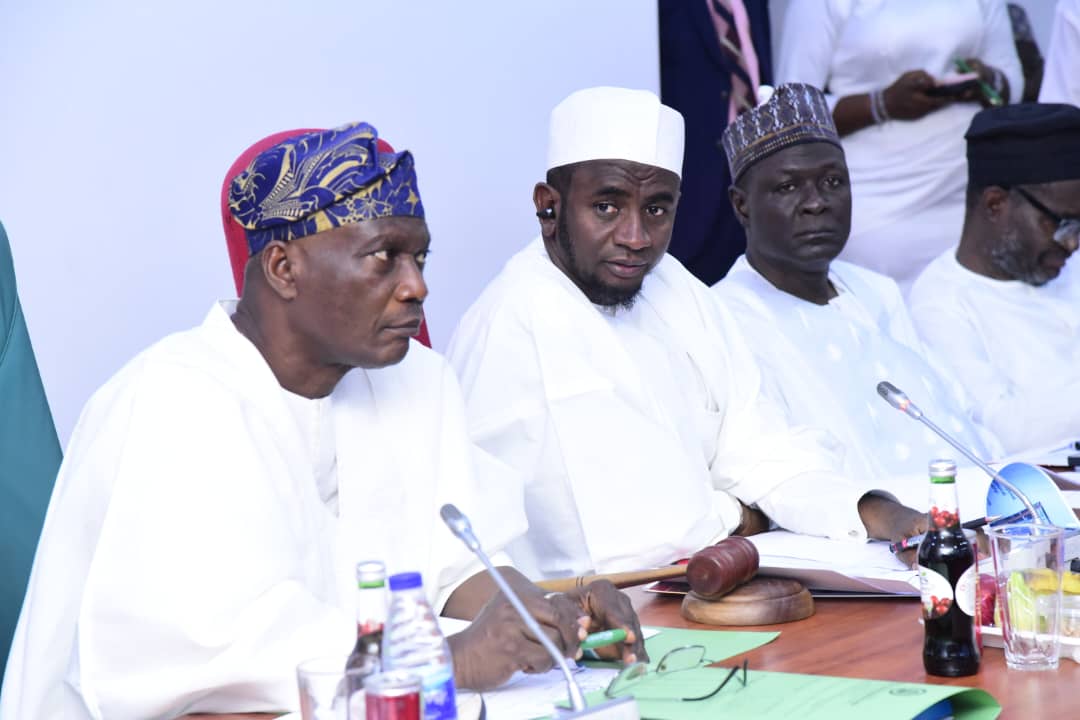
The joint budget defence session, chaired by Senator Shehu Buba and Hon. Wale Raji, brought the ministry’s financial position under sharp legislative focus as lawmakers demanded accountability, implementation clarity and measurable outcomes.
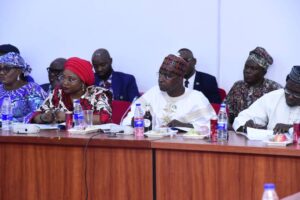
Opening the hearing, Senator Buba described the session as a constitutional obligation and a strategic intervention at a critical time in Nigeria’s livestock reform journey.
He recalled that President Bola Ahmed Tinubu established the ministry on July 9, 2024, under the Renewed Hope Agenda to structurally reposition the livestock sector as a pillar of food security, job creation, rural development and national stability.
“This is not a routine budget defence. We are duty-bound under Section 80(4) of the 1999 Constitution (as amended) to ensure that public funds are properly appropriated and effectively utilised,” Buba said.
He noted that despite Nigeria’s vast livestock population, one of the largest cattle herds in Africa alongside millions of sheep, goats and poultry, productivity remains weak due to outdated production systems, poor veterinary coverage, inadequate feed infrastructure and limited processing capacity.
According to him, the consequences are evident in recurring farmer-herder conflicts, rural insecurity, food supply disruptions and heavy dependence on dairy and livestock imports that strain foreign exchange reserves.
Presenting the ministry’s financial status, the Minister of Livestock Development, Idi Mukhtar Maiha, confirmed that there has been zero cash-backed release for the 2025 budget.
“For 2025, there has been zero performance because there has been zero release. We have been operating on the ₦20 billion earlier released from the take-off grant,” Maiha told lawmakers.
He explained that at inception in 2024, the ministry received a ₦75 billion take-off grant, out of which ₦20 billion was released and fully utilised to execute 40 projects and establish foundational structures.
The ministry also had a ₦11.8 billion allocation in 2024, comprising ₦10 billion for capital expenditure and ₦1.8 billion for overhead, but the absence of 2025 releases has significantly constrained operations.
Maiha, however, said the ministry had not remained idle. He disclosed that it had consolidated legacy livestock policies into a National Livestock Growth Acceleration Strategy (NLGAS), designed to mainstream Nigeria’s largely informal livestock economy — valued at approximately $32 billion — into the formal sector.
The minister stressed that livestock reform is closely tied to national security, noting that pastoral migration driven by inadequate feed and water resources has been a recurring trigger of conflict in several regions.
He revealed that the ministry had inventorised 417 grazing reserves and livestock service centres nationwide as part of efforts to promote structured, climate-smart and commercially viable livestock systems.
Lawmakers emphasised the need for targeted investments in ranching development, feed and fodder production, water infrastructure, breed improvement, veterinary services, processing facilities and digital livestock identification systems.
They also called for stronger legal and regulatory frameworks to guide ranching operations, disease control, food safety standards and livestock transportation, alongside closer collaboration with state governments on land use and implementation.
READ ALSO: Adeola Bags ICCON Fellowship for Contributions to Public Health Chemistry
Traditional Rulers Key to Ndokwa Unity – Amechi Asugwuni
The Joint Committee reaffirmed its commitment to strict oversight, warning that every appropriation must translate into tangible improvements in productivity, rural peace and economic resilience.
“Our goal is not merely to approve figures but to shape the future of livestock development in Nigeria,” Buba said, as the hearing continued with detailed scrutiny of the ministry’s programmes and performance indicators.
About The Author