By Fatima Saka
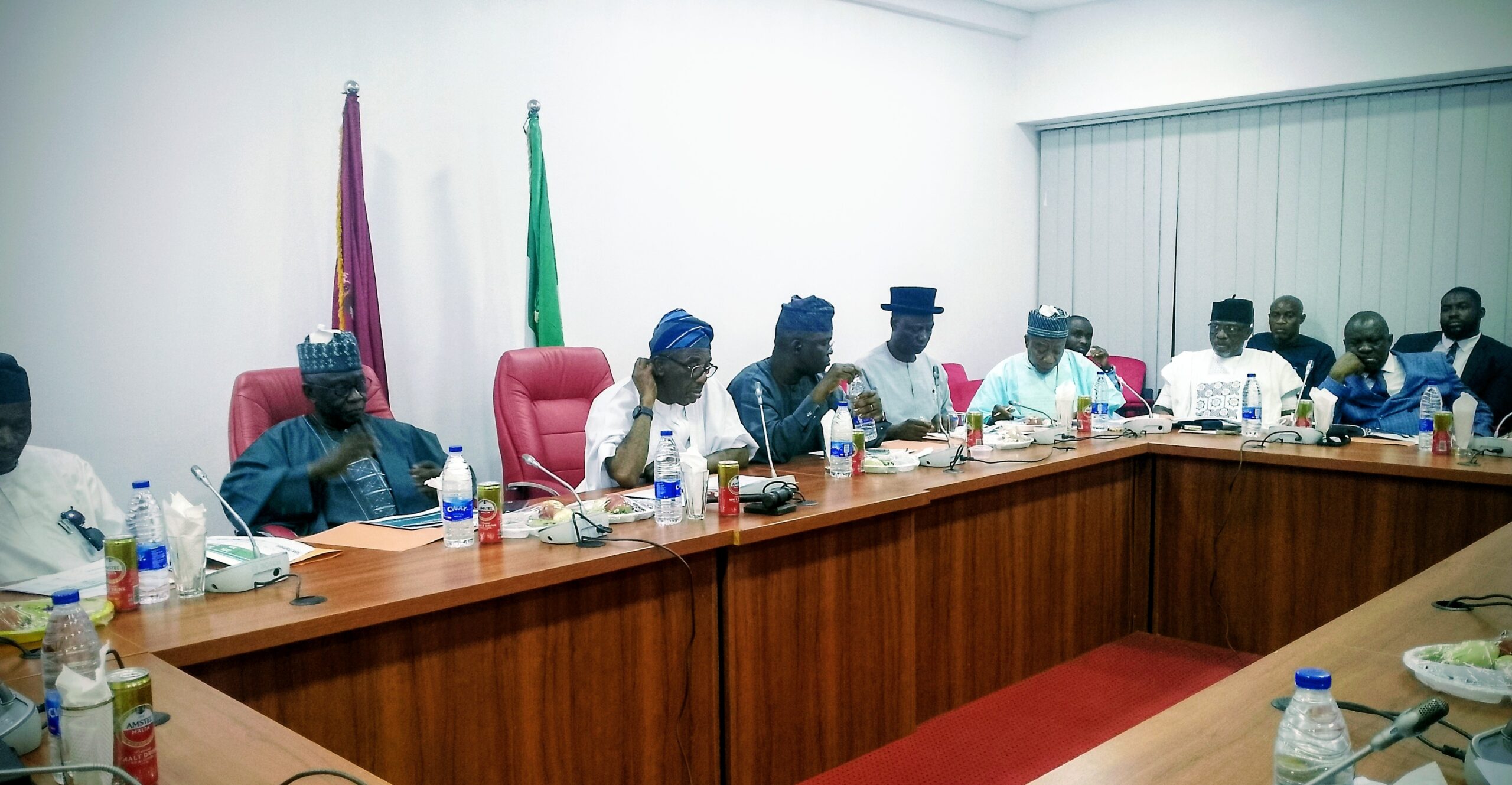
The Senate Committee on Industry, on Tuesday, raised concerns over the Bank of Industry’s (BOI) funding strategy, questioning the rationale behind its proposed $1.5 billion borrowing plan and seeking assurances on interest rates and loan classifications.
Chairman of the Committee, Senator Francis Fadahunsi, led the scrutiny as the Managing Director and Chief Executive Officer of BOI, Dr. Olasupo Olusi, appeared before the panel.

Fadahunsi queried whether previously approved funds had been released to the bank and why it was seeking additional borrowing despite improved disbursement performance.
“Have you gotten the release of that much money? And if so, why are you borrowing another $1.5 billion?” the chairman asked.
While commending BOI for increasing disbursement to about N960 billion from N600 billion, he cautioned against possible abuse in the classification of enterprises, particularly in determining which businesses qualify as small or large for lending purposes.
“At what rate do you say this enterprise is small and another is big? I hope this is not subject to abuse, where people come and claim they are small when they are actually big,” Fadahunsi said.
Other lawmakers echoed concerns about the bank’s funding mix, especially plans to raise N250 billion in local currency and secure foreign-denominated loans. They warned that high borrowing costs could undermine BOI’s mandate as a development finance institution.
One senator stressed that any funds raised from the domestic market must come at sufficiently low rates to enable the bank lend at concessionary rates to micro, small and medium enterprises (MSMEs).
“If you give them cutthroat interest rates, the aim will be defeated,” he said, urging the bank to prioritise securing the N500 billion additional equity proposed in the federal budget before resorting to market borrowing.
Lawmakers also cautioned against foreign exchange risks associated with external loans, advising the bank to channel such funds strictly to export-oriented enterprises capable of generating foreign exchange to repay the obligations.
Responding, Dr. Olusi explained that BOI’s funding model had changed following the discontinuation of its previous arrangement with the Central Bank of Nigeria (CBN), which had significantly supported its operations.
“As a sovereign institution, we can raise bonds in the domestic market at near-sovereign terms, around 16 to 17 per cent,” he said.
However, he disclosed that the bank was in discussions with the Federal Government to establish a discount or rebate mechanism that would reduce the effective cost of funds and enable concessionary lending to MSMEs.
Olusi confirmed that BOI was seeking long-term foreign funding — seven to 15 years — from development finance institutions such as the European Investment Bank and the World Bank, stressing that the bank would no longer pursue short-term commercial foreign loans due to high costs and foreign exchange exposure.
“We cannot go for commercial loans internationally anymore. It makes no sense because we will not be able to pass the cost to our customers,” he said.
He added that MSME loans at BOI are defined as facilities of up to N2 billion, while larger enterprises receive loans above that threshold. Interest rates are currently around 10 per cent for smaller businesses and about 15 per cent for larger firms.
On BOI’s 2025 budget performance, Olusi attributed the shortfall in projected gross income to the cancellation of its established funding and swap arrangements with the CBN at the start of the year, which affected both lending capacity and treasury earnings.
Despite the challenges, he noted that the bank achieved 88.4 per cent performance on a N586.1 billion budget and currently has over N700 billion in approved loans awaiting funding.
Olusi appealed to the Senate to support increased capitalisation for the bank, describing industry financing as critical to economic growth.
Dabiri-Erewa Hails Nigerian Diaspora Stars for Historic 2026 Grammy Wins
“Industry is under pressure. We have over N700 billion in approved loans without a clear line of sight for funding. Increased support from the Federal Government is essential,” he said.
The committee assured the management of continued legislative engagement to ensure sustainable funding for Nigeria’s industrial sector while safeguarding the bank’s development mandate.
About The Author