

By Fatima Saka
The Solar Power Nigeria Coalition has called on state governments to invest in solar energy and mini-grids to address Nigeria’s electricity crisis, warning that more than 86 million Nigerians remain without access to electricity.
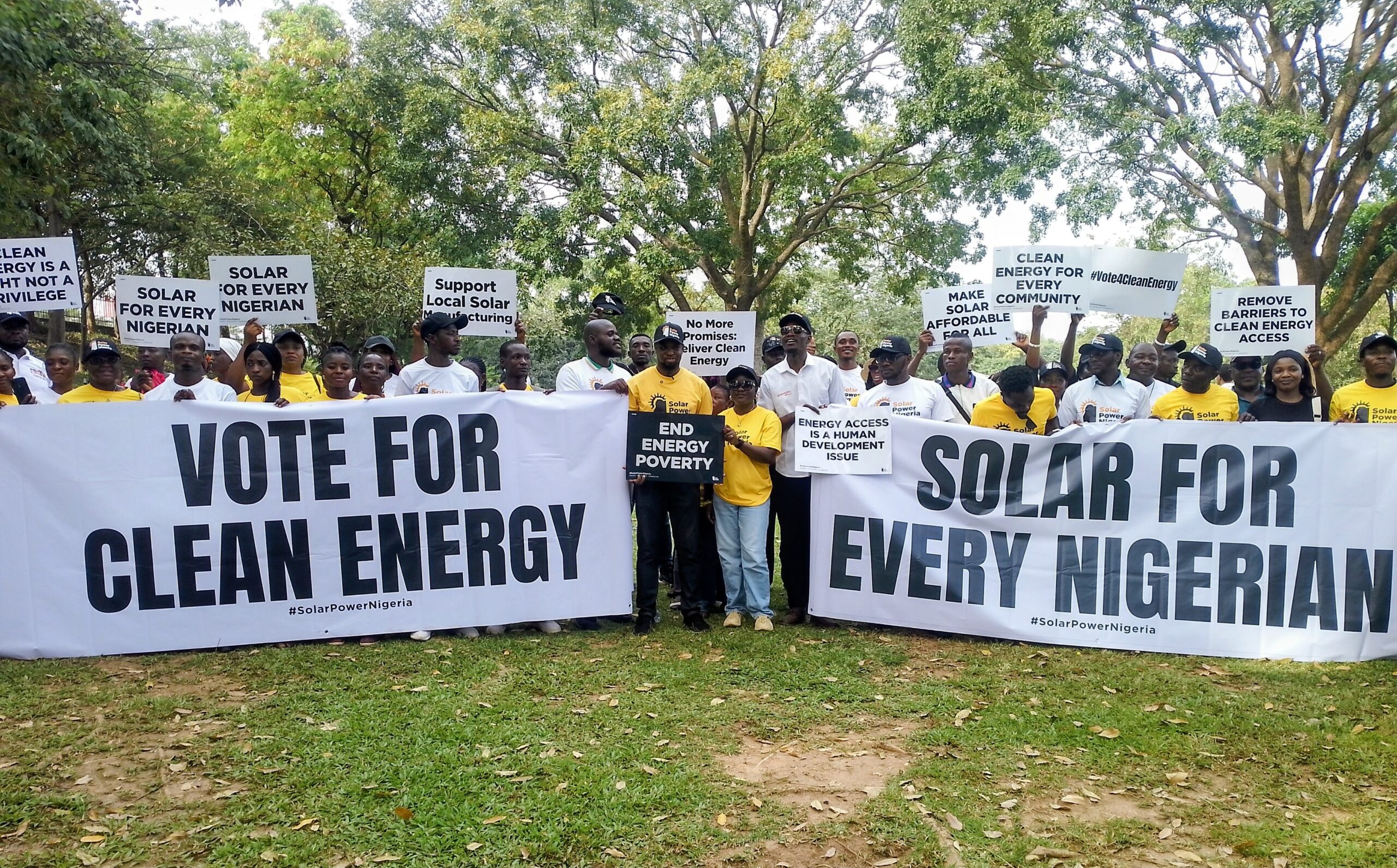
The coalition made the call on Saturday during a march for solar energy in Abuja, urging Nigerians to demand clear commitments to clean energy from political candidates ahead of the 2027 general elections.
The campaign brought together young people, community leaders, clean energy advocates and civil society groups to demand affordable and accessible electricity for households and underserved communities.
Speaking at a press briefing after the march, the Nigerian Campaign Director of the Secure Energy Project and Coordinator of the Solar Power Nigeria Coalition, Joseph Ibrahim, said Nigeria could rapidly reduce energy poverty by expanding access to solar power and solar mini-grids.
Ibrahim welcomed the Federal Government’s reported decision to withdraw its proposed policy to ban the importation of solar panels, saying the move would help prevent additional costs that could make solar energy unaffordable for ordinary Nigerians.
He said the coalition was advocating a Nigeria where every household could access electricity, stressing that the country’s current power generation of more than 5,000 megawatts was insufficient to meet national demand.
According to him, the country must look beyond the national grid and adopt decentralised renewable energy solutions to close the electricity gap.
“As Nigeria moves towards the 2027 election, we should vote for clean energy,” Ibrahim said, urging voters to hold candidates accountable for their energy policies and commitments.
He argued that state governments should play a more active role in expanding electricity access, particularly in rural communities, rather than leaving the responsibility to the Federal Government alone.
Ibrahim cited the Electricity Act 2023, which provides a framework for states to establish and regulate their electricity markets, as an opportunity for subnational governments to develop local power solutions.
He also urged state governments to channel additional resources available to them into solar mini-grid projects that could provide electricity to communities without reliable access to the national grid.
The coalition further called on the Federal Government to translate its renewable energy commitments into concrete action, including supporting local solar panel manufacturing, providing incentives for domestic industries and investing in technical skills development and certification.
Ibrahim said stronger government oversight was also necessary to address safety concerns associated with substandard solar products in the Nigerian market.
He called for measures to ensure that solar equipment meets appropriate quality and safety standards without creating barriers that would prevent ordinary Nigerians from accessing affordable clean energy.
Also speaking, the Nigerian National Coordinator of GreenFaith Africa, Lucky Abeng, urged the Federal Government to prioritise energy access as part of Nigeria’s commitment to the United Nations Sustainable Development Goals.
Abeng noted that Sustainable Development Goal 7 seeks to ensure access to affordable, reliable, sustainable and modern energy for all by 2030.
He expressed concern that millions of Nigerians remained without electricity despite the country’s abundant renewable energy resources, particularly solar radiation in the northern region.
According to him, the high cost of conventional energy sources has made electricity increasingly difficult for low-income households to afford, while rural communities remain disproportionately affected by energy poverty.
Abeng said faith-based institutions and technical colleges could partner with the government to develop local expertise, strengthen technical capacity and support the growth of Nigeria’s renewable energy industry.
He also urged the Federal Government to ensure that Nigeria’s participation at the 31st United Nations Climate Change Conference, COP31, in Turkey translates into practical measures to expand clean energy access.
Describing COP31 as an opportunity to focus on implementation, Abeng said Nigeria must demonstrate how its climate commitments would improve the lives of citizens, particularly those in underserved communities.
He added that the coalition would monitor Nigeria’s commitments at the climate conference and advocate for policies that reflect the energy needs of the country and the wider African continent.
The coalition also expressed concern about the potential effects of extreme climate events on vulnerable communities, noting that faith-based institutions often serve as first points of contact for people affected by disasters.
The campaigners maintained that expanding solar energy access would not only help address electricity shortages but also support climate action, economic activities and improved living conditions.
They called on the government to combine affordable access to imported solar equipment with support for local production, technical training and stronger quality control.
Another coalition member, Abimbola Adjaye, urged the Federal Government to intensify efforts towards achieving universal electricity access by 2030, stressing the need to empower local solar technicians to meet the growing demand for renewable energy.
Adjaye said Nigerians were facing economic hardship amid insecurity and rising energy costs, making affordable and reliable electricity increasingly important for households and communities.
She called on the government to create more opportunities for local technicians to acquire relevant skills, expand their services and provide solar electricity solutions to more Nigerians.
According to her, strengthening local technical capacity would help the country meet the increasing demand for solar installations while creating opportunities for skilled workers.
Adjaye also encouraged Nigerians to embrace solar energy as a reliable alternative amid persistent electricity supply challenges.
READ ALSO: WMO Warns of Record-Breaking El Niño, Rising Heat and Flood Risks
APC Accuses Atiku, ADC of Plot to Discredit Kaduna Campaign Rally
She said expanding access to solar power would help communities that remain underserved by the national grid and support the country’s efforts to achieve universal electricity access by 2030.
The coalition said its campaign would continue to push for policies that make solar energy accessible to households, businesses and rural communities, insisting that Nigerians should no longer be left behind in the transition to clean energy.
About The Author