…Urges States to Match Funding Commitments
By Fatima Saka
Nigeria’s health system has been ranked fourth in Africa, as the Federal Government approved ₦32.88 billion under the Basic Healthcare Provision Fund (BHCPF), intensified nationwide healthcare interventions, strengthened Ebola preparedness, and expanded health insurance coverage to 22 million Nigerians.
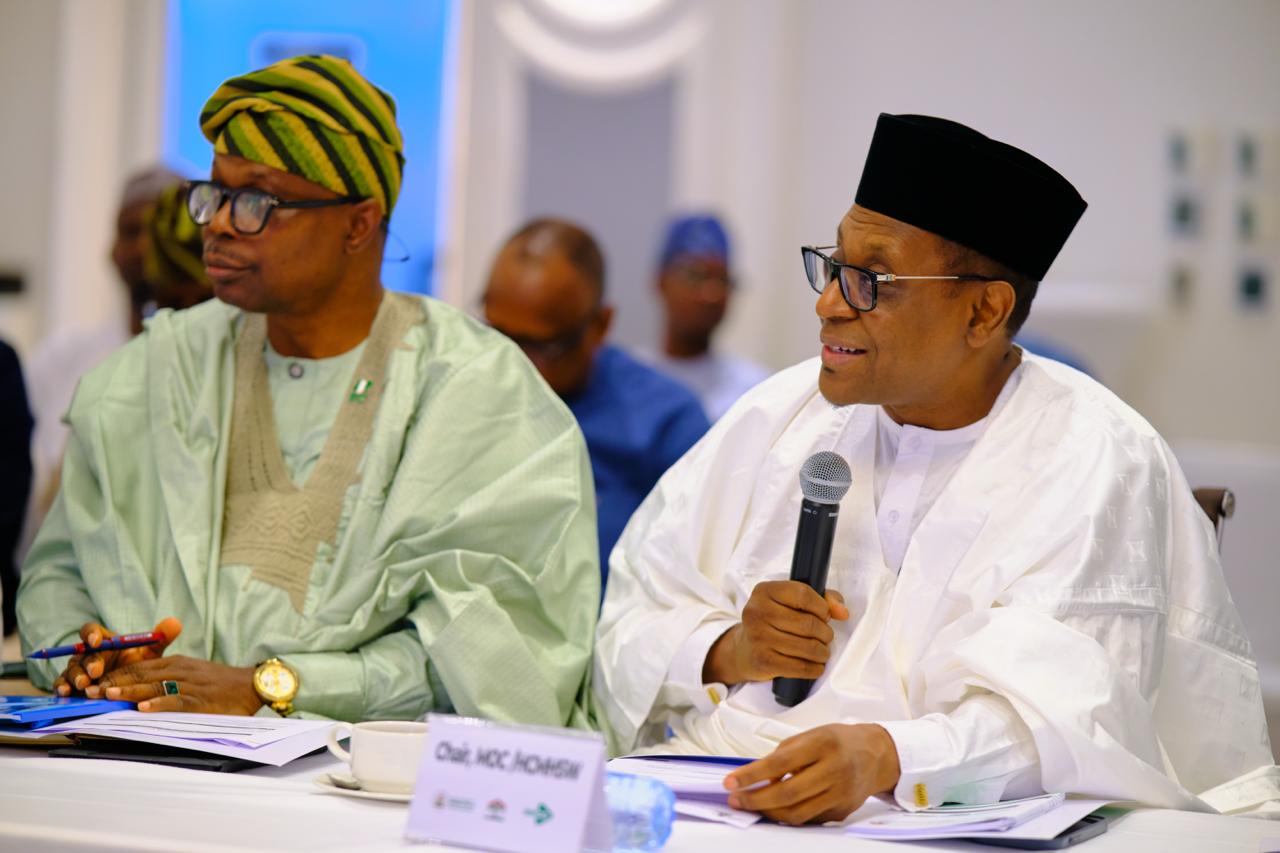
The Coordinating Minister of Health and Social Welfare, Professor Muhammad Ali Pate, disclosed this on Friday in Abuja during a media briefing following the 15th Ministerial Oversight Committee (MOC) meeting, where he also urged state governments to match federal funding to sustain the sector’s growing gains.
The approved sum, ₦32,880,443,906.25, represents the second quarter (Q2) 2026 BHCPF disbursement and is targeted at reinforcing primary healthcare services, strengthening emergency response systems, and consolidating reforms under the Nigeria Health Sector Renewal Investment Initiative (NHSRII).
Pate, who chaired the meeting alongside the Minister of State for Health and Social Welfare, Dr. Iziaq Adekunle Salako, said the committee reviewed implementation progress, addressed operational bottlenecks, and outlined strategic actions to accelerate ongoing health sector reforms.
“This is a quarterly meeting where we assess progress, identify challenges, and agree on the next steps,” he said, noting that participants included representatives from federal and state institutions, development partners, and civil society organisations.
Highlighting increased financial commitment to the sector, the minister revealed that ₦339 billion has been disbursed through the BHCPF over the past 12 years, with ₦235 billion released within the last three years alone, an indication of renewed momentum in strengthening primary healthcare delivery nationwide.
According to him, more than 8,000 primary healthcare centres across the 36 states and the Federal Capital Territory now receive quarterly funding, supporting essential health services, expanding insurance coverage for vulnerable populations, controlling disease outbreaks, and financing emergency medical interventions.
He added that over 130,000 Nigerians have benefitted from emergency medical services funded through the BHCPF, while 35 states have established functional emergency response systems.
On public health security, Pate disclosed that the Federal Government recently approved emergency funding for all 36 states to boost preparedness against Ebola Virus Disease, despite no confirmed case in the country.
He explained that the proactive intervention, implemented through the Nigeria Centre for Disease Control and Prevention (NCDC), is part of a broader multi-sectoral strategy to strengthen surveillance, early detection, and rapid response capabilities nationwide.
Providing updates on infrastructure, the minister said the National Primary Health Care Development Agency (NPHCDA) has upgraded over 3,000 health facilities, with nearly 1,000 others currently undergoing revitalisation.
He further revealed plans to scale up the number of facilities benefiting from direct financing from 8,000 to 17,600, using an equity-based allocation model that reflects population size and disease burden.
Pate noted measurable improvements in key health indicators, including increased antenatal care attendance, skilled birth delivery, immunisation coverage, and contraceptive uptake, based on preliminary findings from the 2026 mini Demographic and Health Survey.
He also stated that health insurance coverage has risen from 16 million to 22 million enrollees within the last three years, while over 48,000 women have accessed free emergency obstetric services and 4,771 women have undergone life-changing fistula repairs.
Despite these gains, the minister cautioned that progress remains fragile and requires sustained collaboration across all tiers of government.
He called on state and local governments to meet their counterpart funding obligations, 25 per cent from states and 15 per cent from local governments, stressing that compliance could boost available healthcare resources by an additional 40 per cent.
Beyond funding, Pate emphasised the need for states to ensure adequate staffing of primary healthcare facilities and improve utilisation of frontline resources to enhance service delivery.
The committee also approved the inclusion of private sector actors in the MOC framework to deepen participation in health sector governance and directed its secretariat to enforce compliance among states on financing commitments.
READ ALSO: Emporium 10th Anniversary: Information Minister Urges Journalists to Uphold Credibility
Enugu Targets Global Climate Finance, Woos Investors with Green Growth Plan in London
Reaffirming the Federal Government’s commitment, Pate said efforts would remain focused on strengthening accountability, improving coordination, and ensuring efficient use of resources to achieve Universal Health Coverage.
The BHCPF, established under the National Health Act of 2014, remains a critical financing mechanism for primary healthcare delivery and expanding access to essential health services, particularly for vulnerable populations across Nigeria.
About The Author