
By Fatima Saka
The Policy Innovation Centre (PIC) has called for stronger adoption of inclusive and gender-responsive policies capable of reaching Nigerians who are most underserved, stressing that policy innovation must translate into tangible impact at the grassroots.
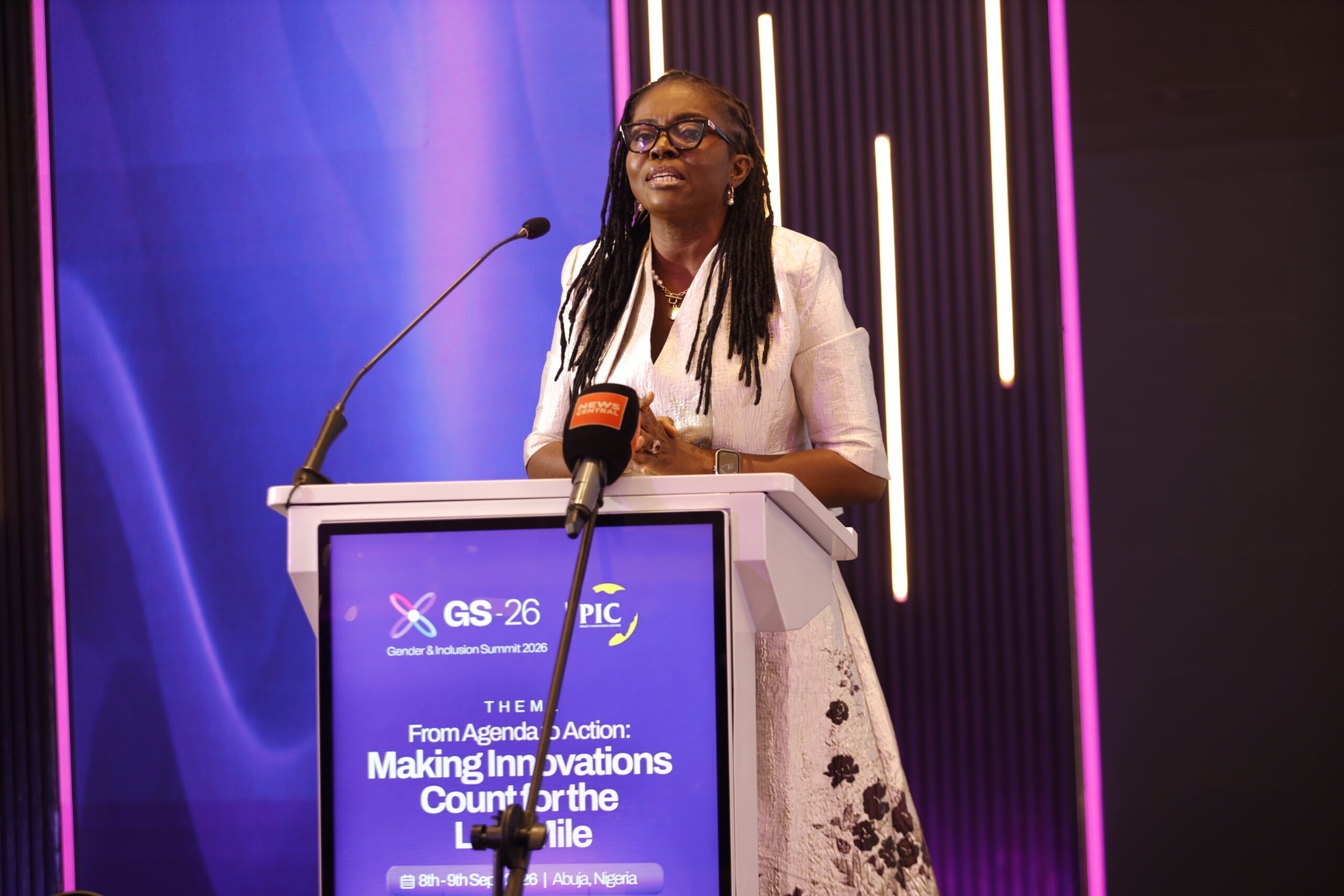
Executive Director of the Policy Innovation Centre, Dr. Osasuyi Dirisu, made the call while speaking on the objectives of the Gender and Inclusion Summit 2026 (GS26) in Abuja.
The 2026 summit, themed “From Agenda to Action: Making Innovations Count for the Last Mile,” is focused on moving stakeholders beyond policy discussions towards practical solutions, partnerships and implementation that deliver measurable impact for underserved and marginalised communities.
Dirisu said the central objective of GS26 was to examine how problems were being addressed and ensure that solutions developed through policy innovation were not only creative but also capable of reaching the people who needed them most.
She explained that the term “last mile” should not be interpreted solely in terms of geographical location, noting that it could also describe the circumstances that prevent people from accessing opportunities and essential services.
“The last mile for us means ensuring that the end user that needs the solutions we’re developing the most is reached. It is sometimes a location, but it is sometimes a condition.”
According to her, people experiencing limited access to resources, financing, education, literacy and healthcare could all fall within the category of those at the last mile.
She said PIC was therefore committed to ensuring that policy and programme innovations were designed around the realities of such people and ultimately delivered meaningful improvements in their lives.
PIC brings grassroots voices into policy conversations
Dirisu said GS26 was deliberately designed to ensure that the experiences of people at the grassroots were reflected in high-level policy discussions.
She acknowledged that it was not always possible to take policymakers and other stakeholders into every community where challenges existed, but said the summit had adopted an approach of bringing grassroots voices into the policy conversation.
She cited sessions where a beneficiary of the Nigeria for Women Project and a farmer were invited to speak about their experiences, challenges and the impact of interventions delivered to them.
According to her, hearing directly from beneficiaries would help policymakers and development partners understand the realities confronting communities and take those realities into account when designing solutions.
“We may not be able to go to the last mile to have these conversations, but we are bringing the last mile right into the conversations here at GS26,” she said.
The approach aligns with the summit’s broader focus on gender-responsive, inclusive-by-design innovations and practical solutions for underserved communities. Its programme covers areas including economic inclusion, health, gender-based violence, digital inclusion, security and climate-resilient livelihoods.
PIC deepens youth participation
The PIC boss also highlighted the centre’s efforts to give young Nigerians a stronger voice in shaping policies that affect their future.
Dirisu said consultations with young people had shown that they wanted a framework that would give them greater opportunities to aspire, participate and contribute to national development.
She disclosed that, with the support of government and partners, stakeholders had worked with young people to co-create a Youth Charter, aimed at providing a platform through which their aspirations could be articulated and advanced.
She added that GS26 was also providing a dedicated platform for young Nigerians to deliberate on their challenges and participate in discussions about the future they want.
Dirisu stressed that the process was intended to move away from the traditional approach of developing policies for young people without their active participation in shaping such policies.
‘You cannot force government to change’
On how PIC would ensure that government implemented recommendations and solutions emerging from the summit, Dirisu said the centre could not compel government to adopt particular policies.
Instead, she said the focus was on creating an enabling environment for government, development partners, civil society organisations and other stakeholders to collaborate towards sustainable change.
“You cannot enforce the government to do anything. But what you do is you create an enabling environment for collaboration to happen,” she said.
Dirisu noted that bringing government, development partners and civil society organisations together provided an opportunity for stakeholders to deliberate, challenge existing approaches and identify practical pathways for reform.
She said advocacy would remain an important tool for influencing policy and institutional change, particularly in ensuring that reforms reached Nigerians who were often excluded from mainstream development interventions.
From policy agenda to measurable action
She stressed that the success of policy innovation should ultimately be measured by its impact on people’s lives, rather than by the number of policies formulated or discussions held.
The PIC’s gender and social inclusion programme focuses on creating an enabling policy environment for gender and social inclusion, strengthening gender systems and promoting gender-transformative programming.
The centre also says previous Gender and Inclusion Summits have contributed to initiatives including Nigeria’s Women Economic Empowerment Policy and gender policy work in agriculture, while the annual Purple Book provides actionable policy and programme recommendations arising from the summit.
Dirisu maintained that inclusive policies must therefore be designed with the people they are intended to serve, particularly women, young people, persons with disabilities, farmers and other underserved groups, actively involved in the process.
READ ALSO: Ufot: Gender Equity, Youth Empowerment Key to Reshaping Africa’s Future
Joy E. Samuel Earns CIML Fellowship, Vows to Champion Ethical Leadership, Youth Empowerment
She said the ultimate goal was to bridge the gap between policy formulation and implementation by ensuring that innovations developed at the national level could translate into practical benefits for communities.
With GS26 bringing together policymakers, development partners, civil society organisations, private-sector leaders, researchers, innovators and community actors, the PIC is seeking to strengthen collaboration and turn policy ideas into solutions that can deliver measurable, gender-responsive impact.
About The Author