By Fatima Saka
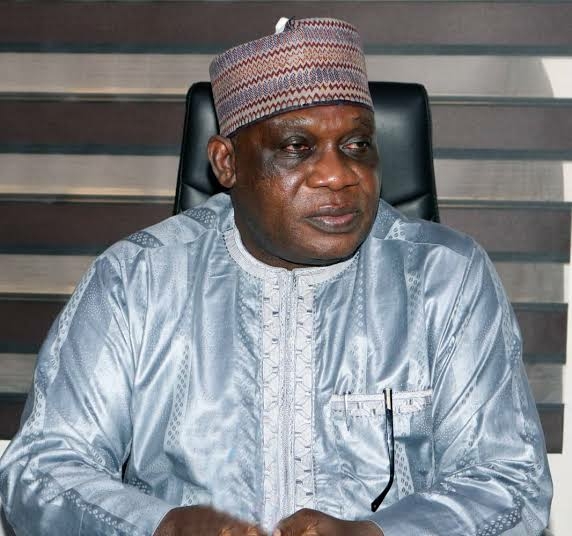
Nigeria’s mining cadastre system is emerging as a continental benchmark for transparency and efficiency, with the Director-General of the Nigerian Mining Cadastre Office (NMCO), Engr. Obadiah Simon Nkom, insisting that licensing delays are not a systemic barrier to investment.
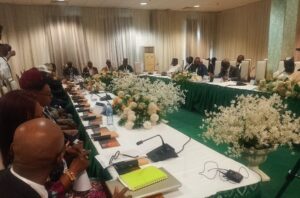
Speaking at the Ministerial Roundtable and masterclass sessions of the 2026 African Natural Resources and Energy Investment Summit in Abuja, Nkom said the country’s legal and digital frameworks have made arbitrary delays in licence issuance virtually impossible.
He noted that Nigeria’s mining law prescribes clear timelines, 30 days for exploration licences and 45 days for mining leases, adding that, in practice, approvals are often completed even faster.
“It is clearly stated in the law. Licensing is not arbitrary. In many cases, licences are issued within two weeks,” he said.
Digital Reforms Driving Transparency
Nkom attributed the improved efficiency to the NMCO’s transition to a fully digital, web-based cadastral system over the past three years. The reform, he said, has significantly enhanced transparency, reduced human interference, and boosted investor confidence.
Nigeria’s progress has also drawn regional attention, with technical experts from ECOWAS visiting the country to understudy its system as part of efforts to harmonise mining cadastre frameworks across West Africa.
“Our system is becoming a model not just for West Africa, but for Africa as a whole,” Nkom stated, noting that harmonisation efforts aim to create a unified regulatory experience for investors across the continent.
‘Use It or Lose It’ Policy Enforced
The NMCO has also strengthened enforcement of the “use it or lose it” principle, leading to the revocation of over 3,000 dormant licences.
Nkom stressed that the process follows due diligence, including formal notices and a 30-day window for compliance.
“This is about accountability. If you do not meet the conditions, the law requires that you lose the title,” he said.
He added that reforms eliminating multiple applications over the same mineral location have further strengthened regulatory discipline and transparency.
Delays Linked to Applicants, Not Regulators
Addressing stakeholder concerns, Nkom clarified that most perceived delays stem from applicants’ inability to meet requirements such as securing landowner consent, submitting complete documentation, or providing bankable geological data.
“If an applicant cannot obtain consent within the stipulated time and fails to communicate, the delay cannot be attributed to the Mining Cadastre Office,” he explained.
Financing Challenges at Exploration Stage
On funding constraints, Nkom noted that financial institutions are typically reluctant to finance early-stage exploration due to high risks and uncertain returns.
“Out of ten exploration projects, you may not get two that become viable mining operations. That is why banks prefer to come in at later stages,” he said.
He added that recent foreign investments, estimated at over $300 billion—have been largely driven by government policies promoting local value addition, including restrictions on the export of raw minerals.
Growing Mining Activity
Nigeria currently has between 8,000 and 9,000 active mineral titles across categories such as exploration licences, mining leases, quarry leases and small-scale mining permits, reflecting growing sector activity.
From Legal Licence to Social Licence
Beyond regulatory efficiency, Nigeria is repositioning its mining sector around sustainability and community trust through a new framework titled “Social Licence and ESG – The New Social Contract.”
Presented on behalf of the DG by the Head of the NMCO’s Research, Development and Sustainability Unit, Muhammad Hannatu Indosire, the framework emphasises that legal approval alone is no longer sufficient for mining operations.
“Mining title grants legal rights, but social licence grants legitimacy, while ESG principles sustain both,” Nkom said.
The initiative aligns Nigeria’s mining governance with global investment standards, where investors increasingly demand ethical sourcing, environmental compliance, and measurable social impact.
Communities at the Centre
Nkom stressed that host communities must be treated as active partners in mining projects, not passive stakeholders.
He warned that failure to integrate local institutions—including traditional rulers, youth groups, women and civil society—could lead to resistance, disputes and reduced investor confidence.
“The future of mining depends on trust, transparency and shared benefits,” he said.
Bridging the Implementation Gap
While Nigeria’s Minerals and Mining Act of 2007 provides a robust legal framework, Nkom identified weak implementation as the sector’s primary challenge.
“The problem is not the absence of legislation, but the faithful implementation and modernisation of existing laws,” he noted.
To address this, the NMCO is promoting a new generation of Community Development Agreements (CDAs) that go beyond compensation to include job creation, skills development, education support, healthcare, infrastructure and equitable benefit-sharing.
Digital Traceability for Global Markets
The framework also prioritises digital mineral traceability systems to track resources from extraction to export, enhancing transparency and improving access to premium international markets.
“Future buyers want to know where minerals come from, how they were extracted and their impact on communities,” Nkom explained.
Towards a Responsible Mining Future
Nkom emphasised that sustainable mining requires collaboration among government, investors, communities and civil society, with accountability and transparency at its core.
Kalu Seeks Sustained UK Support to Strengthen Nigeria’s Electoral Integrity Ahead of 2027 Polls
“The future of mining will not be secured by extraction alone. It will be secured by trust, traceability, benefit sharing, cultural legitimacy and the faithful implementation of the social contract,” he said.
The reforms signal a decisive shift in Nigeria’s mining sector, one that balances efficiency with responsibility and positions the country as a leading destination for sustainable mineral investment in Africa.
About The Author