By Bisola Adeyemo
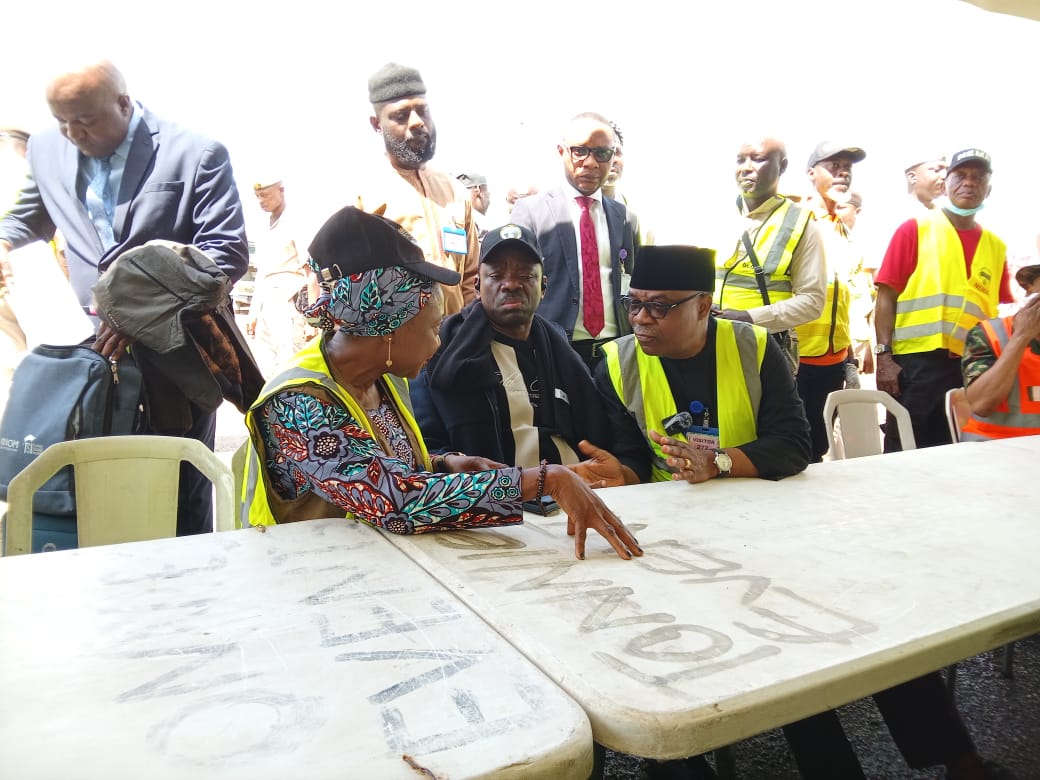
No fewer than 258 Nigerians evacuated from South Africa touched down at Murtala Muhammed International Airport, Lagos, on Thursday, marking the first batch of returnees following weeks of xenophobic violence.
The returnees arrived Nigeria in a specially arranged flight coordinated by the Federal Government.
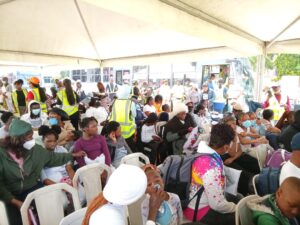
Speaking during the handover of the returnees, the Minister of State for Foreign Affairs, Ambassador Sola Enikanolaiye stressed the importance of diplomacy in managing relations under difficult circumstances.
“We believe in diplomacy, engagement, and dialogue. We are confident that in this process we will continue to engage South Africa to ensure that our nationals are given better treatment,” he said.
The minister noted that mechanisms are already in place to strengthen bilateral relations and prevent future crises.
“We have the Binational Commission between the two countries, covering economic, political, defence, and humanitarian issues. In addition, the early warning mechanism has just been put in place, and we will activate these mechanisms to respond more proactively to situations that may occur in the future,” Enikanolaiye assured.
Nigeria’s Acting High Commissioner in South Africa, Ambassador Alexander Temitope Ajayi, highlighted the extensive coordination behind the evacuation. He said the mission worked closely with South African authorities, including the Foreign Ministry, Home Affairs, Immigration Service, Border Management Office, and Intelligence Service, to ensure a smooth and dignified repatriation.
“We formed a coordinating unit involving the South African Foreign Ministry, Home Affairs Ministry, Immigration Service, Border Management Office, and Intelligence Service. We created a three-stage process: biometric identification, immigration clearance, and issuance of emergency travel certificates,” Ajayi stated.
He dismissed reports that the evacuees were undocumented migrants, attributing their status to systemic delays within South Africa’s Home Affairs system.
“It is false and totally misleading to claim that the Nigerians evacuated were undocumented. Many had applied for residency permit extensions years ago but were caught up in bureaucratic failures,” he clarified.
Ajayi stressed that the operation was humanitarian, not political, and assured that all remaining batches would be brought home safely within June, in line with directives from President Bola Tinubu.
Ministry of Foreign Affairs Spokesperson, Kimiebi Imomotimi Ebienfa, told newsmen that the evacuation exercise had begun in earnest.
“This is the first batch of Nigerians returning home from South Africa, and I want to assure you that every citizen willing to come back will be given the opportunity. We have promised five evacuation flights, and today is the first. The next flight will be on Monday, and as more persons are screened and cleared, they will be conveyed safely to Nigeria to reunite with their families,” Ebienfa said.
He added that the returnees would first be accommodated at a facility managed by the National Commission for Refugees, Migrants and Internally Displaced Persons.
“After documentation and profiling, they will be moved to their respective states to be with their families. In addition, incentives have been announced by the Nigerians in Diaspora Commission, including financial support and airtime, and more assistance will follow as additional flights arrive,” he said.
On calls for retaliatory action against South African business interests, Ebienfa said the ministry would maintain a diplomatic approach.
“As the Ministry of Foreign Affairs, we will not tow that line. Our responsibility is to continue to explore peaceful means. Nigeria is the giant of Africa, and we have always promoted African unity. We will continue to engage South Africa constructively, and with the early warning mechanism already signed between our two countries, we are confident that these issues will be addressed at that level,” he said.
Among those evacuated was Johnson Francis Koso-Chuku, who spent nearly seven years in South Africa. He described both the challenges of reintegration and the relief of returning home after years of insecurity abroad.
“Honestly speaking, it won’t be easy, because I spent approximately seven years in South Africa. The economy here is not friendly, and it wasn’t even friendly when I left Nigeria in 2020. But there is no place like home,” Chuku said.
He recounted living in constant fear of violence in South Africa.
READ ALSO: Reps Pass State Police Bill with Overwhelming Support
Uzodimma Unveils 4 Million-Strong Grassroots Network for Tinubu’s 2027 Re-election Bid
“In South Africa, when police pass, we keep checking if they are coming for us. At night, you can’t even go out to buy something without being harassed with guns or machetes. They rob us and collect our phones. That kind of abnormality became normal there. But here in Nigeria, I’ve never been robbed at gunpoint in my life.”
Chuku explained his decision to return despite economic hardship.
“Making money there is good, but is your life safe? The answer is no. You can be killed anytime for no reason. At least here, if anything happens to me, my family will give me the last respect. In South Africa, I was nobody.”
About The Author