
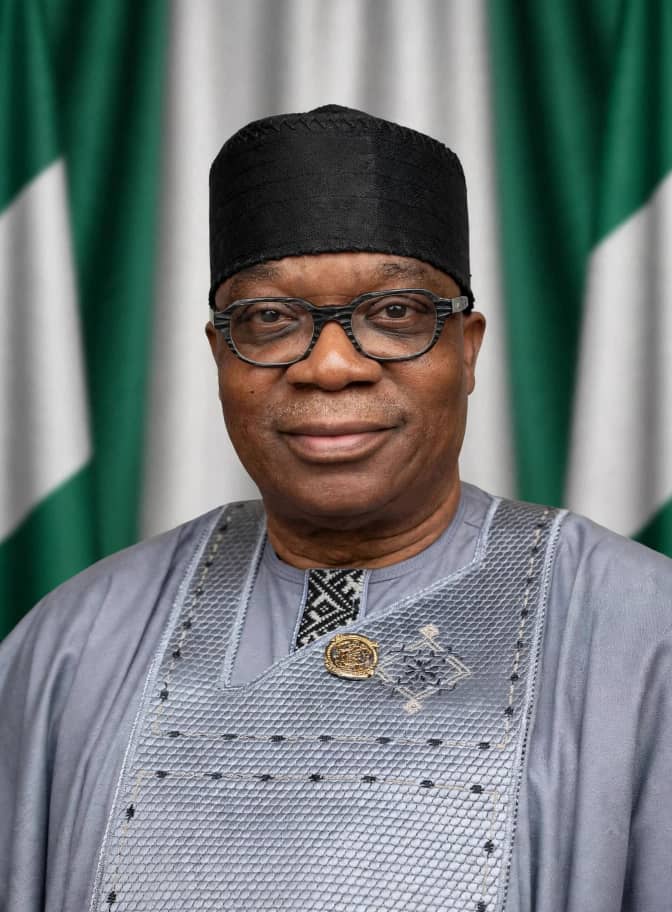
Nigeria has called on African countries to make trade and economic cooperation central to their diplomatic engagements, arguing that stronger economic interests are essential to sustaining Pan-African partnerships and accelerating continental integration.
The Minister of State for Foreign Affairs, Amb. Sola Enikanolaiye, made the call on Friday at the Ministerial Roundtable on “Trade and Economic Cooperation at the Centre of Pan-African Diplomacy” at the inaugural Africa-Alamein Business Forum (Go63) in New Alamein City, Egypt.
A statement signed by Richard Elesho, Special Adviser on Media and Strategic Communications to the Minister of State for Foreign Affairs, said Enikanolaiye urged African countries to move beyond political cooperation by building stronger trade and investment relationships.
“For too long, we treated trade and diplomacy as separate tracks. Our partnerships endure only when they rest on shared economic interests,” the minister said.
Enikanolaiye said Africa remained the centrepiece of Nigeria’s foreign policy, stressing that economic diplomacy must now play a greater role in strengthening relationships among African countries.
He highlighted Nigeria’s economic reforms since 2023, including the removal of fuel subsidy, foreign exchange unification and fiscal reforms, saying the measures had contributed to 4.43 per cent economic growth in the second quarter of 2026.
According to him, inflation declined to 15.39 per cent in August, while the country’s foreign exchange reserves stood at $54.86 billion as of September 24, 2026.
He also noted that the Monetary Policy Rate had been reduced to 23 per cent, while the National Single Window became operational on March 27, 2026, to facilitate trade and improve the efficiency of cross-border transactions.
The minister said the Nigeria Tax Act, which consolidated more than 60 levies, also took effect on January 1, 2026, as part of efforts to simplify the country’s tax system.
On the African Continental Free Trade Area (AfCFTA), Enikanolaiye described the agreement as Africa’s most important trade instrument, noting that 50 countries had ratified it while 39 were participating in the Guided Trade Initiative.
He said Nigeria had validated its AfCFTA Implementation Strategy, gazetted its tariff concessions, submitted commitments on services and ratified the Digital Trade Protocol in November 2025.
The minister further disclosed that a new air cargo corridor involving Uganda Airlines and the United Nations Development Programme had reduced freight costs by between 50 and 75 per cent.
He stressed that increased trade would require accessible financing, welcoming the roles of the African Export-Import Bank (Afreximbank) and the Pan-African Payment and Settlement System (PAPSS) in facilitating intra-African commerce.
Enikanolaiye said the Central Bank of Nigeria had directed banks to adopt PAPSS from April 2025 to support local-currency settlement and reduce dependence on foreign currencies in African trade.
He proposed five measures to deepen Africa’s economic integration, including making trade facilitation a standing item in diplomatic engagements, removing non-tariff barriers and expanding trade finance for small businesses, women and young entrepreneurs.
Other measures, he said, included investment in transport and energy corridors, development of regional value chains and the adoption of a common African position in external trade negotiations.
On Nigeria-Egypt economic relations, Enikanolaiye said bilateral trade, valued at $223 million in 2025, remained below the potential of both economies.
He therefore called for the implementation of agreements reached at the July 2025 Nigeria-Egypt Business Forum and the proposed Joint Investment Council to unlock greater investment and trade opportunities between both countries.
Earlier, Egyptian Prime Minister, Dr Mostafa Madbouly, who opened the forum, described the platform as a sustainable avenue for dialogue among governments, the private sector and financial institutions.
READ ALSO: Oyetola: The quiet strategist at 72
Oyetola: The quiet strategist at 72
Egypt’s Minister of Investment and Foreign Trade, Mohamed Farid, also called for greater African cooperation towards developing an integrated continental automotive industry.
The Go63 Forum, organised by Egypt, Afreximbank and AUDA-NEPAD, is holding in New Alamein City and runs until October 4. It is designed as a permanent biennial platform for translating Africa’s integration objectives into concrete investments and economic partnerships.
About The Author


1 thought on “Nigeria Pushes Trade-Centred Diplomacy to Drive Africa’s Economic Integration”