
The Lagos State Government is set to strengthen enforcement against indiscriminate waste disposal with plans by the Lagos Waste Management Authority (LAWMA) to recruit between 1,500 and 2,000 waste marshals across the state.
The initiative is aimed at addressing the recurring problem of refuse dumping on roads and other public spaces, particularly in areas previously cleared during sanitation operations.
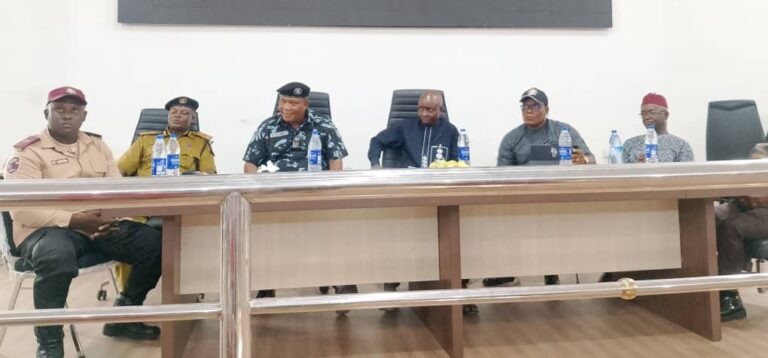
The Acting Managing Director and Chief Executive Officer of LAWMA, Mr Olajuwon Akinyemi, disclosed this during an interview with journalists in Mushin on Friday night, at the flag-off of the 60-day sustainable clean-up exercise tagged Reclaim Lagos.
Akinyemi said the waste marshals would be deployed along major roads and strategic locations to discourage indiscriminate dumping and ensure that environmental cleanliness was sustained beyond the clean-up exercise.
He explained that the initiative was designed to restore Lagos to its former environmental standard through stronger enforcement, public sensitisation and improved waste collection.
According to him, Mushin was selected for the flag-off because of its historical and strategic importance to Lagos, adding that the exercise would also educate residents on their responsibilities in maintaining a clean environment.
He described waste management as a collective responsibility requiring the cooperation of residents, Private Sector Participation (PSP) operators, local governments and relevant government agencies.
Akinyemi identified weaknesses in waste collection, transportation and disposal, alongside residents’ unwillingness to pay for waste management services, as major challenges confronting the sector.
He said the authority would address the gaps by ensuring that residents paid for services, PSP operators collected refuse promptly and owners of waste disposal infrastructure made landfill facilities available.
The LAWMA boss also explained that night operations had been introduced to reduce the effect of traffic congestion on waste evacuation and enable sanitation workers and trucks to operate more efficiently.
On the recurrence of refuse at previously cleared locations, particularly around Igando, he attributed the situation partly to inadequate waste policing and residents’ reluctance to wait for PSP operators before disposing of their refuse.
He assured that the authority would strengthen its enforcement system and re-engage personnel to prevent indiscriminate dumping.
Akinyemi further disclosed that the Lagos State Government had procured more than 100 trucks in collaboration with local governments to improve waste evacuation.
He said the government was also exploring financial support arrangements with the Bank of Industry and other financial institutions to enable PSP operators to acquire additional trucks and improve service delivery.
However, he stressed that residents’ willingness to pay for waste collection remained essential to sustaining the investments and ensuring an effective waste management system.
Meanwhile, the National President of the Association of Waste Managers of Nigeria, Dr Olubenga Adebola, said PSP operators were committed to supporting the Reclaim Lagos initiative.
Adebola, however, cautioned against attributing the state’s waste management challenges entirely to PSP operators, explaining that the sector involved waste generation, collection, transportation and disposal, while operators were primarily responsible for collection and transportation.
He identified inadequate disposal infrastructure as a major constraint, noting that facilities originally designed to serve a smaller population were struggling to accommodate Lagos’ estimated 25 million residents.
According to him, the absence of functional transfer loading stations and delays at landfill sites had significantly reduced the operational capacity of waste managers.
He said PSP operators, who previously made about 12 or more disposal trips weekly, were now struggling to make one or two trips because of difficulties accessing disposal facilities.
Adebola said the association had engaged the state government on the reopening of additional disposal facilities to improve operational efficiency.
He also called for a transition from conventional waste management practices to a circular economy that promotes recycling and resource recovery.
He urged residents to adopt waste separation at source by sorting refuse into organic, inorganic and recyclable materials to improve collection and recycling processes.
READ ALSO: Nigeria Urges South Korean Firms to Establish Factories, Create Jobs
Odumegwu-Ojukwu Urges Igbo Leaders to Unite, Diaspora to Invest in Nigeria
The association president further identified rising operational costs, including diesel, tyres and hydraulic materials, as major challenges facing operators.
He said waste collection tariffs had remained unchanged since 2022 despite increasing operating costs, stressing the need for cost recovery to sustain service delivery.
Adebola reaffirmed the association’s commitment to working with LAWMA and local governments to improve waste collection and achieve sustainable environmental management across Lagos.
About The Author