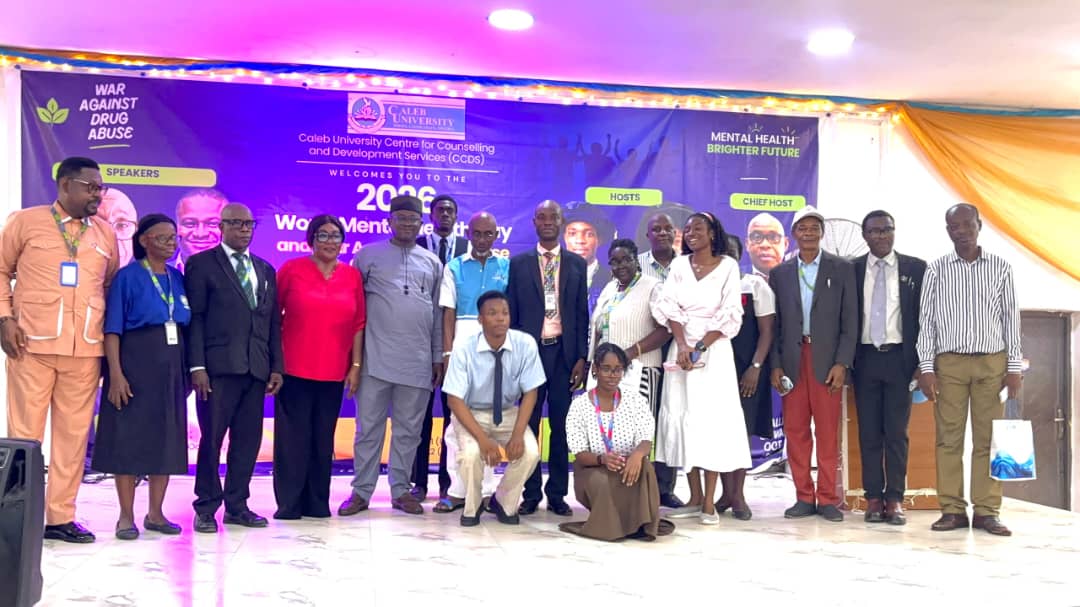
Health experts have urged Nigerian universities to move beyond punitive measures in tackling drug abuse by strengthening counselling services, establishing clear substance-use policies and providing students with access to treatment and rehabilitation.
The experts made the call during a two-day programme on Campus Mental Health Awareness and War Against Drug Abuse held at Caleb University Centre in Ikorodu, Lagos, as part of activities marking the 2026 World Mental Health Day.
Dr Dokun Adedeji, Chief Executive Officer of Compassionate Care Recovery Initiative (CCRI), an organisation involved in rehabilitating people with drug addiction, said achieving a drug-free campus required honesty about substance use and the collective involvement of students, parents and university management.
Speaking on the theme, “Actualising a Drug-Free Caleb University: Stakeholders and Responsibilities,” Adedeji said drug misuse should be treated as both a behavioural and public health concern rather than relying solely on denial or punishment.
He urged university management to strengthen counselling services, develop clear mental health and substance-use policies, educate parents and ensure students could access appropriate treatment and rehabilitation.
Adedeji also encouraged students to resist peer pressure and seek help early, while advising parents to remain involved in their children’s lives, pay attention to behavioural changes and serve as responsible role models.
Similarly, Dr Ayodeji Ajayi, a clinical psychologist at the Federal Neuropsychiatric Hospital, Yaba, described mental health challenges among Nigerian youths as an urgent public health concern requiring collective action.
Speaking on “Mental Health Challenges in Nigeria: A Reality and Ticking Time Bomb,” Ajayi identified anxiety, depression, stigma, inadequate awareness and limited access to mental health services as major challenges preventing young people from obtaining appropriate care.
He acknowledged the progress represented by Nigeria’s National Mental Health Act of 2023 but stressed that legislation alone could not guarantee effective access to mental health services.
The clinical psychologist called for stronger mental health support in schools and primary healthcare facilities, adequate funding and early identification of psychological distress.
According to him, the country’s youth mental health challenges are preventable and manageable if families, schools, healthcare professionals, faith leaders and government institutions work together to promote awareness, tackle stigma and ensure timely access to professional support.
Also speaking, the Acting Director of Caleb University’s Centre for Counselling and Development Services, Dr Sanmi Ibidapo, emphasised the importance of mental health to students’ wellbeing, academic performance and future prospects.
Ibidapo advised students to pay attention to persistent changes in their emotions, behaviour, thinking and physical wellbeing, noting that mental health challenges could affect anyone regardless of academic performance or outward appearance.
He encouraged students to adopt healthy habits, including adequate sleep, balanced diets, emotional regulation, responsible social media use and supportive relationships.
The acting director also cautioned students against using alcohol or non-prescribed drugs to cope with stress, urging them to seek professional assistance when necessary.
He further called on students to support one another, check on their peers and help break the stigma associated with mental health challenges.
The Vice-Chancellor of Caleb University, Prof. Olalekan Asikhia, represented by the Dean of Student Affairs, Prof. Adetayo Olorunlana, said the programme reflected the institution’s commitment to developing the total person.
The programme also featured a students’ panel session moderated by Ayoola Lasebikan, a 400-level student in the Department of Psychology.
In line with the 2026 World Mental Health Day theme, “Lived Experiences Heard: Real Voices, Real Change,” students shared personal experiences of mental health challenges on campus and discussed coping mechanisms to encourage others facing similar difficulties.
The event, organised by the Caleb University Centre for Counselling and Development Services in collaboration with the War Against Drug Abuse (WADA) Club, also featured an awareness rally and walk to promote mental wellbeing and encourage open conversations about mental health and substance abuse.
During the rally, participants moved from the Department of Psychology to the university’s main gate and around the students’ halls of residence, distributing flyers and engaging students and staff in brief educational discussions.
READ ALSO: Fani-Kayode Begins South Africa Mission, Pledges to Rebuild Nigeria’s Ties
Senate Raises Revenue Leak Concerns in Livestock Agencies
The rally ended at the Administrative Block, where the participants were received by the University Bursar, Mr Adesina Abubakre, who represented the Vice-Chancellor.
Abubakre emphasised the importance of mental wellness and maintaining a drug-free campus to sustain academic excellence, commending the Centre for Counselling and Development Services for its efforts to promote mental health awareness and combat drug abuse within the university.
About The Author