By Fatima Saka
The Senate has resolved to summon the Group Chief Executive Officer of the Nigerian National Petroleum Company Limited (NNPCL) and the Managing Director of Chevron Nigeria Limited over alleged non-compliance with a directive mandating the supply of locally produced Liquefied Petroleum Gas (LPG) to the domestic market.
The Senate Committee on Gas, chaired by Senator Jarigbe Agom Jarigbe, also announced plans to investigate revenues generated from LPG exports from 2023 to date and ascertain whether the proceeds were properly remitted into the Consolidated Revenue Fund.
The decision followed an investigative hearing by the committee on Wednesday, in Abuja, over persistent shortages and rising prices of cooking gas despite Nigeria’s domestic production capacity.
The committee resolved that the two chief executives must appear personally before it on Tuesday, December 1, 2026, to explain the circumstances surrounding the continued export of LPG from the Escravos Joint Venture despite the directive for domestic supply.
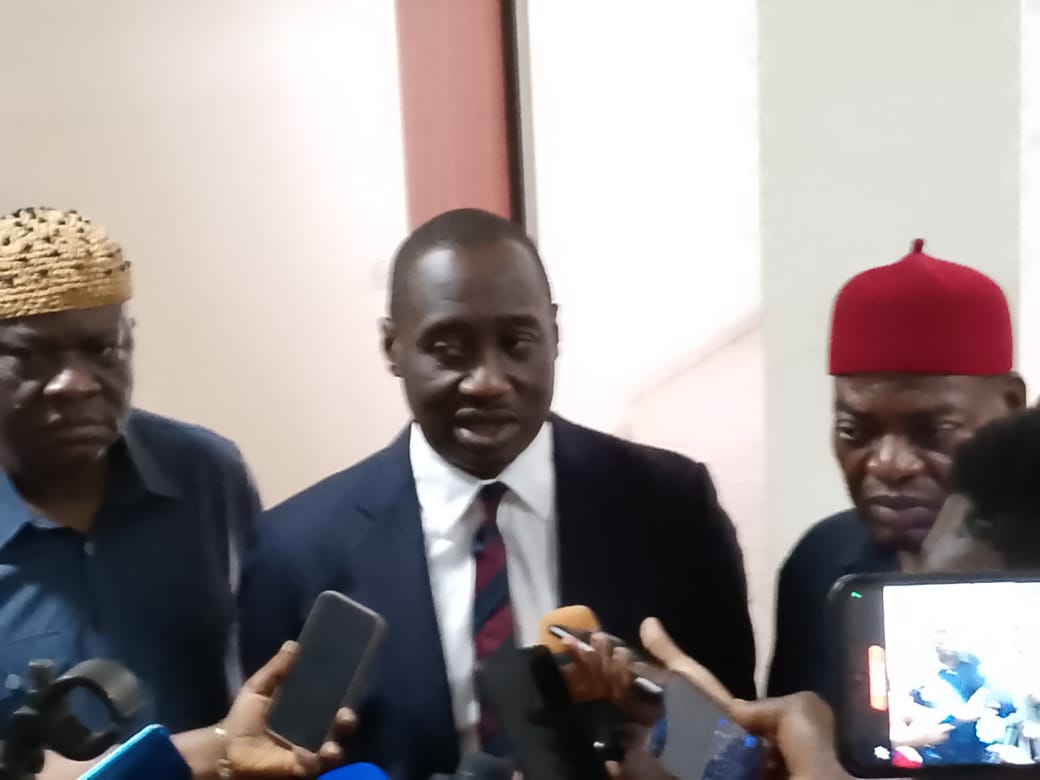
Speaking with journalists after the hearing, Jarigbe said the committee was determined to establish the facts behind the continued exports and ensure that locally produced gas was made available to Nigerians at affordable prices.
He said the investigation would cover the revenues generated from the exports and the repatriation of the proceeds.
“We are still investigating, so we don’t know if there is a conspiracy. But we are going to look at the revenues generated from the exported LPG from 2023 to date. We are also going to look at the repatriation of the funds because they are exported to the Consolidated Revenue Fund. We are interested in that,” he said.
The senator stressed that the committee’s intervention was aimed at protecting Nigerians from the hardship associated with the rising cost of domestic gas, particularly following the removal of fuel subsidy.
He said President Bola Tinubu’s Executive Order 9 was intended to address domestic supply challenges and alleviate the suffering of Nigerians, adding that the National Assembly would ensure that the directive was implemented.
According to him, adequate supply of LPG into the domestic market would naturally reduce prices through the forces of demand and supply.
“We will make sure that the price of gas goes down because when there is adequate supply in response to demand, the price will naturally go down. So, we are working already for our country and for our people,” Jarigbe said.
At the hearing, a representative of the domestic LPG industry had urged the Senate to adopt a time-bound joint venture and cooperative supply arrangement among industry operators to improve domestic availability.
He argued that consistent production and supply into the local market would gradually bring down prices and expand the use of LPG beyond household cooking.
He noted that Nigeria, with an estimated consumption of 1.6 million metric tonnes, had the potential to increase consumption to five million metric tonnes, pointing out that Morocco consumes significantly more despite having about half of Nigeria’s population.
The industry representative recommended that all gas produced locally should be injected into the domestic market to increase supply and reduce prices.
He also urged the committee to revisit an existing agreement involving NNPC Exploration and Production Limited, Gas Power and New Energy Directorate and five other companies to inject gas molecules from the Escravos project into the domestic market.
He proposed that other terminals with the technical capacity to receive and blend the required gas specifications should be included as off-takers to widen distribution across the country.
Explaining the importance of cooperation among operators, he recalled that Nigeria’s LPG consumption stood at about 50,000 metric tonnes in 2007 before increasing to approximately 1.6 million metric tonnes through market development initiatives and cooperative arrangements.
Meanwhile, the Standards Organisation of Nigeria (SON) disclosed that it was not directly involved in certifying the composition of LPG supplied into the Nigerian market, including the proportion of propane and butane.
A representative of the organisation told the committee that SON was responsible for developing standards and certifying LPG cylinders and storage vessels but depended on invitations from relevant agencies to participate in the certification of imported and locally produced products.
He explained that the organisation operated the Mandatory Conformity Assessment Programme (MANCAP) for locally manufactured products and the SON Conformity Assessment Programme (SONCAP) for imported products.
The representative further disclosed that SON had no record of being involved in the processes for certifying the composition of LPG supplied to the domestic market.
He attributed the limitation to provisions of the Petroleum Industry Act, which require government agencies to consult the NMDPRA before taking regulatory or enforcement actions that could directly affect midstream and downstream petroleum operations.
The disclosure raised concerns among lawmakers about the monitoring of LPG quality and the enforcement of standards in the domestic gas market.
Reacting to the issue during his interview, Jarigbe described the situation as an administrative gap, urging the heads of relevant agencies to strengthen coordination and ensure that the required standards were enforced.
“Those are administrative flaws, and I think the heads of those agencies should put themselves together,” he said.
On the reported difference in the propane-to-butane ratio between exported LPG and the product required for domestic consumption, the senator said the issue could be addressed through appropriate blending.
He explained that the proposed composition for local consumption was 80 per cent butane and 20 per cent propane, contrary to the 80:20 ratio cited in connection with exports.
Earlier, lawmakers had questioned why operators continued exporting LPG when a directive had reportedly been issued for domestic supply, particularly without formally notifying the relevant authorities of any technical challenges preventing compliance.
One of the senators described the situation as a matter requiring urgent investigation, arguing that inadequate domestic supply was contributing to persistent increases in LPG prices.
He also questioned why the NMDPRA continued to issue export permits despite the ministerial directive and called for the personal appearance of the joint venture operators.
The committee subsequently adopted a motion summoning the NNPCL Group Chief Executive Officer and Chevron’s Managing Director to appear in person on December 1, 2026.
In his closing remarks, Jarigbe said the Senate would not be part of any arrangement capable of imposing unnecessary hardship on Nigerians through the diversion of products meant for domestic consumption.
READ ALSO: Pastor Akiode at 60: Dagunduro, Wife Celebrate His Humility, Dedication to God’s Work
CDS Urges Media, Security Agencies to Build Trust Against Misinformation
He warned that the committee would extend its investigation to the revenues generated from LPG exports and the proper remittance of proceeds into government coffers.
The chairman maintained that the investigation was only beginning, assuring that the committee would pursue the matter to its logical conclusion and establish accountability among the agencies and operators involved in the domestic gas supply chain.
About The Author