The Association of Nigerian Physicians in the Americas (ANPA) has called for stronger coordination and regulation of medical outreaches in Nigeria to ensure patients receive continuous treatment beyond the departure of visiting medical teams.
The association said sustainable healthcare partnerships must go beyond occasional medical missions to include follow-up care, referrals, local capacity development, mentorship and reliable access to medicines, particularly for patients living with chronic conditions.
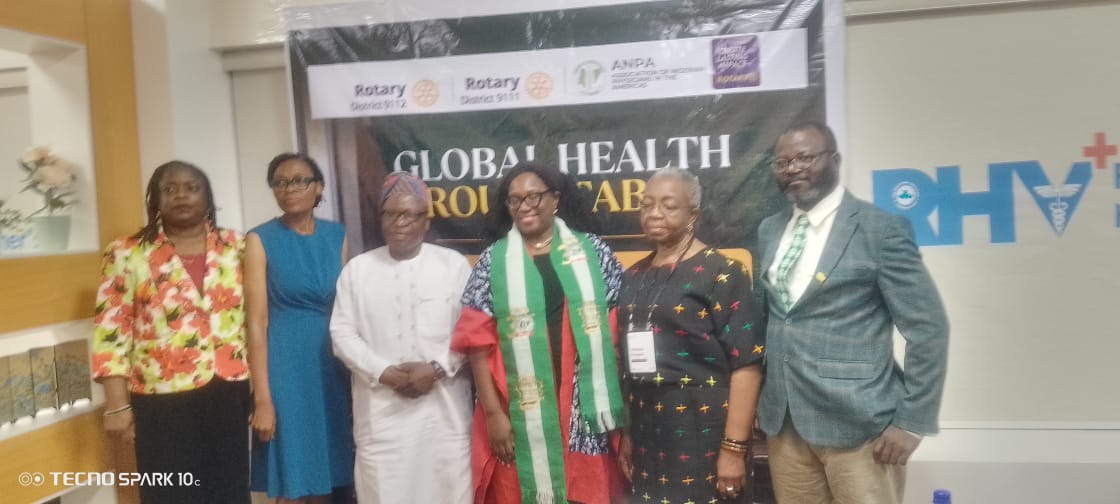
ANPA President, Dr Gertie Anyanwoke, made the call on Wednesday during a presentation at the Global Health Roundtable hosted by ANPA and Rotary Districts 9111 and 9112, covering Lagos and Ogun states.
The roundtable, held at Redeemer’s Health Village, was themed, “Aligning Stakeholders, Strengthening Collaboration, Innovating Health Outcomes”.
Anyanwoke said diaspora medical professionals should work with local healthcare providers to identify and address pressing needs rather than operate independently of existing health systems.
“Our role should be to learn ways that are useful and work alongside local partners to support care,” she said.
She explained that effective partnerships required local knowledge and leadership to guide interventions, while diaspora professionals contributed expertise, resources and international connections.
Also speaking, ANPA Past President, Dr Chinyere Anyaogu, said medical missions needed standardised procedures for engaging state health authorities and local healthcare facilities to guarantee continuity of treatment after visiting teams had departed.
She identified emergency preparedness and response, particularly for road traffic accidents and other medical emergencies, as areas requiring stronger collaboration and innovation.
Anyaogu advocated the use of technology to direct emergency patients to hospitals with the capacity and facilities to provide appropriate treatment.
She said ANPA was supporting healthcare delivery through basic life support, advanced life support, essential newborn care and obstetric emergency training to improve the capacity of healthcare workers.
In his remarks, Dr Kay Adesola, Immediate Past President of the Association of Nigerian Private Medical Practitioners and member of the Emergency Medical Treatment Committee, said nearly every state had established a State Emergency Medical Services and Ambulance Sector platform.
He said the National Emergency Medical Services and Ambulance Sector (NEMSAS) covered emergencies arising from road accidents, fire outbreaks, flooding and snakebites.
Adesola disclosed that Nigeria had more than 600 ambulances within the emergency response system, noting that additional vehicles were welcome, provided they met the required accreditation standards.
He said accredited healthcare facilities provided emergency victims with coverage for their first 48 hours of treatment, with the government bearing the cost.
He added that tricycle ambulances had been introduced to improve access to emergency services in rural communities, particularly for pregnant women, while collaboration with Flying Doctors supported helicopter evacuation.
According to him, the committee is also building the capacity of paramedics, healthcare workers, police officers and firefighters to strengthen emergency response.
Meanwhile, the Chief Executive Officer of Redeemer’s Health Village, Dr Adedamola Dada, called for a system-based approach to healthcare planning, warning that providing ambulances without ensuring effective deployment and coordination would not resolve emergency healthcare challenges.
He stressed the need to strengthen primary healthcare centres, establish clear referral pathways and define catchment areas for healthcare facilities to improve service delivery and data collection.
Similarly, Abia State Commissioner for Health, Prof. Enoch Uche, said the state had invested more than N3 billion in healthcare workers over the last two years to strengthen direct healthcare delivery and expand access, particularly in underserved communities.
Uche, who spoke on healthcare delivery and patient safety, said the state had introduced guidelines requiring medical outreaches to obtain approval, demonstrate community needs, possess adequate capacity and collaborate with relevant local stakeholders.
He said medical outreaches must take place in approved healthcare facilities, with proper patient records and follow-up arrangements to ensure continuity of treatment.
Also, the Ogun State Commissioner for Health, Dr Marcellina Coker, represented by the Director of the Ogun State Ambulance and Emergency Services, Dr Festus Adetonwa, said the state was partnering with non-governmental organisations to conduct medical outreaches and generate data for evidence-based healthcare decisions.
Earlier, the Rotary District Governor for District 9112, covering Lagos and Ogun states, Mr Layi Abidoye, represented by Mr Chinedu Ebo, said collaboration among healthcare organisations was necessary to avoid duplication of efforts and address gaps in service delivery.
READ ALSO: SON Tasks Furniture Makers on Quality Production to Reverse Importation Trend
Dr Salako Sets 90% Target for Implementation of National Council on Health Resolutions
He said Rotary had partnered with ANPA for three to four years, supporting medical missions through consultations and surgical services, with particular attention to maternal and child health, disease prevention and treatment.
Abidoye said the Global Health Roundtable provided an opportunity for healthcare stakeholders and non-governmental organisations to share ideas, build partnerships and develop coordinated interventions to address Nigeria’s healthcare challenges.
About The Author