By Fatima Saka
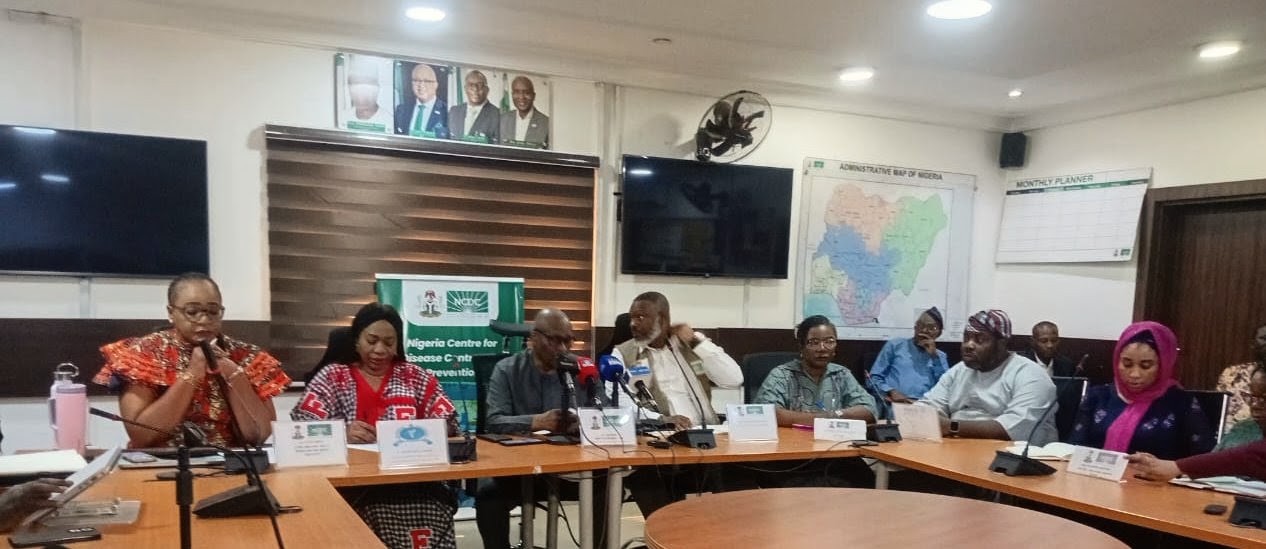
The Nigeria Centre for Disease Control and Prevention (NCDC) has confirmed the recovery and discharge of Nigeria’s confirmed Ebola patient, who was medically evacuated to Switzerland, with no secondary transmission recorded following the completion of contact tracing.
The Director-General of NCDC, Dr Olajide Idris, disclosed this on Friday during a media briefing, saying the patient, who was evacuated on Oct. 26, 2026, subsequently tested negative for the virus after further treatment and was discharged from hospital.
Idris said the successful containment of the case underscored the importance of early detection, prompt investigation, effective public health interventions and collaboration among health authorities, healthcare facilities and affected communities.
He explained that the National Emergency Operations Centre was activated following confirmation of the case, while an emergency management structure was established to coordinate the national response.
According to him, the response prioritised appropriate clinical care, identification and monitoring of exposed persons, prevention of further transmission, protection of healthcare workers and strengthening of disease surveillance.
He said contact tracing covered healthcare facilities, households and other residential settings, with identified contacts assessed according to their level of exposure and monitored in line with established public health protocols.
The NCDC boss added that infection prevention and control measures were strengthened in healthcare facilities across the Federal Capital Territory (FCT) and other parts of the country.
He said the agency also provided healthcare workers with training, personal protective equipment and other response supplies, while laboratory and surveillance teams investigated alerts and ensured that suspected cases received appropriate attention.
Idris said public communication and community engagement were intensified to address misinformation, prevent unnecessary panic and encourage public cooperation with health authorities.
Despite the successful containment, he said Nigeria would sustain its preparedness against possible importation of the virus.
He noted that the National Emergency Operations Centre remained activated, with the Incident Management System operating at Level 3, the highest response level for Ebola.
He added that nationwide surveillance would continue, alongside monitoring of developments in countries and regions affected by the disease.
The NCDC Director-General urged state governments and healthcare facilities to sustain their preparedness, strengthen their capacity to recognise suspected cases, report alerts promptly, conduct laboratory testing and ensure safe referral of patients.
Looking ahead to the December festive season, he warned that increased international travel, religious gatherings, political campaigns, concerts, festivals and other mass events required heightened public health vigilance.
He advised Nigerians and international travellers to seek medical attention promptly whenever they felt unwell, particularly after travelling or having possible exposure to infectious diseases.
He also urged travellers to provide accurate travel and health histories to healthcare workers, cautioning against assuming that every fever was malaria.
The NCDC chief further advised the public to avoid unprotected contact with the blood and other body fluids of persons suspected of having Ebola and to cooperate with public health authorities during contact tracing and monitoring.
Organisers of religious gatherings, political rallies and other public events were also advised to provide adequate sanitation, safe drinking water and medical assistance, while establishing mechanisms for prompt reporting of suspected illnesses.
He disclosed that the NCDC had developed public health guidelines for mass gatherings to guide organisers and participants.
Earlier, the FCT Mandate Secretary for Health Services Secretariat said the suspected Ebola case was detected after a private healthcare facility raised concerns about the patient’s condition and travel history.
She said the FCT Rapid Response Team was immediately deployed to collect samples, which were subsequently taken to the National Reference Laboratory for testing.
According to her, the private hospital’s prompt detection and reporting enabled health authorities to initiate an appropriate public health response.
She disclosed that members of the FCT response team who had contact with the patient had completed their three-week isolation period and remained in good health.
The Mandate Secretary urged private hospitals in the FCT to maintain a high index of suspicion for infectious diseases and promptly report suspected cases to the NCDC or relevant FCT health authorities.
She stressed that private healthcare facilities remained critical partners in disease surveillance and early detection.
Idris commended President Bola Tinubu, the Coordinating Minister of Health and Social Welfare, Prof. Muhammad Ali Pate, the Minister of State for Health and Social Welfare, Dr Iziaq Adekunle Salako, the FCT Administration, healthcare workers, development partners and other government institutions for their contributions to the successful response.
READ ALSO: Agunbiade hails wife’s academic feat, pledges lifelong support
Presidential Movement Is Not a Licence to Intimidate Citizens: Is Mr President Aware?
He also acknowledged the role of the private hospital where the patient initially received care, describing its prompt recognition and reporting of the suspected case as critical to the national response.
The NCDC boss thanked identified contacts and their families for complying with monitoring requirements and public health instructions, while urging Nigerians to remain vigilant, report symptoms early and avoid spreading unverified information.
About The Author