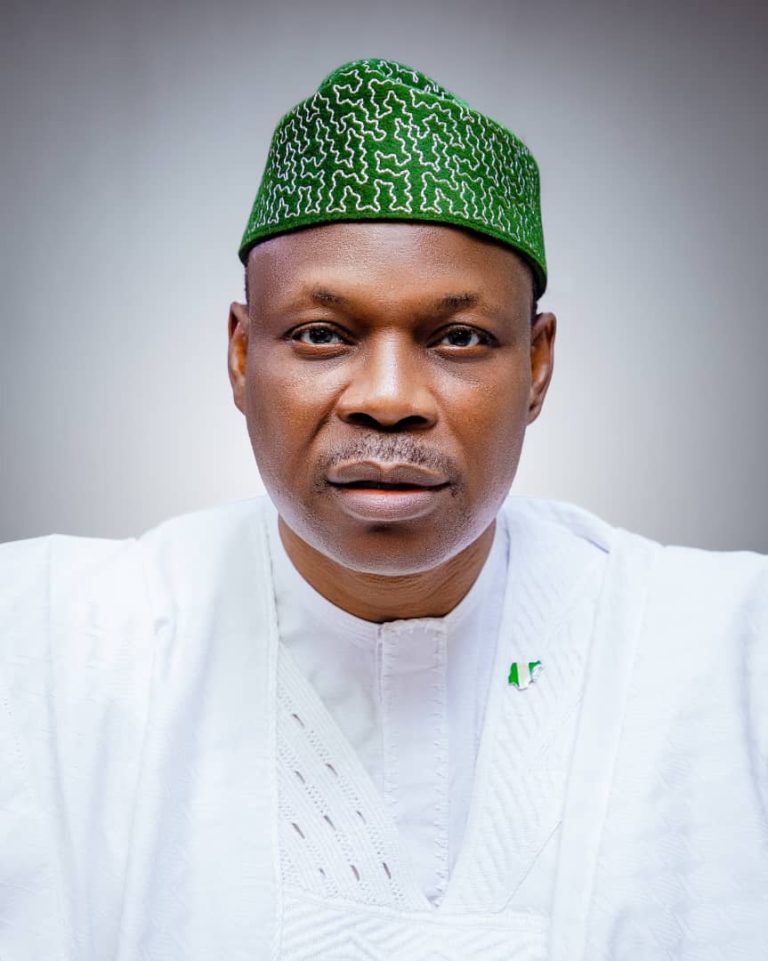
The Federal Government has pledged to expand access to quality eye care services for more than 25 million vulnerable Nigerians, alongside the distribution of five million ready-made reading spectacles and 25,000 subsidised cataract surgeries by 2027.
The Minister of State for Health and Social Welfare, Dr Iziaq Adekunle Salako, announced the commitments while delivering Nigeria’s closing address at the Global Summit for Eye Health held on September 2, 2026, in St. John’s, Antigua and Barbuda.
Salako, who spoke on behalf of President Bola Tinubu, said the government was committed to eliminating avoidable vision loss through expanded access to equitable and quality eye care, particularly for women, elderly people and underserved rural communities.
He said the Federal Government would also integrate Primary Eye Care (PEC) into the Basic Health Care Provision Fund (BHCPF) and train 15,000 primary healthcare workers to strengthen eye health services at the grassroots.
According to him, Nigeria is targeting a 20 per cent increase in its active eye care workforce and a 30-percentage-point improvement in national Effective Cataract Surgical Coverage (eCSC) by 2030.
The minister described the commitments as part of Nigeria’s broader efforts to accelerate universal health coverage and make eye care services more accessible to vulnerable populations.
He recalled that about 25 years ago, the JigiBola initiative, pioneered in Lagos State, provided free eye screening, eyeglasses and cataract surgeries, noting that the programme had inspired the national Effective Spectacle Coverage Initiative, known as JigiBola 2.0.
Salako said the initiative demonstrated how early interventions could be expanded into national programmes to address preventable vision loss.
He stressed that vision loss extends beyond individual health challenges, affecting education, household incomes, road safety, community development and national productivity.
According to him, Nigeria is also participating in the World Health Organisation’s Global Cataract Surgery Initiative, known as SEE 2045, which aims to eliminate cataract-related blindness.
He described the initiative as a significant global commitment, noting that cataract elimination represents the second global elimination target for a non-communicable disease in WHO’s history.
The minister called on participating countries, including Antigua and Barbuda, Bangladesh, Tanzania and China, to demonstrate that equitable access to cataract surgery could be rapidly expanded while maintaining quality standards.
He urged countries to document achievements, measure outcomes and share implementation strategies to ensure that surgical backlogs are cleared and underserved rural communities are reached.
Salako further highlighted the importance of international and private-sector partnerships in advancing global eye health, disclosing that philanthropic partners had committed $60 million to support assistive technology.
He added that 15 private-sector commitments were valued at more than $468 million for accelerated eye care implementation, while about 143 additional commitments had been made by organisations beyond governments.
The minister said the summit had elevated eye health beyond hospital-based services to become a central issue in global development and the Commonwealth agenda.
He urged governments and development partners to sustain the momentum generated at the summit by mobilising domestic resources and strengthening collaboration with international partners.
Salako said Nigeria would translate the resolutions reached at the summit into practical actions within its national health system, with emphasis on measurable progress and accountability.
READ ALSO: State Police Bill Clears Constitutional 28 States Approve Amendment
PEWAN Seeks Private Sector Investment to Drive Sustainable Housing in Nigeria
He called on stakeholders to ensure that millions of people waiting for basic eye care interventions receive timely access to reading glasses, referrals and cataract surgeries.
The minister also expressed appreciation to the government and people of Antigua and Barbuda, the World Health Organisation, the International Agency for the Prevention of Blindness, fellow co-host countries and other global partners for their contributions to the summit.
About The Author