The Association of Waste Managers of Nigeria (AWAMN) has called for stronger regulation, technology adoption and increased citizen participation to transform Nigeria’s waste management sector from a disposal-based system to a resource recovery model.
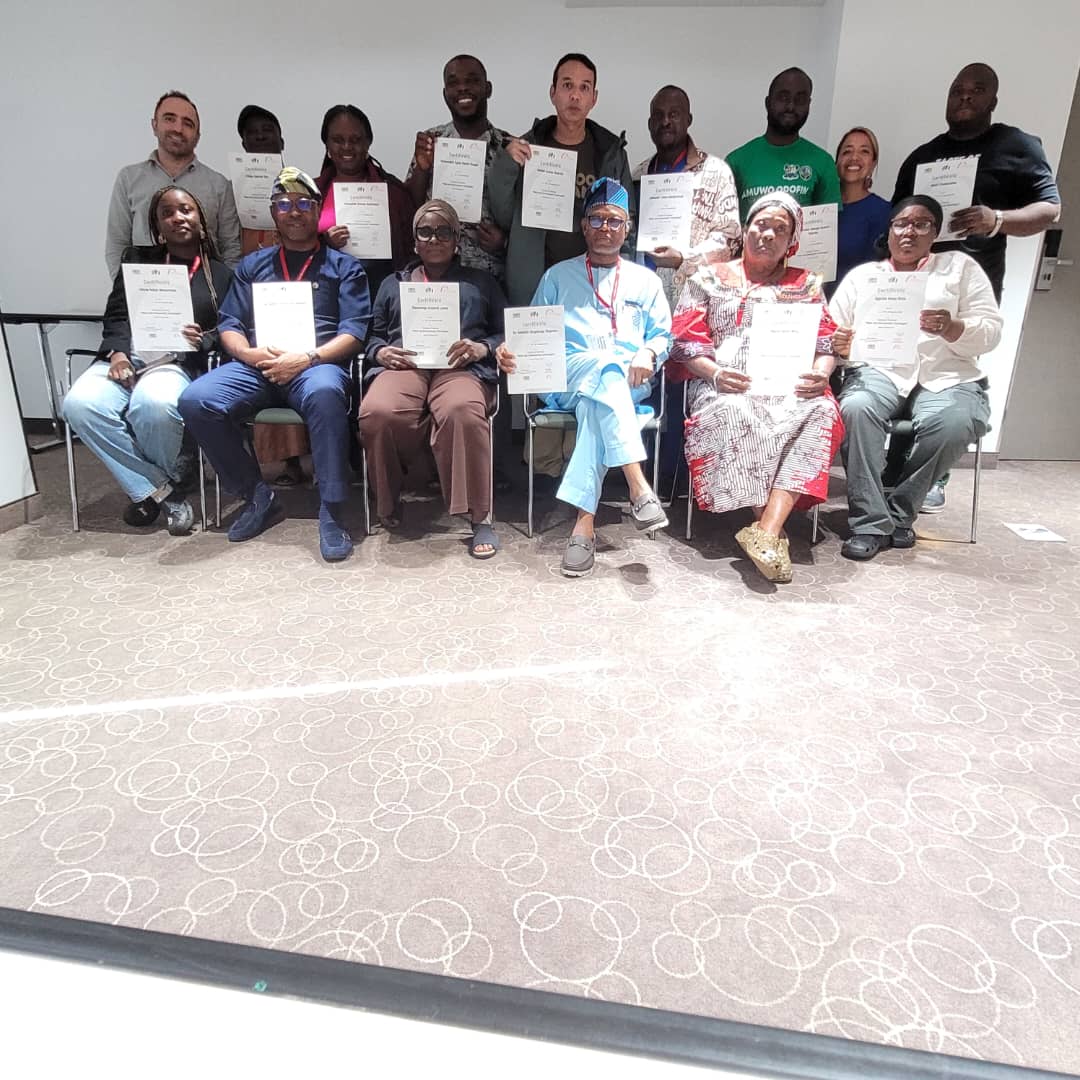
National President of AWAMN, Dr Olugbenga Adebola, made the call after a 10-day technical study tour of Bavaria, Germany, where the delegation examined waste management, environmental technologies, circular economy solutions, and sewage and wastewater management.
The News Agency of Nigeria reports that the study tour, held from Sept. 19 to Sept. 26 in Nuremberg, Germany, was funded by the Bavarian Ministry of Economic Affairs, Regional Development and Energy and coordinated by Bildungswerk der Bayerischen Wirtschaft (bbw) GmbH in partnership with AWAMN.
Adebola said the delegation examined systems in which waste, wastewater and energy were treated as resources through effective regulation, technology and citizen participation.
He said Nigeria did not need to copy the German model but could adapt its principles to suit the country’s socio-economic realities.
“Waste is not waste unless you waste it. Don’t waste your waste; it is a resource,” Adebola said.
He said the tour showed that technology alone could not address environmental challenges without effective governance and public participation.
According to him, the delegation visited companies and facilities involved in wastewater treatment, water treatment, sludge management, digital monitoring and municipal waste management.
Adebola said the visit to Klara GmbH demonstrated the potential of decentralised and modular wastewater treatment plants for communities, estates and hotels without central sewage systems.
He said such systems could be considered for estates and developments in Lagos and Abuja, particularly as a way of reducing reliance on septic tanks and soakaways that could contribute to groundwater contamination.
At Clearfield PPU Water Systems, he said the delegation examined water treatment and pipe systems designed to reduce energy consumption and resist corrosion.
Adebola said the technology could be explored for coastal communities in Nigeria, while local manufacturing could create opportunities for Nigerian businesses.
He said the delegation also visited UTP Umwelttechnik Pöhnl GmbH, where it examined the conversion of sewage sludge into dried pellets for cement production.
According to him, Nigeria could explore partnerships between wastewater authorities and cement manufacturers to convert treated sludge into an energy resource.
The AWAMN president said digital systems developed by FlowChief GmbH for monitoring sewage flows, pump stations and waste collection operations could also be adapted to Nigeria.
He said similar technology could improve waste collection, monitor truck routes, reduce operational costs and provide early warnings on blockages.
Adebola said visits to Klärwerk 1 Nuremberg and Freystadt sewage treatment plants demonstrated how wastewater could be converted into useful resources through biogas electricity generation, phosphorus recovery for fertiliser and treated water reuse for agriculture.
He therefore called for Nigerian wastewater facilities to be redesigned as resource recovery centres rather than facilities focused solely on disposal.
On municipal waste management, Adebola said the delegation studied waste segregation and landfill management systems in Erlangen, where residents separated waste into different categories with enforcement supported by public participation.
He said Nigeria should consider source segregation and develop facilities capable of recovering materials, generating energy and treating leachate and landfill gases.
The delegation also visited HUBER SE, where it examined equipment for screening, grit separation and sludge drying.
Adebola said AWAMN would explore opportunities for technology transfer, local assembly and technical training to improve equipment maintenance in Nigeria.
He said the delegation also studied a youth-led initiative in Augsburg that converts organic waste into biogas for household use.
According to him, similar initiatives could be developed in Nigerian markets and other locations generating large volumes of organic waste, creating opportunities for young entrepreneurs while addressing organic waste challenges.
Adebola said engagements with the Bavarian State Ministry also highlighted the importance of government creating an enabling environment and supporting vocational training.
He said AWAMN would seek continued collaboration with German institutions to strengthen technical and vocational training for Nigerian waste management operators.
Adebola said the association had identified seven major areas for possible action following the study tour.
He listed them as shifting from waste disposal to resource management, decentralising wastewater treatment, establishing circular economy industrial parks, digitalising waste management operations, developing a permanent technical training centre, establishing a youth green fund and converting sewage sludge into useful products.
He proposed a circular economy industrial park in the Epe-Ogun axis, integrating sludge-to-energy, equipment manufacturing and organic waste processing enterprises.
The AWAMN president also proposed digital tracking systems for private-sector waste collection operations, including GPS monitoring of trucks and tracking waste from collection to disposal.
He proposed an AWAMN-bbw skills academy or similar vocational arrangement to build technical capacity in Nigeria’s waste and wastewater sector.
Adebola also advocated youth-led biogas enterprises in major markets to convert organic waste into cooking gas and other useful products.
He said AWAMN would explore partnerships involving the Lagos State Waste Management Office and cement manufacturers to support the utilisation of treated and dried sewage sludge by cement companies.
Adebola said the Bavarian experience showed that sustainable waste management required an integrated system involving government, operators, technology providers and citizens.
He said AWAMN planned to develop a formal Bavaria-Nigeria Circular Economy Partnership proposal covering 2026 to 2030, which would be presented at the association’s next international conference.
READ ALSO: LWC Pledges 100% Support for Timely, Quality Delivery of Lagos Island Waterworks
NiDCOM Boss Hails Ogunyemi’s Election, First Black Physician to Lead Canadian Medical Association
Adebola appreciated the Bavarian Ministry, German Consulate General in Lagos and bbw GmbH for supporting and coordinating the study tour.
He expressed hope that participants would apply the knowledge gained from the tour to improve waste and wastewater management in Nigeria.
About The Author