By Fatima Saka
The Federal Government has set a target of achieving at least 70 per cent local production of essential healthcare products by 2030 as part of efforts to reduce Nigeria’s dependence on imported medicines and strengthen medicine security.
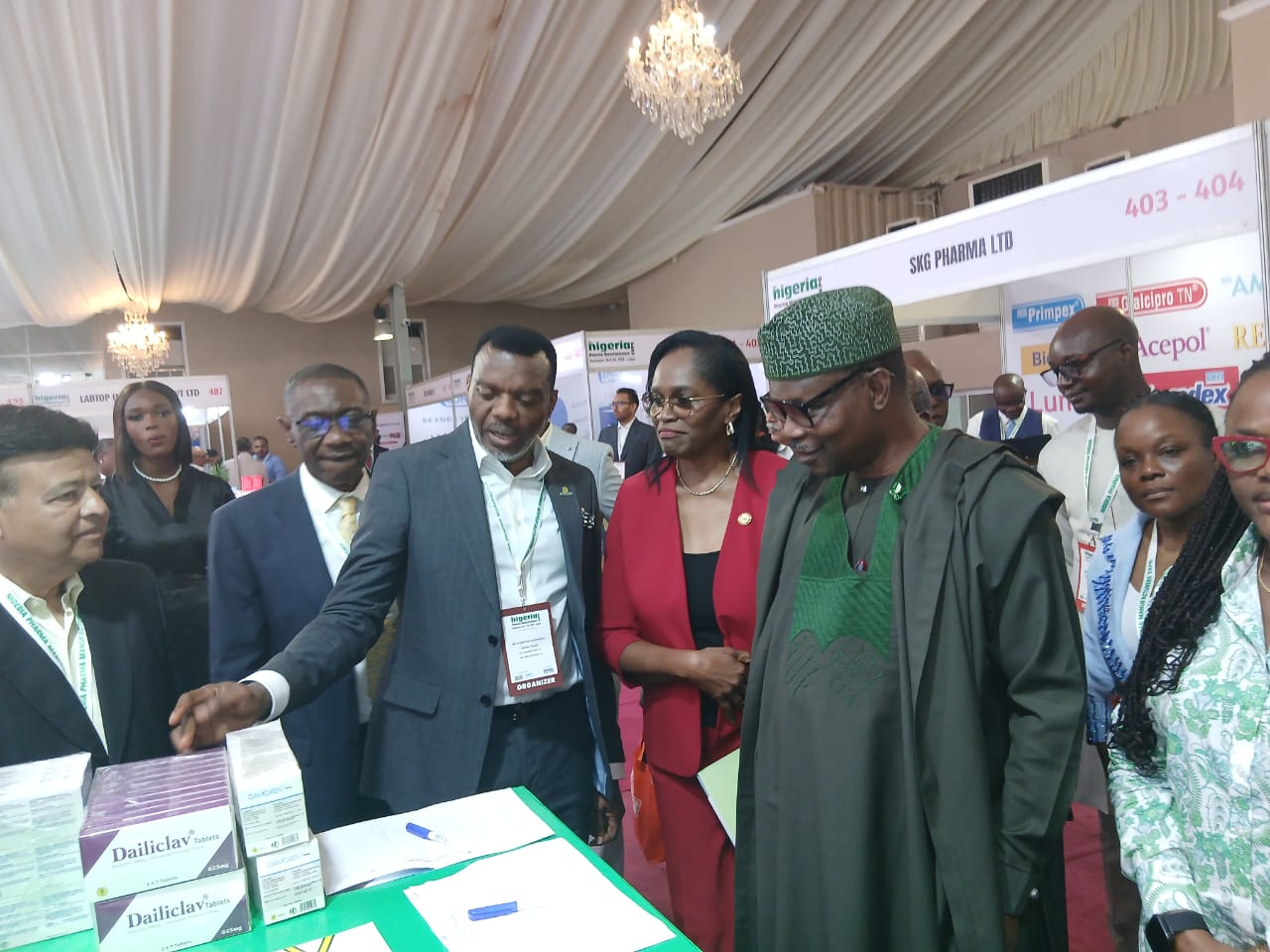
The Minister of State for Health and Social Welfare, Dr Iziaq Adekunle Salako, disclosed this on Monday in Lagos while declaring open the 8th Nigeria Pharma Manufacturers Expo (NPME), organised by the Pharmaceutical Manufacturers Group of the Manufacturers Association of Nigeria (PMG-MAN).
Salako said the target was being supported by the Presidential Initiative to Unlock the Healthcare Value Chain (PVAC) and the Presidential Executive Order for Pharmaceutical and Allied Sectors.
According to him, the COVID-19 pandemic and changing global healthcare financing landscape exposed the vulnerabilities created by excessive dependence on international supply chains.
He said Nigeria and other African countries must develop the capacity to produce medicines, vaccines, diagnostics and other critical health technologies domestically.
“Our conversation can no longer be limited to whether we can access medicines when global supply chains are functioning.
“The more fundamental question is whether we can produce what our people need when those supply chains are disrupted,” Salako said.
He described medicine security as not only a health-sector objective but also an issue of national resilience and sovereignty.
The minister disclosed that the PVAC had secured commitments of about $2 billion at single-digit interest rates, with about 50 Nigerian health firms in advanced funding discussions.
He said the initiative was targeting at least 70 per cent local production of essential healthcare products by 2030.
Salako added that 87 local manufacturers were benefiting from the implementation of the Presidential Executive Order, which provides zero tariffs on pharmaceutical machinery, active pharmaceutical ingredients (APIs) and excipients across almost 1,000 Harmonised System codes.
He said the order also introduced fiscal and non-fiscal measures, including tariff relief and market-shaping mechanisms, to support local pharmaceutical production.
The minister said the government was also working to expand domestic production of APIs, vaccines, biologics, diagnostics and other essential health commodities.
He listed the operationalisation of the NIPRD API Capacity Building and Concept Production Centre, development of commercial API manufacturing capacity, and efforts to localise production of HIV, Hepatitis and Syphilis diagnostic products among the initiatives.
Salako, however, said genuine localisation must go beyond importing ingredients and packaging materials for final assembly in Nigeria.
He called for increased investment in research and development, particularly in harnessing the country’s phytomedicinal resources.
“Localization must not mean simply importing the active ingredients, packaging materials and technologies and assembling the final product here.
“We must progressively build capacity across the entire value chain—from research and raw materials to formulation, quality assurance, manufacturing, packaging and distribution,” he said.
The minister also highlighted the establishment of Medipool, Nigeria’s national Group Purchasing Organisation for essential medicines and medical commodities, as part of measures to create predictable demand for locally manufactured products.
He said Medipool would aggregate procurement, negotiate bulk purchases and improve supply-chain efficiency, thereby creating opportunities for domestic pharmaceutical manufacturers.
Salako urged pharmaceutical manufacturers, researchers, investors and development partners to explore regional manufacturing opportunities and leverage the African Continental Free Trade Area to expand markets.
He said sustained investment, innovation, regulatory alignment and market integration would be critical to strengthening Nigeria’s pharmaceutical manufacturing ecosystem.
“We must move from dependency to capability, from fragmented markets to regional scale, and from localization to genuine African pharmaceutical sovereignty,” he said.
The minister said the country’s health security would depend not only on hospitals and laboratories but also on factories, universities, research centres, supply chains and investment decisions.
READ ALSO: No Forests, No Rivers: FG Warns Pollution, Deforestation Threaten Nigeria’s Water Security
The expo, themed “Regional Manufacturing: Advancing Africa’s Pharma and Life-Science Sovereignty through Localization,” brought stakeholders together to discuss strategies for strengthening pharmaceutical manufacturing and life-science production in Nigeria and across Africa.
Salako expressed confidence that sustained collaboration among stakeholders would contribute to improved medicine security, a stronger healthcare value chain and greater resilience in Nigeria’s pharmaceutical sector.
About The Author