The Nigeria Data Protection Commission (NDPC) and the Nigerians in Diaspora Commission (NiDCOM) have intensified collaboration to strengthen the protection of personal information and raise awareness of privacy rights among Nigerians at home and in the Diaspora.
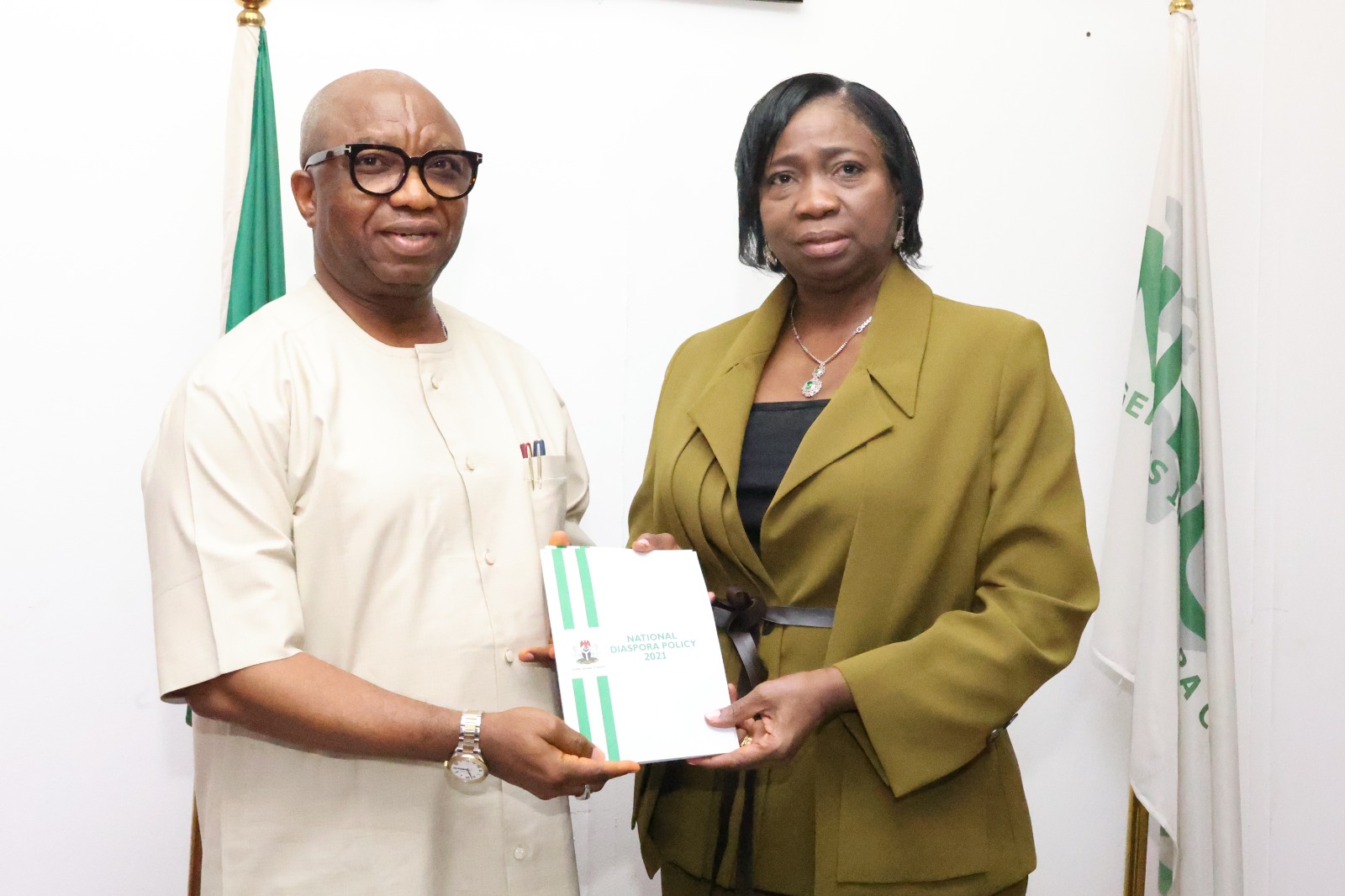
The move followed a courtesy visit by the National Commissioner/Chief Executive Officer of the NDPC, Dr Vincent Olatunji, to NiDCOM in Abuja, where both agencies discussed responsible handling of personal data, privacy awareness, staff capacity building and institutional collaboration.
Olatunji said the growing volume of personal information shared online had made data protection increasingly important, stressing that individuals were leaving digital footprints that required responsible handling and adequate safeguards.
He said the risks were particularly significant in sensitive sectors such as healthcare, where improper handling of personal information could contribute to misdiagnosis, wrong medication and, in extreme cases, loss of life.
The NDPC boss explained that the Commission was established to strengthen Nigeria’s data protection framework and protect the rights, freedoms and interests of data subjects, adding that Ministries, Departments and Agencies (MDAs) were required to process personal data in line with the Nigeria Data Protection Act 2023.
He said the Commission was also focusing on public awareness, capacity building and the development of certified data protection professionals.
Olatunji offered to support NiDCOM through staff training, public enlightenment and the development of Data Protection Officers, assuring the Commission of the NDPC’s readiness to deepen institutional collaboration.
Responding, the Chairman/CEO of NiDCOM, Hon. Abike Dabiri-Erewa, welcomed the proposed training for the Commission’s staff, noting that data privacy was particularly important to NiDCOM because of the nature and volume of information generated through its engagement with Nigerians in the Diaspora.
Dabiri-Erewa also highlighted the contributions of Nigerians in the global technology sector, particularly in Silicon Valley, and called for stronger partnerships with Nigerians in the Diaspora through public-private partnerships and greater integration into NiDCOM programmes.
She raised concerns about the extent to which individuals retain control over their personal information in the digital age, particularly where such information could be accessed or taken online without their permission.
The NiDCOM boss consequently called for increased public awareness of data protection rights and suggested consideration of a dedicated Diaspora desk to strengthen engagement between NiDCOM and the NDPC on Diaspora data.
Dabiri-Erewa commended President Bola Ahmed Tinubu for approving the Nigeria Data Protection Act, describing it as an important framework for strengthening personal data protection in the country.
She disclosed that NiDCOM had taken steps to align its digital systems with data protection requirements, revealing that its latest upgrade was undertaken with the support of a Nigerian based in Silicon Valley.
According to her, the upgrade was aimed at ensuring that NiDCOM remained abreast of evolving data protection standards and was equipped to responsibly manage information relating to Nigerians in the Diaspora.
The Head of Technology Transfer and Innovation (TTI), Hon. Abdulrahman Terab, underscored the importance of data protection to NiDCOM’s Diaspora Data Mapping initiative.
Terab said information collected to facilitate effective engagement with Nigerians in the Diaspora must be properly managed and protected.
READ ALSO: 6th Constitution Amendment: States Get 30 Days to Consider National Assembly Bill
High Travel Costs Threaten Intra-African Tourism – Say Expert
He noted that NiDCOM’s Diaspora Data Mapping Portal predated the establishment of the NDPC, reflecting the Commission’s longstanding efforts to develop reliable data on Nigerians in the Diaspora.
He stressed that as NiDCOM continued to collect information to support effective engagement with Nigerians abroad, protecting such data must remain a priority.
Terab added that stronger collaboration with the NDPC would deepen awareness and institutional capacity on data protection, while ensuring that Nigerians understood their rights as data subjects and that information collected by institutions was handled responsibly, securely and in line with established data protection standards.
About The Author