By Fatima Saka
The President of the National Assembly of Côte d’Ivoire and former Prime Minister, Patrick Achi, has called on African governments to move beyond poverty management and make wealth creation, productive employment and private-sector development the centre of their inclusion strategies.
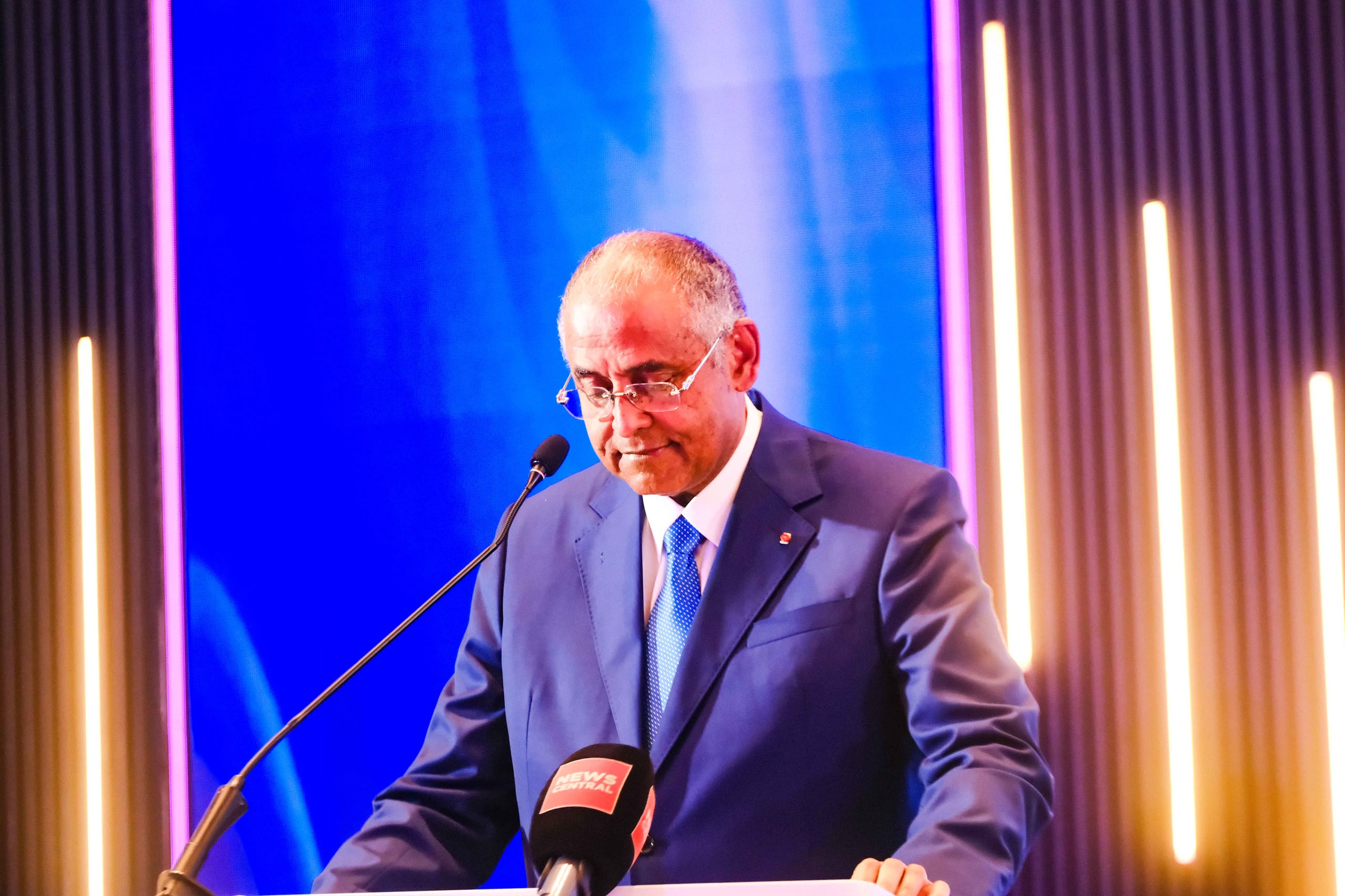
Achi made the call while delivering the keynote address at the Gender and Inclusion Summit 2026 (GS26) in Abuja, organised by the Policy Innovation Centre (PIC). The summit is focused on translating innovation and inclusion policies into measurable impact at the last mile.
Speaking on the theme, “Moving from Agenda to Action: Making Innovation Count on the Last Mile,” Achi said inclusion should not be treated as a social supplement to development but as a fundamental component of economic transformation.
Drawing from his experience as an engineer, former minister responsible for economic infrastructure and former Prime Minister of Côte d’Ivoire, he said development only becomes meaningful when infrastructure, public services and economic opportunities reach the people they were designed to serve.
“Inclusion is not a social supplement to development. Inclusion is development,” Achi declared.
He explained that a road has value because it connects farmers to markets, children to schools, workers to jobs and entrepreneurs to customers, stressing that infrastructure that does not translate into opportunities for citizens has not fulfilled its economic purpose.
According to him, the same principle applies to electricity, water, education, healthcare and digital infrastructure.
“A power line that does not reach the household, the farm, the enterprise, has not yet completed its economic mission,” he said.
Achi said governments must therefore focus on creating the conditions for businesses to invest, expand and create jobs, arguing that productive employment remains the most sustainable pathway out of poverty.
He cautioned African countries against relying excessively on social protection, cash transfers, development assistance and philanthropy as long-term solutions to poverty.
“We must be careful not to build a system that becomes better at managing poverty than at ending it,” he warned.
According to him, social protection has an important role in protecting vulnerable citizens, particularly during crises, but it cannot substitute for a productive economy capable of generating sustainable income.
“Social protection must protect people from falling, but productive employment must give them the ladder to climb,” he said.
The former Prime Minister said the challenge was becoming more urgent as Africa’s population, particularly its youth population, continues to expand.
He noted that millions of young Africans would enter the labour market in the coming decades, stressing that neither philanthropy nor development assistance could provide economic opportunities on the scale required.
He urged African leaders to identify strategic sectors capable of driving inclusive and sustainable growth, while ensuring that public investment creates the conditions for private-sector expansion and job creation.
Achi also challenged African countries to examine critically their development trajectory, saying that although the continent had made progress in life expectancy, education, electricity access and infrastructure, the pace of transformation remained inadequate.
He pointed to the contrasting economic performance of sub-Saharan Africa and developing East Asia, arguing that Africa had failed to translate its enormous natural and human resources into comparable improvements in productivity, income and global economic influence.
He identified agriculture, education, science, technology, industrialisation and digital infrastructure as critical areas requiring urgent transformation.
On agriculture, he noted that Africa possesses enormous agricultural potential but continues to import huge quantities of food, while irrigation remains significantly underdeveloped.
He also warned that Africa’s human-capital deficit could become more damaging as the global economy increasingly depends on science, technology and artificial intelligence.
“This is not simply an education gap. It is a future productivity gap,” he said.
Achi pointed to the experiences of China, Singapore, Vietnam and South Korea, saying that although there was no single Asian development model, a common pattern was the emphasis on productive investment, competitive enterprises, capable states and job creation.
He cited China’s dramatic reduction in poverty as evidence that large-scale transformation was possible when vision, leadership and pragmatism were combined.
“We have to be hopeful for Africa. Everything is possible,” he said, urging African leaders to confront the continent’s structural challenges rather than accept poverty as inevitable.
The Ivorian leader further stressed that women and young people must be placed at the centre of economic strategy rather than treated as beneficiaries of separate social programmes.
“Women and young people are not categories to be added at the end of the economic strategy. They are central to the size and quality of the economy itself,” he said.
He argued that excluding women, young people, rural producers and entrepreneurs from education, employment, finance and markets represents a major economic loss to Africa.
Reflecting on Côte d’Ivoire’s development experience, Achi said the country’s journey since the political and economic crisis of 2011 demonstrated both the importance of expanding access and the limitations of access when it was not converted into capability, productivity and income.
He said the initial focus was on rebuilding the nation, restoring peace and security, reconnecting communities and rebuilding infrastructure and public services.
The country subsequently expanded access to electricity, education, social protection and other essential services, but, according to him, the next phase must focus on converting access into productivity and higher incomes.
“A school place must become learning, training must become employability, and rural production must contribute to higher income,” he said.
Achi described Côte d’Ivoire’s development journey in three stages: rebuilding and reconnecting the country, extending access, and turning access into capability and productivity.
He said the experience had shaped the country’s current development priorities, which seek to link agricultural modernisation, industrialisation, regional economic development and employment within a coherent strategy.
He challenged African policymakers to design inclusion as a system, invest in areas where future value will be created, measure whether policies are working and scale what works.
According to him, inclusion must be embedded in national economic planning and budgeting rather than treated as a collection of isolated programmes.
He particularly urged governments to ensure that women, young people and rural communities are integrated into the productive economy, while creating opportunities for young entrepreneurs, African SMEs and rural producers.
He also highlighted the African Continental Free Trade Area, saying its promise would only be realised if African businesses could effectively use the continental market to invest, produce, expand and create jobs.
READ ALSO: HAS DOTUN OLADIPO REALLY DIED? ASK ABDUR-RAHMAN BALOGUN (ARAB)
Achi concluded that sustainable inclusion must combine social protection with economic empowerment, stressing that Africa’s lasting escape from poverty would ultimately depend on productive activity, enterprise, employment and rising incomes.
The GS26 summit brought together government officials, policymakers, development institutions, private-sector leaders, civil society organisations, women and young leaders to examine practical approaches to advancing gender equality and social inclusion across Africa.
About The Author