
By Fatima Saka
Nigeria’s military campaign against terrorism and banditry is gaining renewed momentum, with coordinated operations stretching from the agrarian hubs of Benue State to the forest corridors of Kebbi and the volatile communities of the North West, delivering significant blows to criminal networks and restoring a measure of confidence among civilians.
At the heart of these operations is a growing synergy between conventional forces and local security structures. In Benue State, this collaboration proved decisive when troops of Operation WHIRL STROKE, alongside the Benue State Civil Protection Guard, foiled a terrorist attack at the busy Tor Donga Yam Market on June 28, 2026. Acting on a distress call while on routine patrol, the troops swiftly engaged the attackers in a fierce gun battle.
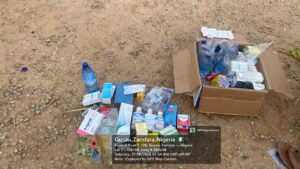

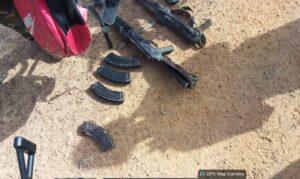
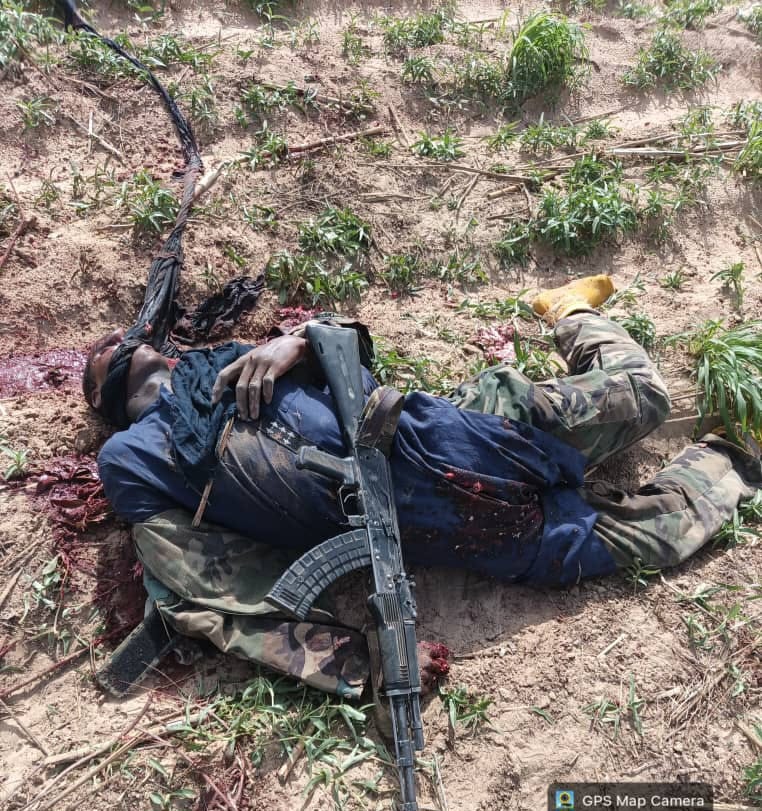
The confrontation led to the neutralisation of two identified terrorists, Dantaraba and Golozo, and the recovery of arms including an AK-47 rifle, ammunition, and other items. More critically, the intervention averted what could have been a major disruption to livelihoods, allowing trading activities to continue uninterrupted in one of the area’s key commercial centres.
Military authorities say the operation underscores the importance of timely intelligence and community cooperation. The Force Commander, Major General Moses Gara, commended both the troops and local collaborators, noting that such joint efforts remain vital in preventing large-scale attacks and sustaining economic stability.
Further north, the operational landscape reveals a broader and more sustained offensive under Operation FANSAN YAMMA, where troops have intensified pressure on terrorist and bandit groups across Kaduna, Zamfara, and Kebbi States.
Between June 27 and 28, troops carried out a series of coordinated engagements in Kaduna State. In Giwa and Kaduna North Local Government Areas, security forces intercepted terrorists transporting kidnapped victims on motorcycles. A firefight forced the assailants to flee, leading to the rescue of one victim, though another was found dead.
In a related incident in Dariya Village, troops pursued fleeing attackers after an assault on the community, neutralising two during a gun battle and recovering weapons and other items. These encounters highlight the persistent threat faced by rural communities, as well as the rapid-response capability being deployed to contain it.
Operations extended into Zamfara State, where intelligence-driven actions led to the arrest of individuals suspected of providing medical and logistical support to terrorist groups. Additional suspects were apprehended in Birnin Gwari, pointing to an expanding effort to dismantle not just fighters but the wider support networks enabling criminal activity.
Meanwhile, in Chikun Local Government Area of Kaduna State, sustained military pressure forced cattle rustlers to abandon 110 stolen livestock during an ambush operation conducted in collaboration with vigilante groups. The cattle were successfully recovered and returned to their owners, reinforcing confidence among affected communities.
In Kebbi State, troops delivered another strategic blow against Lakurawa terrorist elements in the Sabarumawa axis. Acting on credible intelligence about a planned attack, troops of the Chief of Army Staff Intervention Battalion 7 established a tactical ambush along the terrorists’ route.
The ensuing engagement resulted in the neutralisation of two terrorists, while others fled under pressure. A follow-up sweep of the area led to the recovery of a cache of arms, including AK-47 rifles, magazines, 143 rounds of ammunition, and a motorcycle—further weakening the group’s operational capacity.
READ ALSO: Nigeria, France Strengthen Military Partnership at Defence Talks
Army Reshuffle Targets Stronger Security, Operational Efficiency
Across these theatres, military authorities maintain that the sustained offensives are part of a deliberate strategy to deny terrorist and criminal groups freedom of movement while protecting civilian populations and economic activities.
They continue to emphasise that the success of these operations depends not only on firepower and coordination but also on the active support of local communities through the provision of timely and credible intelligence, as the fight against insecurity evolves into a collective national effort.
About The Author