
……Ties Funding to Results Under Health Sector Reforms
By Fatima Saka
The Federal Government has announced the deployment of critical medical equipment to 251 secondary health facilities nationwide as part of sweeping reforms aimed at improving maternal and newborn health outcomes, with funding now tied strictly to measurable results.
The National Coordinator of the SWAp Coordination Office, Dr. Muntaqa Umar-Sadiq, disclosed this on Thursday during a media briefing held via Zoom, where he outlined ongoing health sector reforms, the Universal Health Coverage (UHC) Compact, and the state of Comprehensive Emergency Obstetric and Newborn Care (CEmONC) readiness across the country.
Umar-Sadiq said the reforms prioritise governance, accountability, and efficient resource utilisation rather than increased spending alone. He emphasised that the government’s “one plan, one budget, one report, and one conversation” framework is central to addressing systemic challenges in the health sector.
According to him, the initiative—under the Nigerian Health Sector Renewal Investment Programme—combines supply- and demand-side interventions. On the supply side, the government is scaling up community health workforce deployment, revitalising health facilities, and strengthening linkages between primary and referral centres. On the demand side, efforts are focused on improving affordability through the National Health Insurance Authority (NHIA), including reimbursement for Caesarean sections and other emergency services.
A key feature of the reform is the Sector-Wide Approach (SWAp), which pools funding into a unified structure to reduce fragmentation and improve impact. Umar-Sadiq explained that the UHC Compact, signed by all states, establishes a unified accountability framework with clearly defined performance indicators, expectations, and a code of conduct for federal, state, and local governments.
He noted that under the compact, the Federal Government provides support—such as equipment and financing—while states are required to meet specific conditions, including infrastructure upgrades and workforce recruitment. Performance is monitored through quarterly reviews, and payments are made only after independently verified results are achieved.
“As part of this commitment, we assessed 774 CEmONC facilities nationwide and identified critical infrastructure and equipment gaps. Tomorrow, we will begin distributing equipment to nearly 251 of these facilities,” he said.
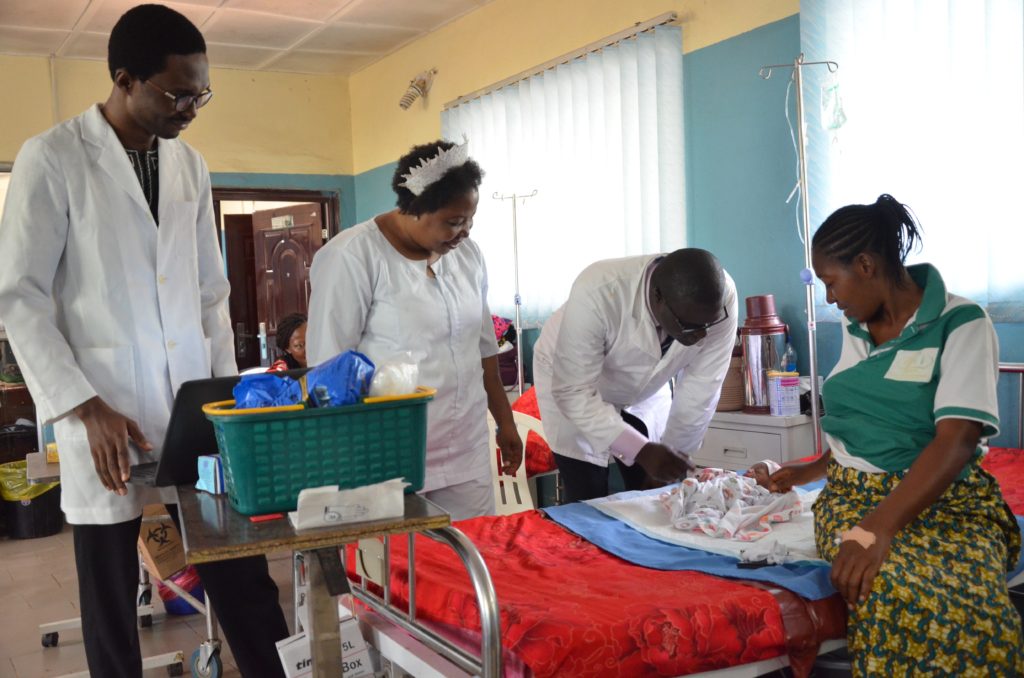
The equipment covers essential areas such as labour wards, operating theatres, laboratories, pharmacies, and neonatal units, aimed at strengthening emergency obstetric and newborn care services and reducing preventable deaths.
Beyond equipment deployment, the government is implementing broader system reforms. Over 3,000 primary healthcare centres have been revitalised in collaboration with states, including 808 facilities in high-burden local government areas that account for about 55 per cent of maternal deaths. Additionally, more than 3,000 community health workers have been recruited and are being deployed to underserved areas.
Umar-Sadiq highlighted a shift to a “pay-for-results” model, where states are incentivised to invest their own resources in health system improvements before receiving federal reimbursements. This, he said, is designed to ensure sustainability and avoid past challenges associated with co-financing models.
READ ALSO: MIHAS 2026 to Generate $1.13bn, Position Nigeria for Global Halal Market Expansion
Nigeria, South Korea Strengthen Strategic Ties Ahead of Korea-Africa Foreign Ministers’ Meeting
He added that the compact also mandates regular data reporting, performance reviews, and adherence to national standards for service delivery, particularly for facilities providing comprehensive emergency obstetric care.
The reforms, he said, reflect a deliberate move to strengthen governance, enhance accountability, and ensure that investments translate into tangible health outcomes for Nigerians, especially women and newborns.
About The Author